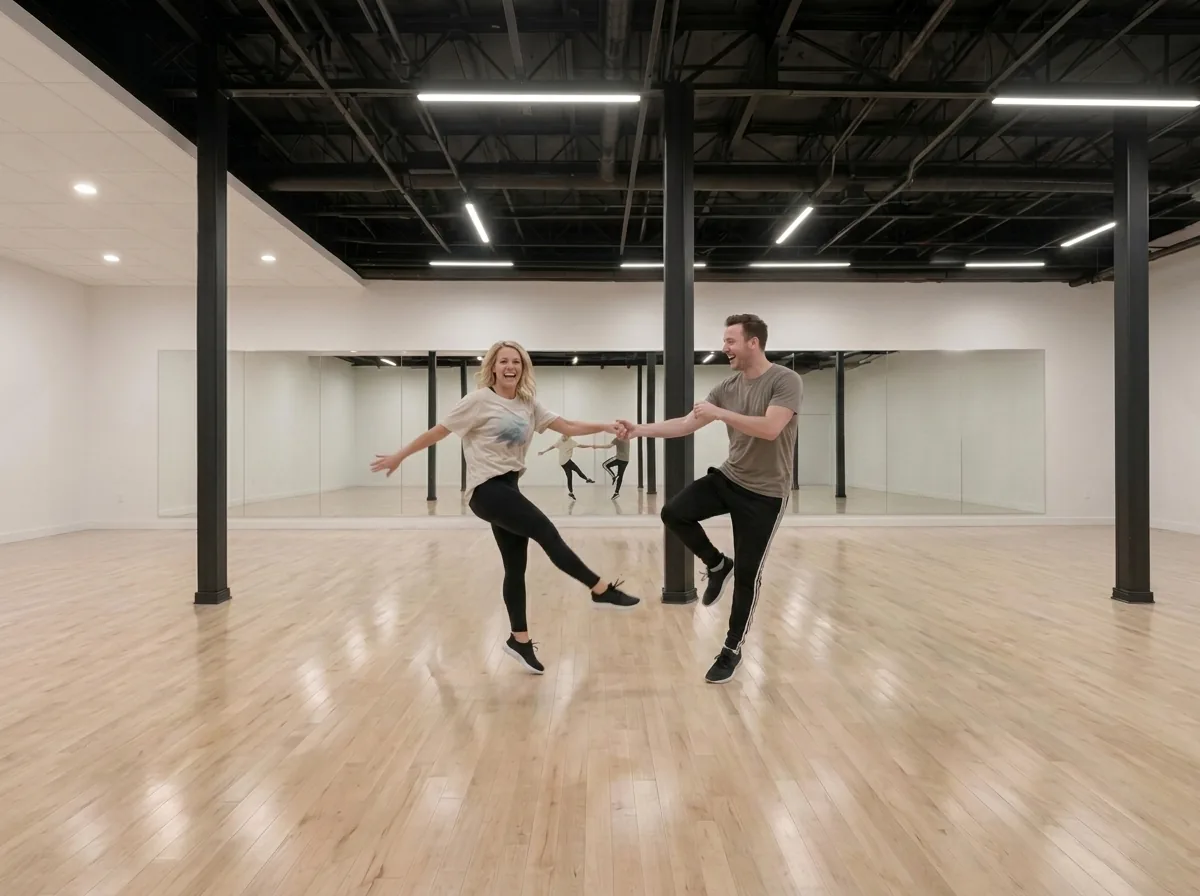
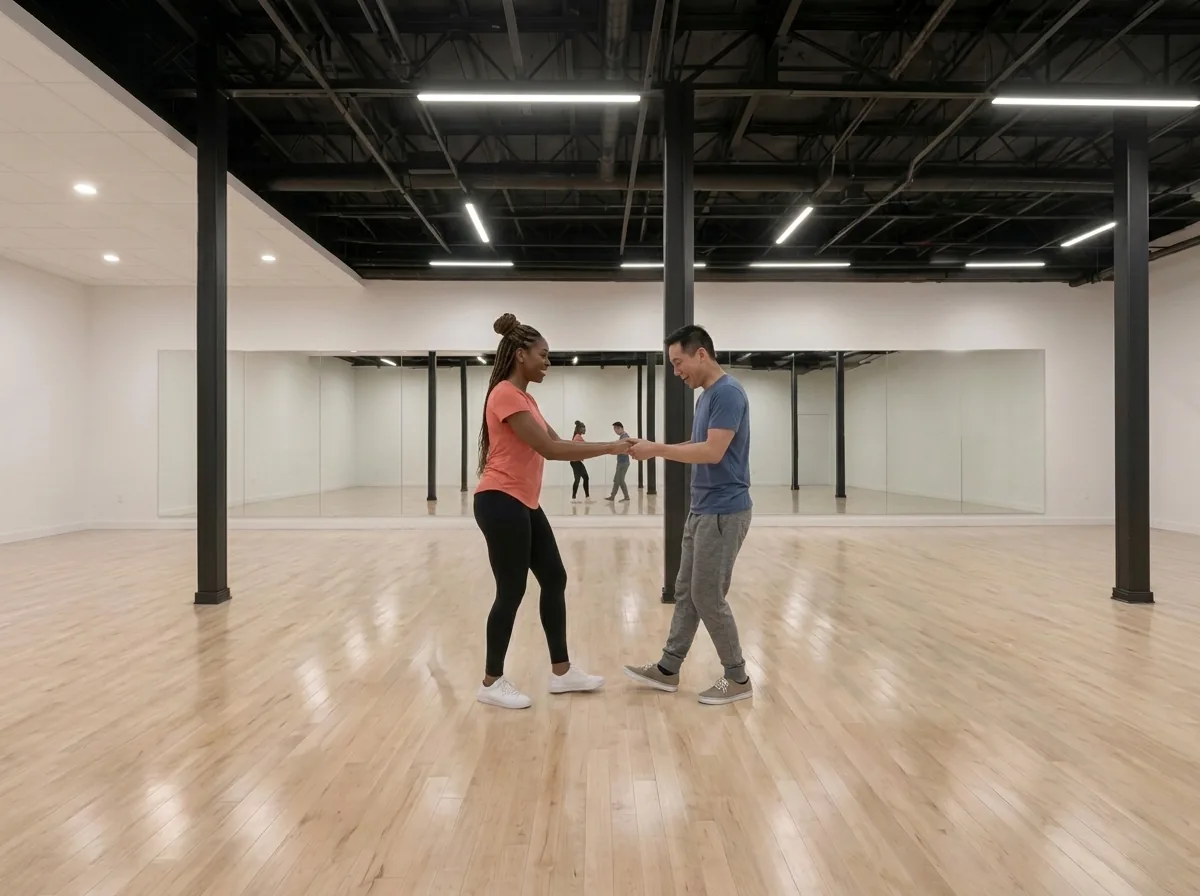
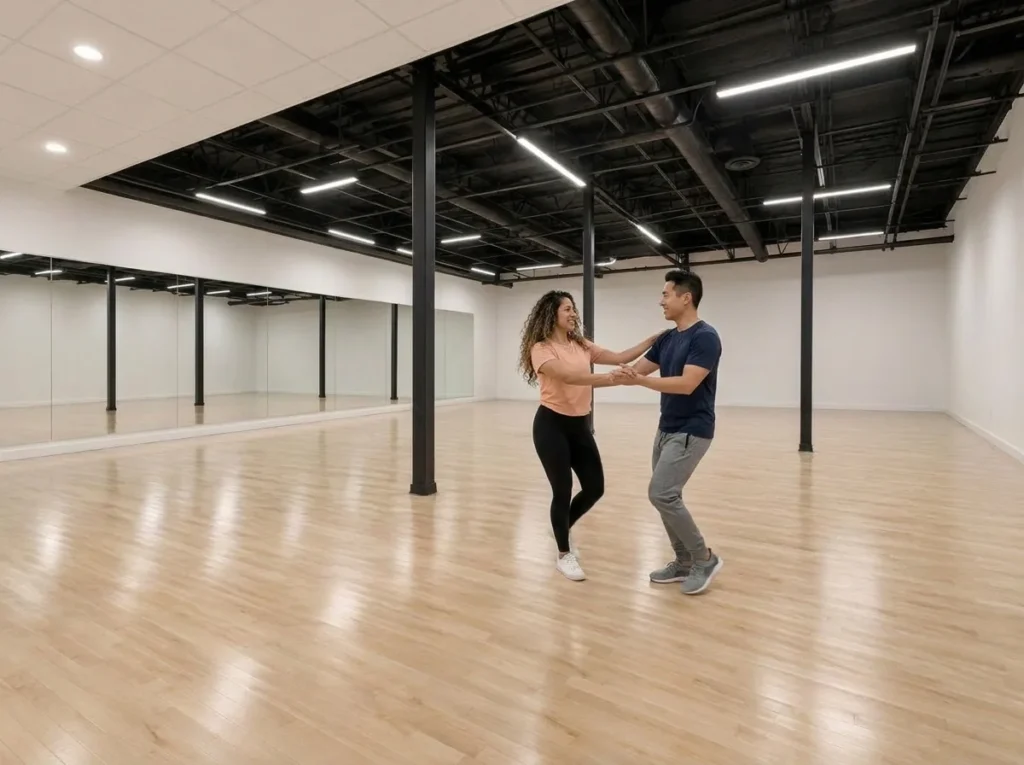
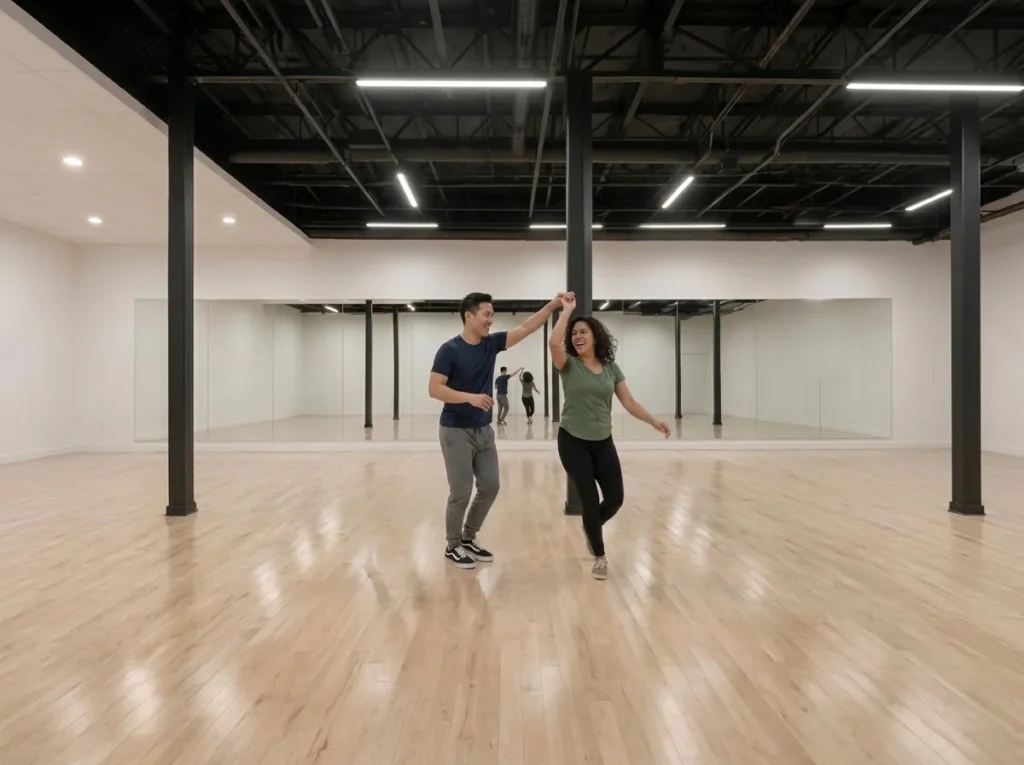
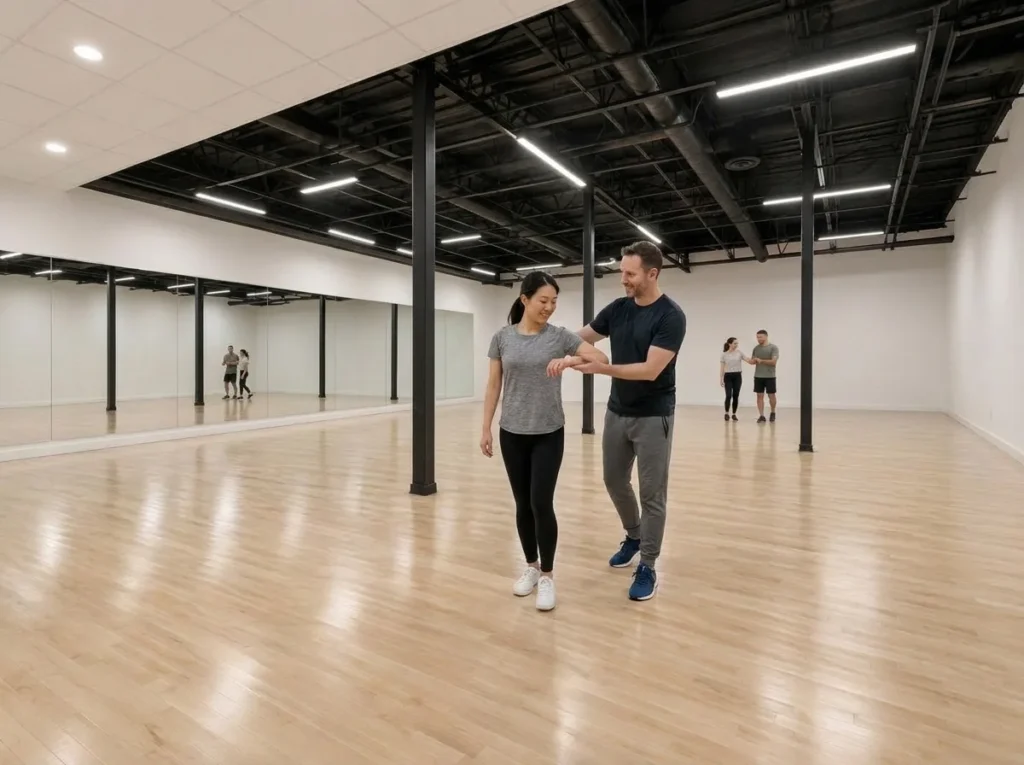
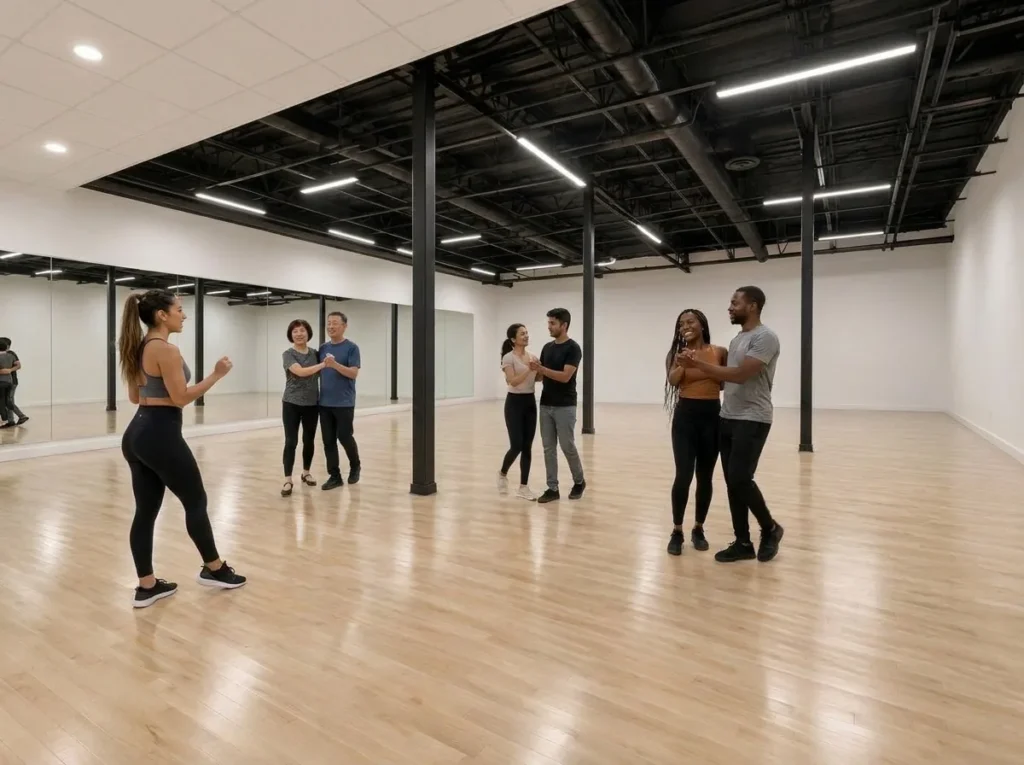
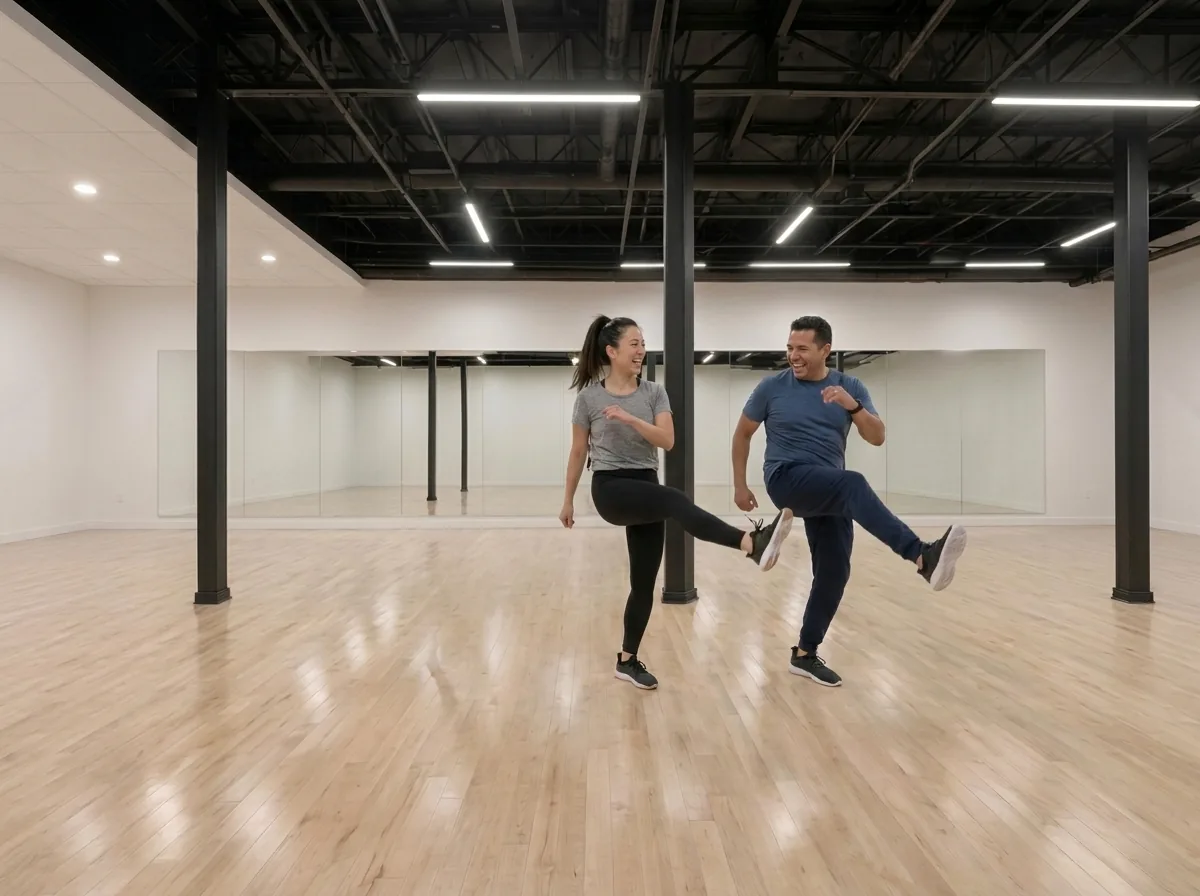
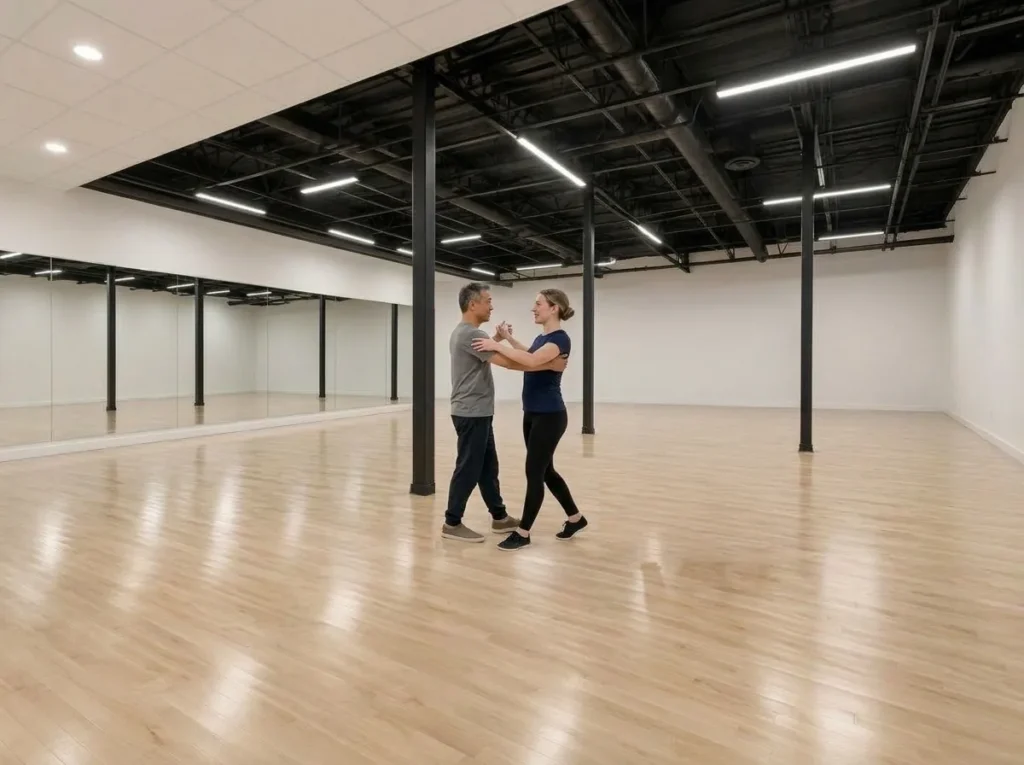
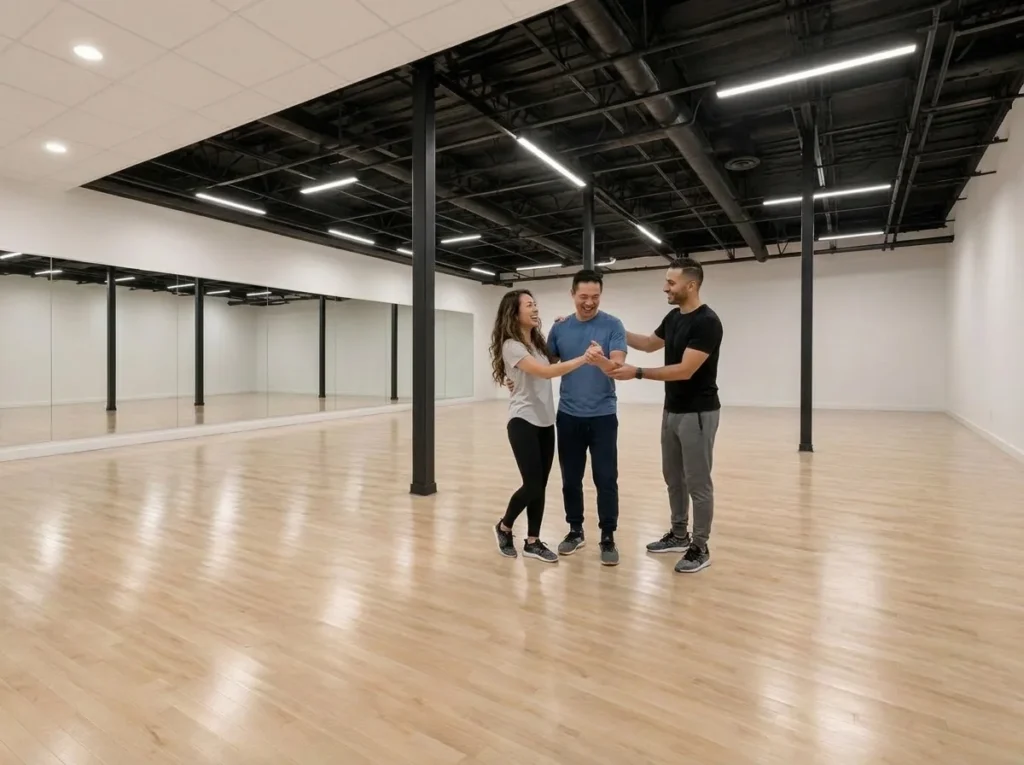
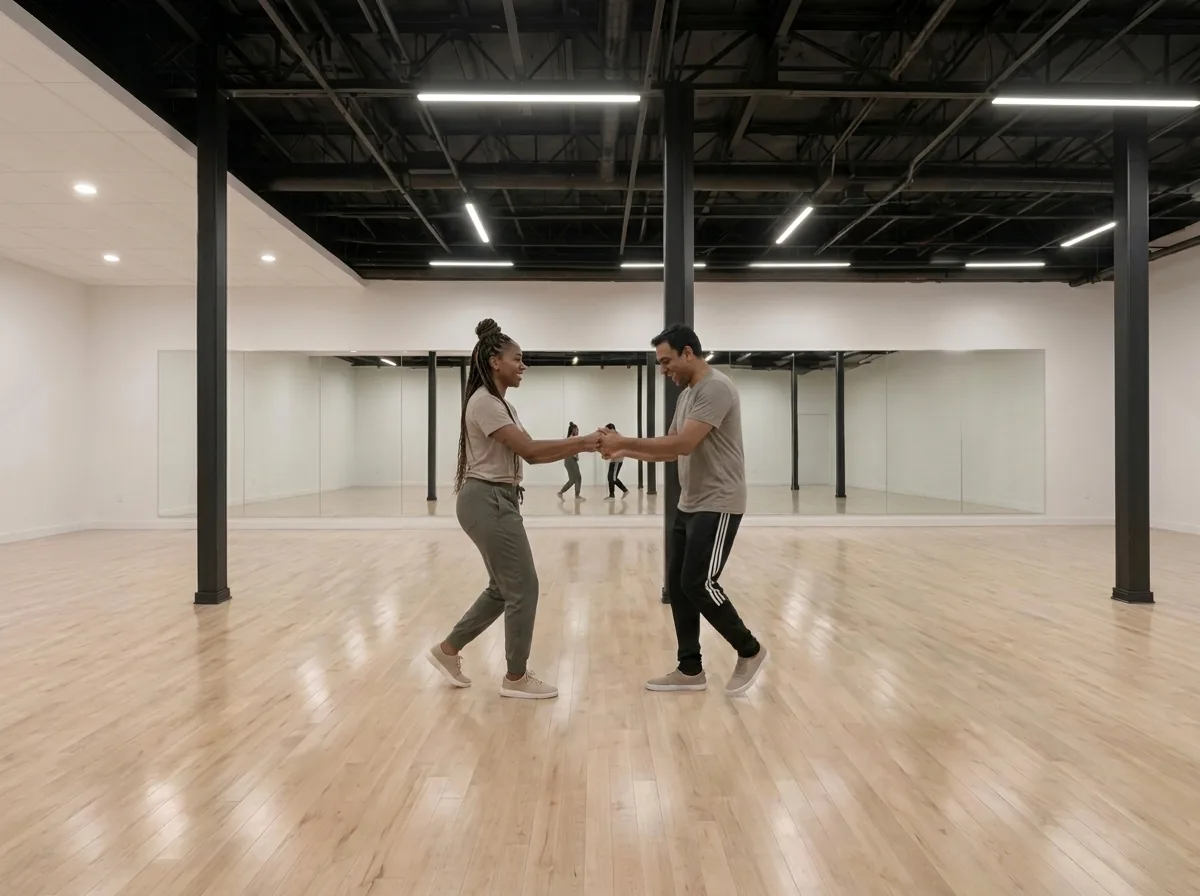
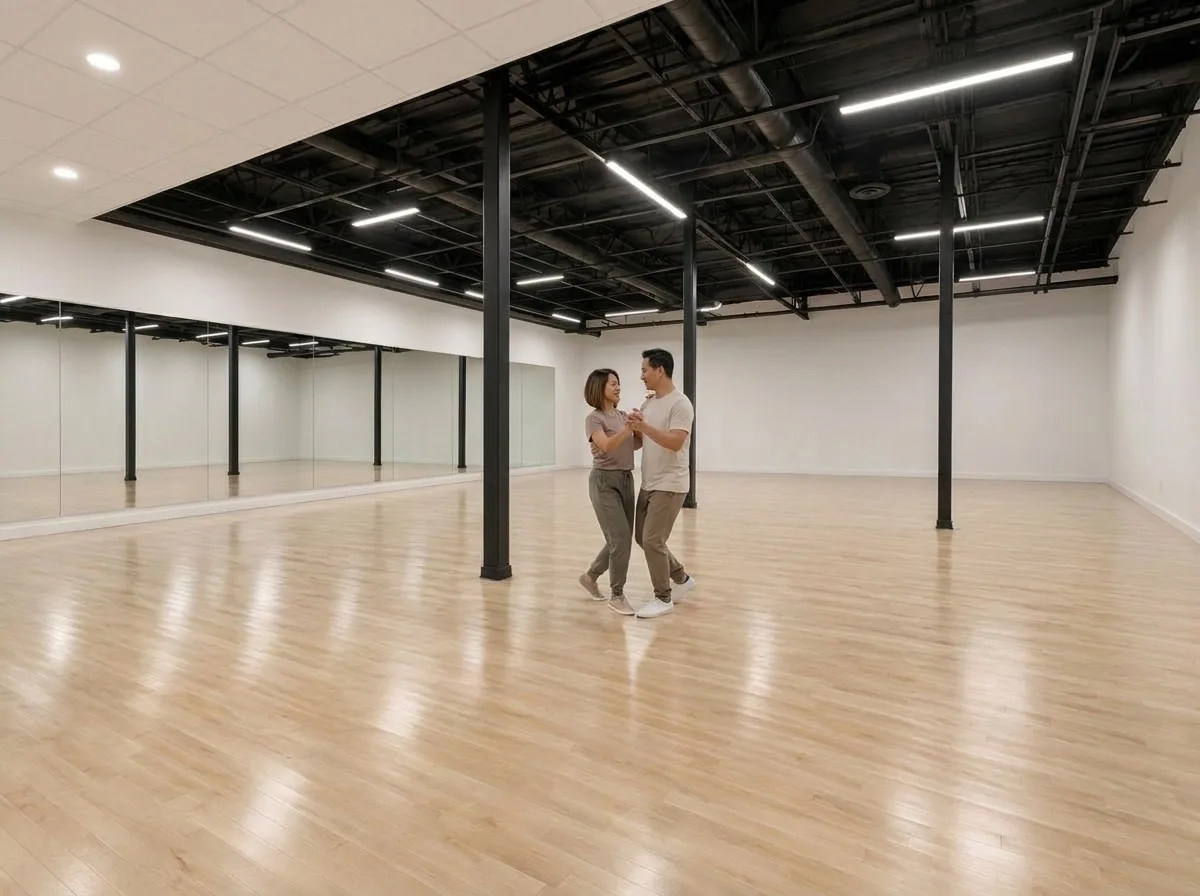
Jive is the fast, bouncy, feel-good dance of the Latin family, full of kicks, flicks, and big smiles. The jive dance lessons Alhambra students take at Fred Astaire Dance Studios start at an easy tempo and build speed only when your feet are ready, so the fun comes before the fast part.
Co-owner Jonathan Roberts is a former World and US Ballroom champion, 7 seasons on Dancing With the Stars.
Start with simple foundations.
Solo students and couples are welcome.
Personalized coaching at your pace.
Practice timing and confidence.
Kicks, flicks, and grins.
Jive takes the spirit of rock and roll and adds real technique. It is quick, playful, and packed with energy, which makes it one of the most fun dances to learn. Lessons start slower than you would expect and speed up only as each step becomes second nature.
Dance feel: fast, bouncy, electric.
Best for: high-energy dancers, rock and swing music fans, fitness seekers.
Lesson options: private, group, beginner.
Related categories: Latin.

Jive is the competitive Latin cousin of swing dancing. It uses quick triple steps, sharp kicks and flicks, and a light bounce, all danced to upbeat rock, swing, and boogie music. New students learn the basic triple step at a relaxed tempo first, then add turns and kicks once the rhythm feels natural.
01
Jive and East Coast Swing are family. Jive is the sharper, faster, more technical cousin.
02
Swing is the relaxed social version. Start with either. Many students do both.

Jive looks impossible and starts easy. The triple step begins at a friendly tempo, and the speed builds only as your feet are ready for it. Nobody is thrown into fast music on day one.
Jive gives couples pure fun with a workout hidden inside it. It is fast, it is silly in the best way, and it is impossible to dance without grinning at each other by the end.
Any upbeat band or playlist is Jive territory. Once the triple step and a couple of turns are automatic, you can hear a fast song come on and simply get up.
Jive makes a bold, upbeat first dance for couples who want to surprise their guests. For full choreography and planning, see our Wedding Dance and First Dance Lessons pages.
If your playlist leans fast and loud, Jive is where it belongs on a dance floor. The kicks and flicks were built for exactly this music, and the bounce sits right in the pocket of a backbeat.
Jive is one of the best workouts in the studio and never once feels like exercise. Constant motion, fast music, and no time to be bored mean the hour disappears and the sweat sneaks up on you.
Jive lessons are about more than memorizing steps. You will learn how to hear the timing, move with balance, connect with a partner, and feel more natural on the dance floor.

The springy lift that lives under every Jive step. Get the bounce and the speed follows. Force the speed and the bounce disappears.
The quick three-count footwork that defines the dance. Learned slowly first, then sped up only when your feet stop thinking about it.
The sharp leg action that makes Jive look like Jive. Small, precise, and far more about timing than height.
The moves that connect figures and send your partner spinning. Where the dance starts to feel fast even at a slow tempo.
Knowing when to push and when to hold. Jive is not about going as fast as possible, it is about matching the song.
The physical conversation that lets two people move together without talking. Learned from both sides, so you understand what your partner feels.
Jive rewards precision over power. Landing each kick and flick exactly on the beat is what makes fast music look easy.
Jive is a sprint. Your legs and lungs build the endurance over a few lessons, and the fast songs stop feeling long.
Hearing the accents in fast rock and swing, and putting your kicks where the music wants them. It turns steps into dancing.
The quiet result of the other nine. Knowing your feet will show up means you can relax and enjoy the music.

Best for: Personalized coaching, couples, beginners, technique-focused students
Private Jive lessons give you focused attention and a lesson path shaped around your goals, pace, comfort level, and preferred use case.

Best for: First-time students and anyone who wants a low-pressure start
Beginner lessons can introduce Jive timing, basic steps, posture, and partner connection without assuming previous experience.

Best for: Partners who want to learn together
Couples can use Jive to build connection, coordination, and a fun, energetic way to move together.

Best for: Practice, repetition, confidence, and social comfort
Group classes can help you reinforce timing and movement in a supportive studio environment.
You do not need dance experience to begin. You do not need to know the music, the steps, or the difference between Jive and other Latin styles before your first lesson. Your instructor can start with your goals and help you learn simple foundations at a comfortable pace.
What to know before you come in:

Tell us what you want Jive for: social dancing, a partner activity, cardio, or just the fun of it.
Start with a few simple foundations so you can feel how Jive works.
Build timing, posture, frame, footwork, and partner connection at your pace.
As your comfort grows, add turns, movement, musicality, and confidence for real dance settings.
Fred Astaire Dance Studios, Alhambra is a friendly place to learn Jive, whether you are brand new or adding a new Latin style. We are at 2121 Orange Street, Unit C, Alhambra, CA 91803, with students coming from San Gabriel, Monterey Park, San Marino, and Pasadena. We are open Monday to Friday, 12pm to 9pm, and closed on weekends. Call (626) 342-7909 or visit the contact page to plan your first lesson.

Students often appreciate a Jive lesson experience that feels clear, patient, welcoming, and personal. The right lesson should help you feel more comfortable with the music, your timing, your partner, and the next step.
Yes. Jive is taught in private lessons, beginner lessons, and group classes at Fred Astaire Dance Studios, Alhambra. Most people begin with an intro lesson, where an instructor sees how you move and picks a comfortable tempo to start. From there you can book private lessons, join a group class, or mix both. The studio is on Orange Street in Alhambra, open Monday to Friday.
No. Lessons start at a comfortable tempo and build speed only as the triple step becomes automatic. Nobody is dropped into fast rock and roll on the first day. The bounce and the footwork are taught slowly, and the music speeds up when your feet are ready for it. Most beginners are surprised how quickly a friendly tempo starts to feel too slow.
Same family, different intensity. East Coast Swing is relaxed, bouncy, and social. Jive is faster, sharper, and more technical, with cleaner kicks and flicks. They share roots and much of the footwork, which is why students who learn one pick up the other quickly. Each has its own page here, and many people end up doing both because the same fast songs suit either dance.

No. Instructors partner with solo students, and group classes rotate partners so everyone gets plenty of practice. Couples are welcome to learn together and are never separated if they would rather not be. Plenty of people walk in alone for a first Jive lesson. You will not be the only one, and nobody is asked to perform in front of the room.
Yes. Fast music, constant motion, and no time to be bored. Jive keeps you moving for the whole song, and the kicks and bounce work your legs without feeling like a workout. It is a fun option for anyone who finds the treadmill dull. The music carries you, and the sweat arrives before you have thought about effort once.
Breathable clothing and secure, smooth-soled shoes you can kick in. Leather or suede soles let you pivot. Sneakers grip the floor and can catch a kick, so bring an alternative if you have one. Jive runs warm and fast, so dress lighter than you think you need to. There is no dress code and no need to buy dance shoes before your first lesson.
Fast songs deserve fast feet. Book your intro lesson and start kicking.
No experience required. No partner required. Start with your goals and comfort level.