

Argentine Tango is known for improvisation, close connection, and expressive footwork, while Ballroom Tango features sharper movements, dramatic poses, and a more structured approach. Both styles can be exciting to learn.
The best choice depends on your goals, personality, and musical preferences. Some prefer the intimate, improvisational nature of the Argentine version, while others favor the precision and theatrical energy of the Ballroom version.
Let’s take a look at the main differences between these styles.
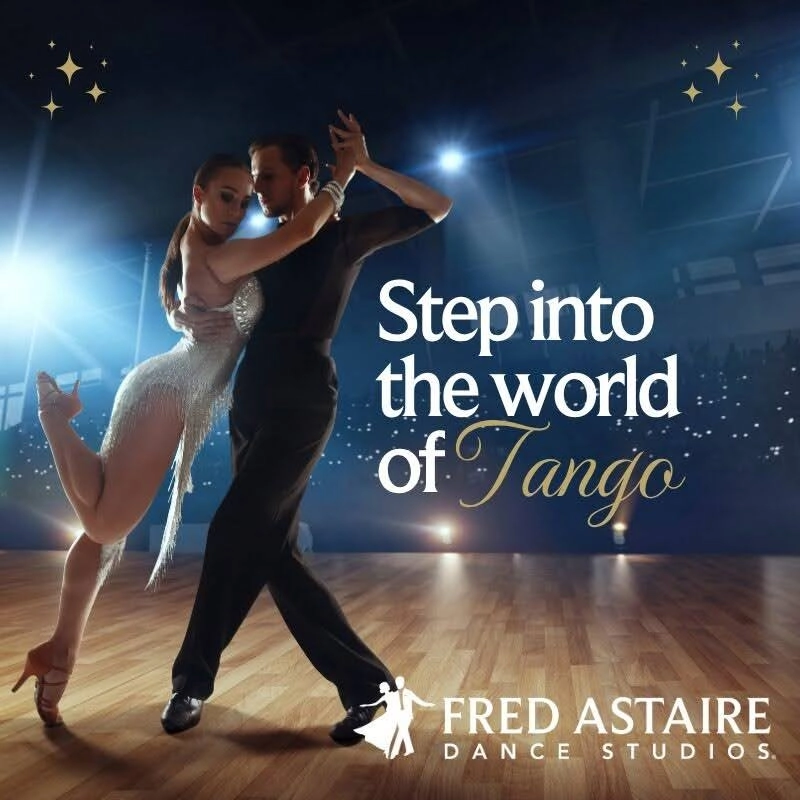
Argentine Tango vs. Ballroom Tango: Origins, Steps, and Partner Connection
The Origins
Argentine Tango
Argentine Tango began in the late 1800s in Buenos Aires and Montevideo. It was shaped by European, African, and local music and grew in neighborhoods where many cultures mixed, giving it unique rhythms and an expressive style.
Over the years, it became famous for its improvisation, musical feel, and the close connection between partners. Today, people enjoy it at social dances called “milongas”, where everyone brings their own style.
Ballroom Tango
This style emerged as Tango spread to Europe and North America in the early 20th century. Dance instructors adapted it into a more standardized form, emphasizing recognizable figures, precise timing, and dramatic movement.
International Ballroom Tango is now one of the five main dances in the International Standard group, along with the Waltz, Viennese Waltz, Foxtrot, and Quickstep. The American version also developed its own special features.
Improvisation vs. Structured Patterns
Argentine Style: A Conversation Through Movement
This style relies heavily on improvisation. Dancers start by learning basic steps, walking patterns, turns, and pauses. They then blend these with the music and their partner’s movements.
The leader uses small changes in body position and weight to guide the dance, and the follower responds to these signals. Rather than following a set routine, both partners build the dance together as they go.
Dancers can slow down, pause, or change direction to fit the music. This makes the Argentine version great for people who like creativity and personal expression.
Still, improvisation needs balance, musical awareness, and clear communication.
Ballroom Style: Precision and Figures
It uses familiar figures and patterns. Beginners practice combinations like walks, turns, sharp direction changes, and dramatic stops.
This approach gives clear steps and helps you see your progress. You can learn one figure at a time and then connect them, which builds confidence and steady technique.
Even with its structure, social dancers can still combine figures creatively and show their own technique as they interpret the music.
Posture and Partner Connection
Argentine Connection
In this style, partners usually dance in a close, chest-to-chest embrace, but sometimes use an open embrace too. The connection is flexible, so dancers can communicate through small body movements and weight shifting.
For beginners, the priority is maintaining balance and moving comfortably with your partner. Even walking together can feel expressive when you both listen to the music and respond to each other.
Ballroom Tango Connection
This style uses a more defined dance frame, especially in International Tango. Partners keep their upper bodies coordinated, which helps with clear leading, following, and changing direction.
Posture is usually more dramatic than in the Waltz or Foxtrot, giving the dance its sharp, intense look. In the American version, there’s more variety in how you hold your partner, and some moves let you separate from each other.
If you like clear technical goals, this style gives you chances to work on posture, coordination, and control while staying relaxed.
Argentine Tango vs. Ballroom Tango: Basic Steps
Argentine Tango Basic Steps
The eight-count basic (salida básica) is a common beginner exercise. The Argentine style is improvisational, so dancers don’t have to follow this sequence in every social dance.
| Steps | Leader |
| 1 | Step backward with the right foot |
| 2 | Step to the side with the left foot |
| 3 | Step forward with the right foot |
| 4 | Step forward with the left foot |
| 5 | Close the right foot to the left, transferring weight |
| 6 | Step forward with the left foot |
| 7 | Step to the side with the right foot |
| 8 | Close the left foot to the right |
Note: This is a simplified version of the basic sequence. Feet placement and weight transfers can vary by teaching method.
The follower mirrors the leader’s movements using the opposite foot and direction, except in Step 5, where the follower crosses the left foot in front of the right.
Ballroom Tango Basic Steps
The basics follow a Slow, Slow, Quick, Quick, Slow rhythm. The movements should remain grounded, level, and sharp, following a 4/4 rhythm at approximately 120–132 beats per minute. Dancers also travel counterclockwise around the dance floor.
The table below shows the basic pattern of American Tango, which many beginners learn first for social dancing. In International Tango, beginners usually start with walks, the Progressive Side Step and the Progressive Link, which use a similar slow and quick rhythm.
| Count | Timing | Leader | Follower |
| 1-2 | Slow | Step forward with the left foot | Step backward with the right foot |
| 3-4 | Slow | Step forward with the right foot | Step backward with the left foot |
| 5 | Quick | Step forward with the left foot | Step backward with the right foot |
| 6 | Quick | Step side and slightly forward with the right foot | Step side with the left foot |
| 7-8 | Slow | Draw the left foot closed to the right, without changing weight | Draw the right foot closed to the left, without changing weight |
Which Style Is Easier for Beginners?
No single style is universally easier. It depends on your learning style and what you want to get out of dancing.
If you are hesitating between these two styles, we recommend starting with Ballroom Tango dance classes in a dance studio in Peoria, AZ. This style offers a structured approach to learning, with recognizable steps, clear timing, and a progression from simple figures to more advanced combinations.
If you begin your dance journey at Fred Astaire Dance Studios – Peoria, our instructors can teach you American or International Tango, depending on your goals. In American Tango, you’ll start with the basic pattern shown above. In International Tango, you’ll begin with the basic walks, the Progressive Side Step and the Progressive Link. Either way, each figure has specific footwork and timing, so you can master one movement at a time before we combine several into a short sequence.
This structure makes it easy to track your progress and helps us identify specific skills that may need further improvement.
Argentine style focuses more on improvisation. You can start with simple walking steps, but building the balance, awareness, and improvisation skills needed for social dancing takes time and practice.
Learn Tango Near Phoenix at Fred Astaire Dance Studios – Peoria
Ready to find out which style suits you best? At Fred Astaire Dance Studios – Peoria, you can learn the fundamentals of both dances with professional guidance in a welcoming environment.
For more highlights from our studio, follow us on Facebook, Instagram, and X.