

Begin by getting used to a simple rhythm and basic footwork while moving together with your partner. This country-western style has easy steps and a lively beat, so it’s perfect for beginners.
With a little practice, you can pick up the basic pattern and feel confident dancing to your favorite country songs.
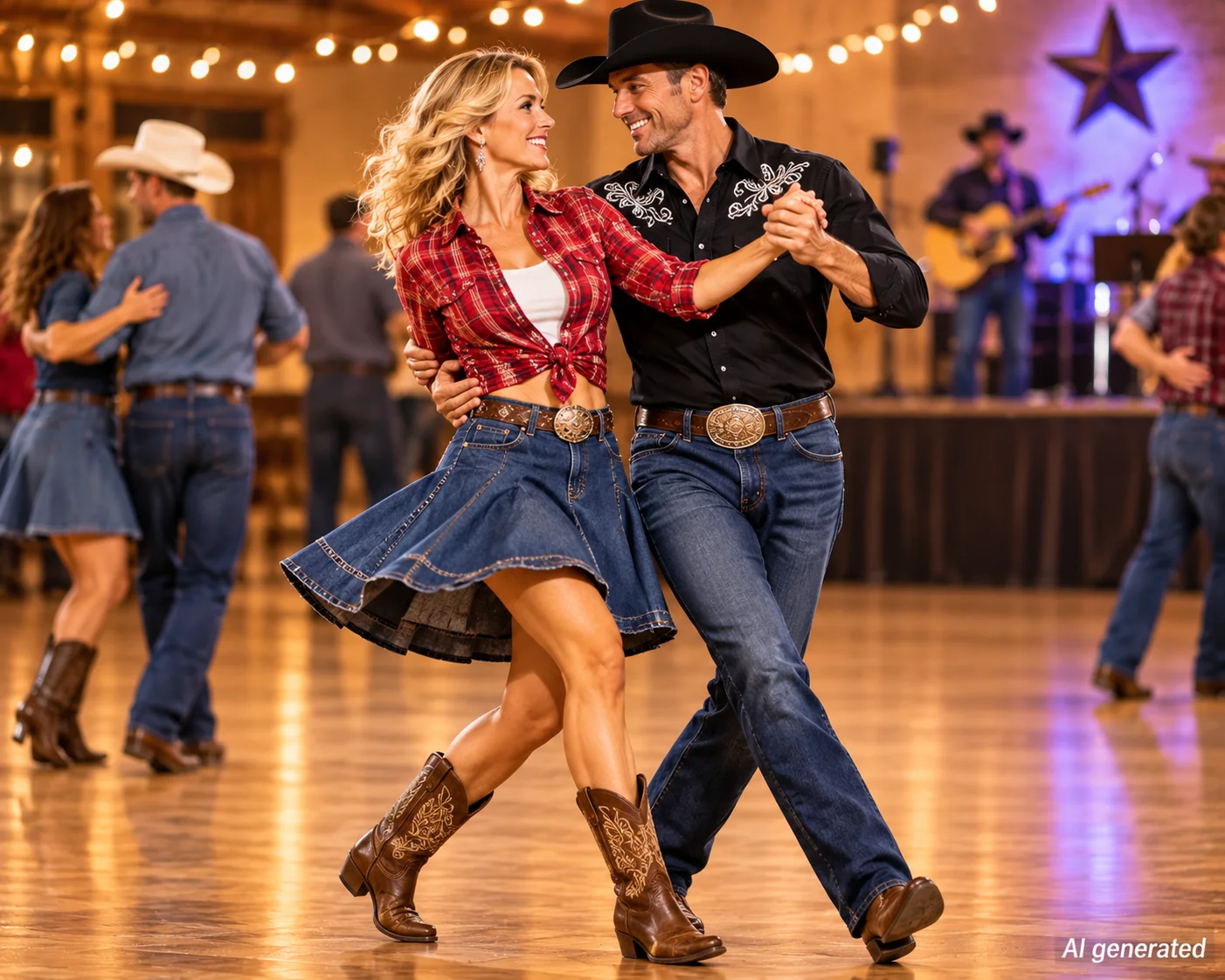
What Is Two-Step?
The Two-Step is a partner dance you’ll see in just about any country bar. Couples move around the floor together. The leader steps forward and the follower steps back, using a simple pattern of two quick steps and two slow ones.
It grew out of the American West, where people from all kinds of backgrounds brought their own dances with them. Over time, those dances mixed together and picked up a Western feel. That’s why the Two-Step looks a bit more relaxed than ballroom dances like the Waltz. Partners often hold each other more loosely, and the steps feel more grounded, which many people link to dancing in boots.
How to Two-Step: Understand the Basic Rhythm
This style has a straightforward, easy-to-recognize rhythm: quick, quick, slow, slow. Each quick move takes one beat, while each slow move takes two beats, creating a six-beat pattern that allows you to move smoothly across the dance floor.
The secret is to avoid rushing. Often, beginners can focus so much on their feet that they lose track of the music. Instead, we advise focusing on the rhythm first before trying the steps with a partner. Once you can go through the pattern on your own and build coordination, add your partner’s movements.
Basic Steps for Beginners
When you’re starting, you’ll use four walking steps. The leader moves forward while the follower moves backward. Let’s walk through a simple example so you can see how you and your partner work together.
| Count | Leader’s Footwork | Follower’s Footwork |
| 1 | Step forward with the left foot | Step backward with the right foot |
| 2 | Step forward with the right foot | Step backward with the left foot |
| 3-4 | Step forward with the left foot, taking two beats | Step backward with the right foot, taking two beats |
| 5-6 | Step forward with the right foot, taking two beats | Step backward with the left foot, taking two beats |
This breakdown shows you how the basics work, both in movement and timing. Here are some helpful tips to make practice easier and more enjoyable:
- Keep your posture upright, relax your knees, and balance your weight over your feet.
- Begin with small steps instead of big ones.
- Count the rhythm out loud as you go. This helps you stay on track.
- Practice the pattern until the timing feels natural
Don’t worry if you lose the rhythm while learning. Your instructor will offer tips on how to recover and keep dancing with confidence.
How Long Does It Take to Learn?
Most beginners master the basic pattern in just a few lessons. The real key is regular practice, which helps you dance with confidence and ease.
One of the best things about this style is its straightforward pattern, especially compared to other western dances that have more complex steps.
Your progress depends on how often you practice, how dedicated you are, and whether you attend dance lessons. Personal instruction can help a lot. If you choose Fred Astaire Dance Studios – Peoria, our team will provide a personalized approach to dancing.
They’ll demonstrate the steps in a way that makes sense to you, and you can repeat the moves that seem tricky. Also, you’ll be able to ask direct questions and immediately receive answers to anything that is unclear to you.
You are also welcome to come with your partner if you have common goals. Couple country dance lessons can help you build confidence faster and make practicing together more enjoyable.
Common Two-Step Mistakes Beginners Should Avoid
Although mastering the basics is relatively easy, several common mistakes can throw your steps out of sync with the music. Here are some of the most important:
Taking steps that are too big. Many beginners exaggerate their movements, which makes it hard to balance and transition between steps. Keep your steps small and comfortable; let your feet do the work smoothly underneath you.
Rushing the quick-quick, slow-slow rhythm. This style depends on consistent timing, so avoid treating every step as equally fast. Practice counting the rhythm out loud until you start to distinguish fast movements from slow ones.
Staring at the floor. It might seem helpful at first to watch your feet, but this habit can be hard to break. Try to keep your head up and your shoulders relaxed instead.
Learning too many patterns at once. The golden rule is to focus on the basics. Work on your leg movements, your frame, and your connection with your partner. Once these feel comfortable, you can start adding turns, variations, and more advanced moves.
What’s the Difference Between Two-Step and West Coast Swing?
Many beginners mix them up, since both are popular at country dance nights. But their rhythms and movement styles differ.
Two-Step uses a steady quick-quick-slow-slow rhythm, with partners moving around the dance floor in smooth walking steps and turns.
West Coast Swing has a more flexible rhythm, with syncopated steps, pauses, and changes in timing. Instead of moving around the whole floor, partners dance along an imaginary line called a slot.
If you are new to country dancing, learning the Two-Step can be a good starting point. Once you become more comfortable with rhythm and partner connection, dance lessons can introduce you to another style and expand your options on the dance floor.
Learn How to Two-Step at Fred Astaire Dance Studios – Peoria, AZ
The Two-Step isn’t just about quick and slow steps. It’s a fun way to experience country music. Once you get the rhythm and basic moves down, you’ll feel at ease joining country nights, social gatherings, and celebrations.
At Fred Astaire Dance Studios – Peoria, we’ll guide you through the basics, help you build coordination, and let you try new moves at your own pace.
Ready to get started? Book your introductory lesson today, or give us a call at 623-288-9898 if you have any questions.