

The best way to start beginner ballroom dance lessons in NYC is to begin with the foundations: posture, timing, footwork, rhythm, weight transfer, and partner connection. Before learning complex turns or full routines, beginners should understand how to move to the rhythm and how to feel comfortable dancing with another person.
Here are 5 tips to help beginners start ballroom lessons in New York with more confidence.
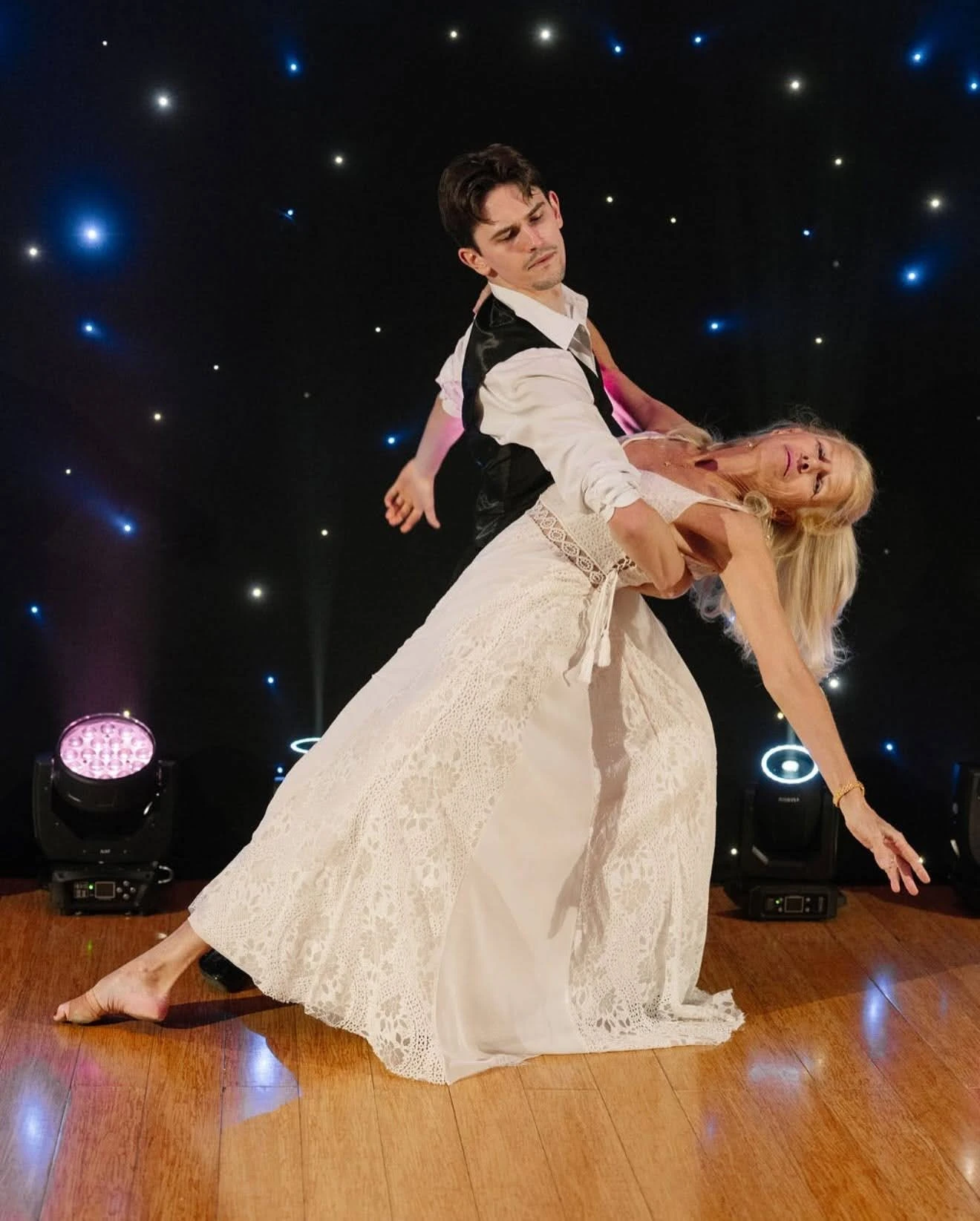
1. Choose a Ballroom Style That Matches Your Goal
One of the first things to know about ballroom dancing is that there isn’t just one style.
Ballroom includes several types of dances, and each one has a different feeling. Some are smooth and elegant. Some are dramatic. Some are playful and social.
- Foxtrot is often a good starting point for social dancing because it is smooth, practical, and works with many types of music.
- Waltz is graceful and flowing, making it helpful for posture, balance, and movement across the floor.
- Tango is more dramatic and structured, with strong movement and clear direction.
- Viennese Waltz is faster and more continuous, usually better after you have some foundation.
- Quickstep is upbeat and lively, with more energy and faster footwork.
For many people searching for ballroom dance for beginners, the best starting point isn’t the most impressive-looking style. If you want to feel comfortable at weddings, galas, or social events, Foxtrot or Waltz may be a good place to begin. If you like something more dramatic, you should consider Tango.
2. Learn Fundamentals Properly
It can be tempting to want turns, dips, spins, or a full routine right away. But ballroom becomes much easier when the fundamentals are learned properly.
The basics aren’t boring. They are what make you look more confident and feel more comfortable.
In our beginner ballroom lessons in NYC, you will usually work on:
Posture
Good posture helps you feel balanced, move more smoothly, and connect better with a partner.
Frame
Frame is the way you hold your body and arms in partner dancing. It helps both dancers move together.
Footwork
Your feet create the structure of the dance. You’ll learn where to step and how to place your weight.
Timing and rhythm
Ballroom dancing is not just about steps. You need to understand how the steps match the music. We’ll teach you how to hear and respond to music.
Lead and follow
In partner dancing, communication happens through movement. You learn how to give or receive signals clearly without pulling, pushing, or overthinking.
For adults who want to learn ballroom dancing, starting with these fundamentals is important because it gives you a base you can use across other styles.
3. Choose a Beginner-Friendly Dance Studio
Not every class is designed for complete beginners. Some classes move quickly, especially in a city like New York, where dance options are everywhere.
But a good beginner ballroom instructor should be able to explain movement clearly, repeat steps when needed, and adjust the lesson to your pace. You should feel comfortable asking questions. You shouldn’t feel embarrassed for needing more time with the basics.
At our Union Square studio, we see students who have tried lessons somewhere else and felt overwhelmed because they were expected to keep up too quickly.
If you want to know where to find private dance instructors in NYC, you can meet our instructors and learn more about their experience before getting started.
Here is what one student shared about starting their ballroom journey with our Union Square team:
“From my experience, the owners, Artur and Svitlana, are the most welcoming, encouraging, and fantastic people you could ask for when beginning your ballroom dance journey. You will feel supported every step of the way. If you’re thinking about starting dance lessons, I can’t recommend the Fred Astaire Union Square studio enough!”
- E S
4. Don’t Wait Until You Have a Partner
One of the biggest misconceptions about dancing is that you need to bring a partner. You don’t need a partner.
If you come solo to our Union Square studio, your instructor will be your partner during the lesson and help you understand the basics before you practice with others. This is helpful because you can get immediate corrections on posture, timing, balance, and footwork.
If you come with a partner, the lesson can be built around both of you. This works well for couples, wedding preparation, date nights, or anyone who wants a fun date night.
5. Practice Consistently
Many beginners think they need to practice for hours or remember every detail from class. That can quickly become overwhelming. Instead, focus on one or two simple things between lessons.
You can practice:
- Posture
- Counting the music
- Repeating the basic step
- Shifting your weight
Even a few minutes of focused practice can help your body remember what you learned.
The key is consistency. Dancing becomes easier when the movement starts to feel familiar, and that usually happens when each lesson builds on what you learned before.
That is our approach at Fred Astaire Dance Studios – Union Square. We structure beginner lessons so that each lesson connects to the next. This is a proven method that helps you build posture, timing, footwork, confidence, and partner connection.
Why Ballroom Dancing Is a Great Choice for Adults
It can help improve posture, coordination, balance, rhythm, confidence, and social comfort, while also giving you a fun way to stay active and mentally engaged. Many adults also enjoy the fact that it combines movement, music, and connection, which can help reduce stress and make each lesson feel rewarding.
For adults wanting to learn ballroom dancing, the benefit is that it can grow with you. You can start with a simple social goal and later explore more styles, techniques, performance, or even competition if that becomes interesting.
These are just some of the benefits of dance that make dancing a great choice for adults who want to stay active, build confidence, and enjoy learning something new.
Ballroom vs. Latin Dancing
Ballroom styles, such as Foxtrot, Waltz, Tango, Viennese Waltz, and Quickstep, often feel more structured and elegant. They are great for posture, smooth movement, and formal social dancing.
Latin styles, such as Salsa, Cha-Cha, Rumba, Mambo, Merengue, and Bachata, usually feel more rhythmic, expressive, and energetic. They are a great option if you enjoy upbeat music or prefer a style that you can use almost in any social setting.
Neither option is better for everyone. The right choice depends on your music taste, personality, and goals. Some students start with ballroom because they want structure, while others start with Latin because they connect with the rhythm and energy. Many students eventually enjoy learning both because each style teaches something different.
Start Beginner Ballroom Dance Lessons in Union Square, NYC
At Fred Astaire Dance Studios – Union Square, we use the first lesson to get to know you, introduce a few beginner-friendly movements, and help you see what feels most natural.
That may be Foxtrot, Waltz, Tango, or another style. This first session gives you a clear starting point instead of leaving you to guess which class or level is right for you.
Start with our introductory dance lesson and take the first step toward feeling more comfortable dancing.