

To learn how to move your hips in Latin dance, start with weight changes and coordinated foot and leg action. The hip movement follows the way your body uses those actions. Trying to create a large sway before understanding your steps can make the movement harder to control.
You don’t need dramatic styling to begin. Start small, notice which foot supports you, and keep the timing clear. The action takes different forms across dances, so your instructor’s explanation should match the style you’re learning.
What Is Cuban Motion?
Cuban motion is coordinated hip and pelvic action linked to weight transfer and foot articulation. It includes more than a sideways sway. The pelvis, the bony structure around your hips, also rotates as part of the movement.
Foot articulation means how you use the different parts of your foot as you move. That connection gives beginners a useful place to focus before adding more styling.
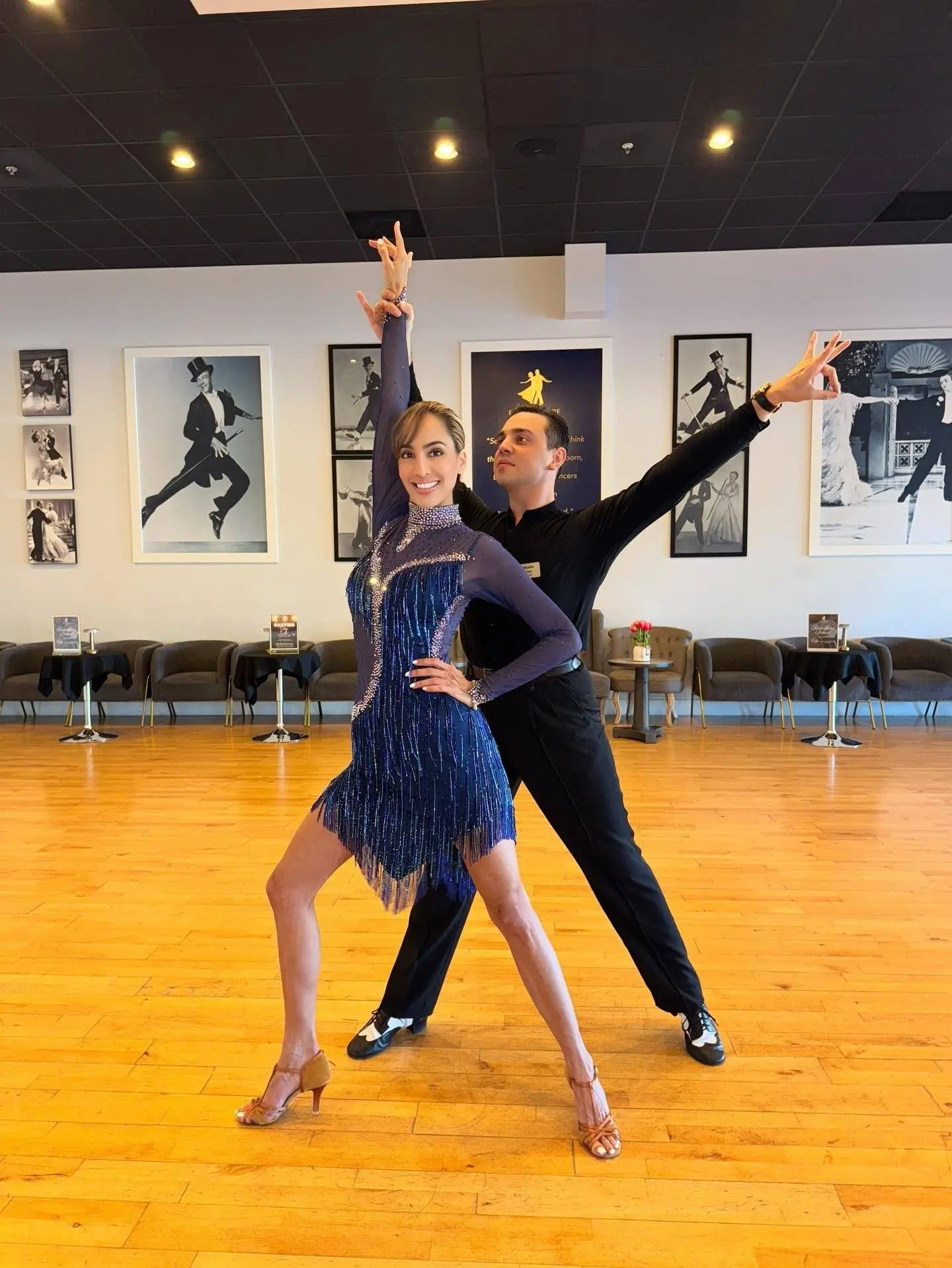
How Your Feet, Knees, and Hips Work Together
Weight transfer means moving your body weight from one supporting foot to the other. Placing a foot on the floor doesn’t always complete that transfer. You need to know which leg is supporting you before taking the next step.
As your legs bend and straighten within the dance technique, the position of your pelvis changes too. Your feet help control how you receive and move your weight. These actions work together rather than becoming three separate tasks.
Why Bigger Hip Movements Aren’t the Starting Goal
Begin with balance and clear weight changes rather than the size of the movement. A larger hip action doesn’t show that you’ve completed a step correctly. It can hide uncertainty about where your weight belongs.
If you’re learning how to move your hips in Latin dance, notice whether you can repeat a small action with control. You can build on that with your instructor. Copying the shape of an advanced dancer’s hips won’t explain everything happening through their feet and legs.
Moving Your Hips Step by Step
Begin with a balanced stance, practice small weight changes, and coordinate your leg action before adding a dance pattern. The following exercise introduces those parts.
Start With a Balanced Standing Position
Stand with your feet comfortably under you and your upper body upright without making it rigid. Keep your knees available to move rather than pushing them backward. Let your arms rest so you can focus on your feet and legs.
You don’t need to begin with turned-out feet or a posed hip position. A starting position should help you move into the next step.
Practice Small Weight Changes
Move your weight gradually toward one foot, then return toward the other. Keep the movement small enough that you can tell which leg supports you. Notice the difference between touching the floor with a foot and placing weight onto it.
Try this simple sequence:
- Stand with both feet on the floor.
- Move your weight toward the left foot without taking a large step.
- Notice that the right foot feels lighter.
- Transfer your weight toward the right foot.
- Repeat slowly, keeping track of the supporting side.
Add a Basic Step Before Increasing Speed
Apply the weight changes to a simple pattern once the exercise feels clear. A small side step or a familiar basic gives the movement a purpose. Then add the count and music at a pace you can follow.
When practicing how to move your hips in Latin dance, work on one change at a time. You might focus only on completing the transfer before moving the next foot. Adding turns and arm styling can wait until the basic task makes sense.
Moving Your Hips in Salsa and Rumba
Both Salsa and Rumba feature characteristic hip movements, but the way those movements develop differs between the two dances. In both styles, hip action comes primarily from controlled weight transfers and leg movement rather than deliberately swinging the hips from side to side.
In either dance, focus on proper footwork, balance, and timing before trying to increase the size of your hip movements.
Hip Movement in Salsa
In Salsa, hip movement is connected to the quick, rhythmic weight changes of the basic steps. As you transfer your weight from one foot to the other, your hips respond naturally to the movement of your legs and pelvis.
To practice how to move your hips in Salsa, start with small forward-and-back basic steps. Focus on transferring your weight completely onto each supporting foot while allowing your knees to bend and straighten naturally. Keep your upper body relatively stable and avoid forcing exaggerated hip swings.
Because Salsa is typically danced at a faster pace, hip action should feel fluid and rhythmic without interrupting your footwork. The exact movement and timing may vary depending on the Salsa style you’re learning.
Our Salsa lessons introduce the studio’s Mambo-based approach danced on the first beat.
Hip Movement in Rumba
Rumba places greater emphasis on controlled, expressive hip movement. Compared with Salsa, Rumba generally allows more time to develop each weight transfer, making the hip action more pronounced and easier to observe.
As you step and transfer your weight, the supporting leg straightens according to the technique of your Rumba style, allowing the pelvis to settle and rotate naturally. The movement should develop through the legs and hips rather than from pushing the pelvis sideways.
An American-style Rumba box step is a useful starting point. Practice transferring your weight during the forward, side, and closing steps, paying attention to which leg supports your body. As your coordination improves, you can gradually develop more continuous hip action.
Use this comparison when learning how to move your hips in Latin dance:
| Practice Context | Main Focus | Timing Consideration | Common Mistake |
|---|---|---|---|
| Beginner weight-transfer exercise | Identify the supporting foot | Start slowly without music | Moving the hips while leaving weight between the feet |
| Salsa basic | Coordinate weight changes within the pattern | Follow the count for your style | Taking steps too large to complete on time |
| American-style Rumba box | Connect weight transfer with bent-to-straight leg action | Keep the basic rhythm clear | Closing the feet without knowing which leg supports you |
Mistakes To Avoid When Learning Cuban Motion
Forced hip movement, unclear weight changes, oversized steps, and excessive speed can interrupt coordination. Reduce the task when you feel unsure.
Pushing the Hips Without Moving Your Weight
Return to the supporting foot when you’re moving your hips but losing track of your steps. Make the action smaller and check whether you’ve completed the transfer. Ask your instructor to watch that part before you repeat the whole pattern.
For example, you might sway sideways while both feet remain equally weighted. That isn’t the same task as arriving over one leg. A clear transfer gives the next foot room to move.
Adding Speed Before the Basic Action Feels Clear
Slow down when the count becomes hard to follow or the footwork changes with every attempt. Practice a short section, then reconnect it to the pattern. Choose one correction rather than trying to change your knees, arms, and hips at once.
Our guide to dance styles for beginners can help you compare starting options. Once you choose a style, let your instructor guide the technical details. Clear questions are more useful than repeated guesses.
Practice Latin Hip Action With an Instructor in West Palm Beach, FL
Develop your Latin dance technique and discover how natural hip movement can enhance your dancing at Fred Astaire Dance Studios – West Palm Beach. Our experienced instructors provide personalized guidance to help you improve your footwork, weight transfers, coordination, and overall confidence on the dance floor.
Whether you’re exploring Latin dance styles for the first time or looking to refine your existing skills, our lessons are designed to help you progress at your own pace.
Visit us at 1804 North Dixie Highway, Suite A, West Palm Beach, FL, and take the first step toward more confident, natural movement. Book an introductory lesson and experience the excitement of Latin dancing with our professional instructors.