

The Hustle dance is a disco partner dance known for smooth movement, turns, and rhythmic footwork. It grew in New York’s social dance scene and became closely linked with the disco era of the 1970s. Today, you can learn it for social dancing without copying a stage routine or dressing for a retro party.
If you picture a line of people doing the same steps, you’re thinking of a different format. The partner version uses a connection between two people to guide changes of direction and turns. Understanding that difference is a useful first step before learning the footwork.
Difference Between the Hustle Dance and a Line Dance
Partner Hustle uses lead and follow rather than one fixed group routine. The leader suggests movement through a clear connection, and the follower responds while maintaining their own balance. Both dancers keep track of the rhythm and their steps.
The name also appears in descriptions of disco line dances. Those routines have a set sequence that people perform together without a partner. You may recognize either form from parties or dance videos, but learning one doesn’t mean you’ve learned the other.
Dance historian Richard Powers discusses partnered, solo, and line dancing in his Stanford overview of 1970s disco dances. The variety explains why two videos labeled with the same name can look quite different.
| Feature | Partner Dance | Line Dance |
|---|---|---|
| Who you dance with | A partner | A group following the same routine |
| How movement develops | Through lead, follow, and learned patterns | Through a set sequence |
| Connection | Handholds and other partnered positions | Usually no partner connection |
| What beginners practice | Timing, weight changes, and working together | Remembering the order and timing of steps |
History of the Hustle Dance
The dance grew from New York’s social dance communities during the early 1970s, with important roots among Puerto Rican youth in the South Bronx. Its development included influences from Latin partner dancing and Swing. Different groups shaped the steps as the music and club scene changed.
From Bronx Parties to Disco Floors
The Bronx County Historical Society’s Latin Hustle exhibit traces the dance to Puerto Rican teenagers in the South Bronx around 1972. It describes how the form spread from local parties into larger clubs. Turns, arm leads, and new footwork became part of its development.
That history matters because this wasn’t simply a routine created for a hit song. It grew through dancers sharing and changing movement in their communities. The Hustle dance already had a social life before its best-known pop culture appearances.
The 1970s Made It Famous
Van McCoy’s 1975 recording “The Hustle” helped spread the name, while the broader disco boom brought more attention to club dancing. The 1977 film Saturday Night Fever became another major disco reference point. The dance itself predates the film.
Its familiar turns and partner exchanges are still useful ways to recognize it. You don’t need to recreate a movie scene to take part. A beginner lesson can focus on a few clear patterns rather than dramatic dips or tricks.
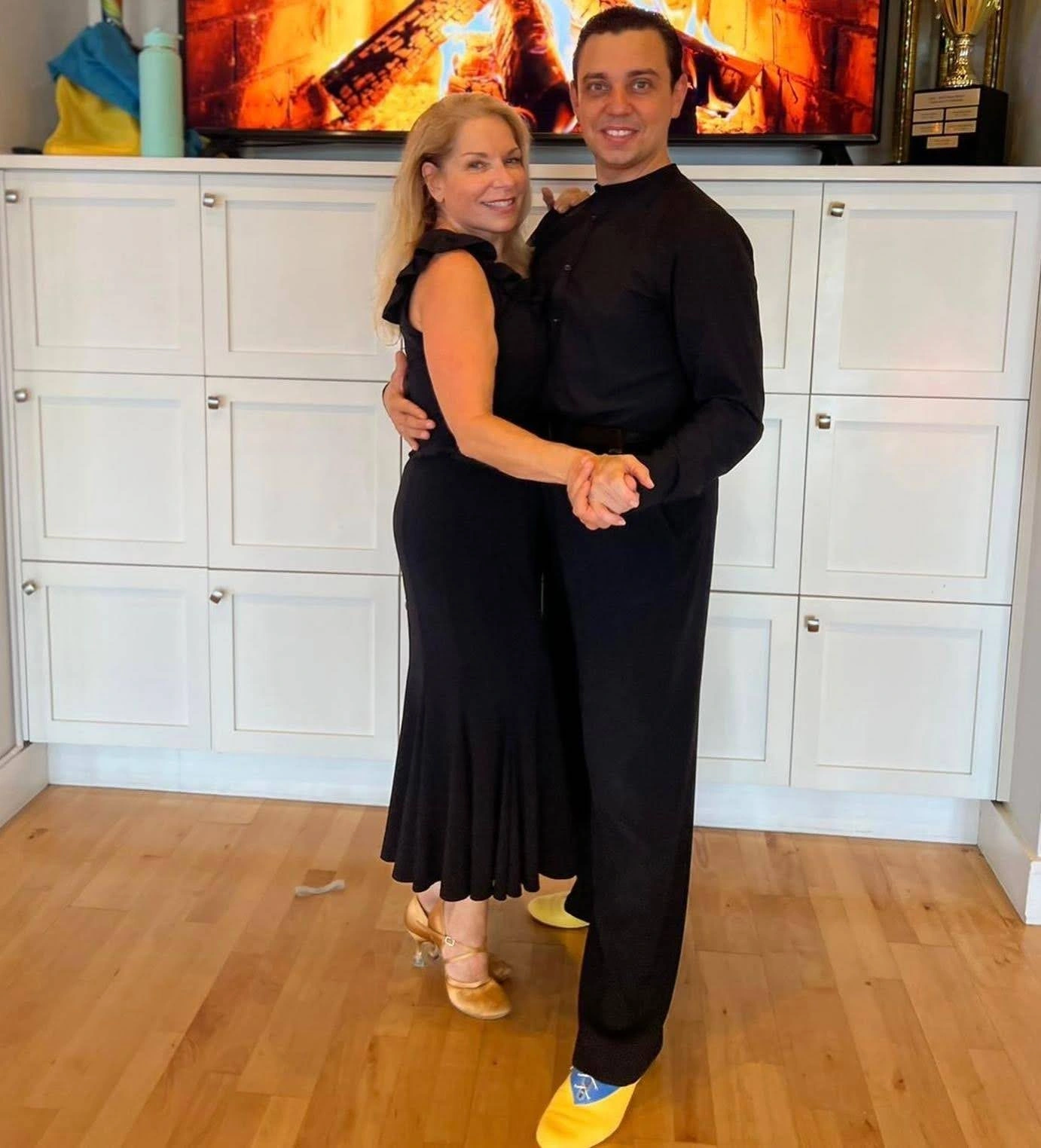
The Basic Hustle Dance Steps
Basic Hustle dance steps start with weight changes, timing, and a connection you can maintain with a partner. In a common three-count version, dancers use four weight changes counted “& 1, 2, 3.” The quick “& 1” gives the rhythm its syncopation, meaning a step falls between the main beats.
Our Hustle lessons page describes this three-count form alongside other versions. You may hear different counts or see different starting patterns in other classes. Ask which version you’re learning so you can practice it consistently.
Understand the Count Before Adding Turns
The count “& 1, 2, 3” contains four steps over three beats. The first two weight changes are quicker than the next two. Four steps and three beats aren’t the same thing, which is why watching feet alone can be confusing.
To understand the idea, say the count slowly before trying to move. Then let your instructor show where each weight change falls. Moving your foot without transferring weight can leave you on the wrong leg for the next step.
Music for Disco Partner Dance
Classic disco and suitable contemporary dance-pop can both work for partner Hustle. Look for a clear, steady beat and a pace that lets you complete your steps. The song needs to suit your current dancing, rather than simply carry a disco label.
The dance’s roots explain its close link with disco music, but your playlist doesn’t have to stop in the 1970s. Bring a song title if you’d like your instructor to check how it fits.
For a first practice, choose timing you can hear without struggling. If you lose the count while concentrating on a turn, return to the basic pattern. Your instructor can help you connect the movement to the music before increasing the challenge.
Is the Hustle Dance Suitable for Beginners?
Beginners can learn the Hustle dance by starting with a simple pattern and building from there. You don’t need to begin with fast spins or a long routine. Your starting point should match your experience and the pace at which you can follow the count.
At Fred Astaire Dance Studios – West Palm Beach, beginners can start alone or with a partner. Tell the team you’re interested in this style when you book. That gives your instructor a clear starting point for discussing your goals.
What to Focus on in Your First Lessons
Focus on hearing the beat, transferring weight, and knowing your own steps. Those tasks give you something specific to work on before patterns become more complex. Your instructor can adjust the amount of material as you learn.
Useful early goals include:
- Remembering which foot starts the pattern.
- Completing each weight change without rushing.
- Repeating the basic count with music.
- Keeping a comfortable connection with your partner.
- Finding your place again after a pause.
If you forget a step, ask to repeat that part slowly. You don’t need to hide uncertainty by moving faster. Our guide to getting started with adult dance lessons explains how to prepare for a first visit and discuss a learning plan.
Try the Hustle Dance in Fred Astaire Dance Studios – West Palm Beach
Try this disco partner dance at Fred Astaire Dance Studios in West Palm Beach, FL if you enjoy rhythmic music and want to learn partner movement. You can start without prior experience or a partner. Your first goal can be learning the count and trying a few basic steps.
Our studio is at 1804 North Dixie Highway, Suite A, West Palm Beach, FL. Book an introductory lesson and mention the style you’d like to explore. Bring your questions or a song you enjoy, and discuss a starting plan with an instructor.