

Dancing is a weight-bearing activity that also builds balance and coordination, with steps and effort matched to your needs. Its safety depends on your fracture risk, your balance and the movements involved.
Osteoporosis makes bones more fragile and more likely to break. If you have it, ask your healthcare team how dance fits your exercise plan. This matters especially after a fracture or if you feel unsteady.
You don’t need a performance goal to enjoy dance lessons. Perhaps you want to enjoy music with your partner or learn steps for social events. Knowing what dance can offer helps you choose a class that fits your goals.
How Does Dancing Fit Into Exercise for Osteoporosis?
Dance can add upright movement and step practice to a wider exercise plan. That plan may also include strength work and exercises chosen for your balance needs. A dance lesson has a different aim from an exercise session your care team sets.
What Is Weight-Bearing Exercise for Bones?
Weight-bearing exercise means moving against gravity while you stand and support your own weight. During standing dance steps, your legs support your weight as you move across the floor. That’s why dance belongs in conversations about weight-bearing exercise for bones.
The Bone Health & Osteoporosis Foundation includes dancing in its examples of weight-bearing activity. It also lists types of exercise with higher and lower impact.
The word “dance” covers many kinds of movement. Simple walking steps and a routine with jumps place different demands on the body.
How Dance Supports Balance
Dance asks you to shift your weight, change direction, and stay steady while moving to music. Practicing these skills regularly can support balance and coordination. Better balance matters for people with osteoporosis because it can help lower the risk of falls.
The Bone Health & Osteoporosis Foundation explains that balance and functional exercises can improve steadiness and reduce fall risk. The Royal Osteoporosis Society also includes dance among activities that can complement a balance routine. Dance can therefore work alongside the balance exercises for seniors that a physical therapist may recommend.
Music also plays a role: keeping time, remembering steps, and moving with a partner. You can work on a short pattern and enjoy learning it before adding more. This makes dance an engaging option within a broader plan of exercise for osteoporosis.
Bone Density Benefits Depend on the Exercise
Bones get stronger when they’re gently challenged, and some movements challenge them more than others. A slow walk puts much less force on your bones than brisk stepping or small jumps. The Royal Osteoporosis Society explains that activities vary in how much impact they provide, and recommends increasing it gradually, based on your fitness and strength.
The same is true for dancing. Every dance is weight-bearing, but not every dance has the same effect on your bones. That’s one of the advantages of dance lessons: the pace and intensity can be adjusted to you. You can start with gentle, simple steps and add more energy over time, following your healthcare team’s guidance.
Dance Styles to Discuss With Your Instructor
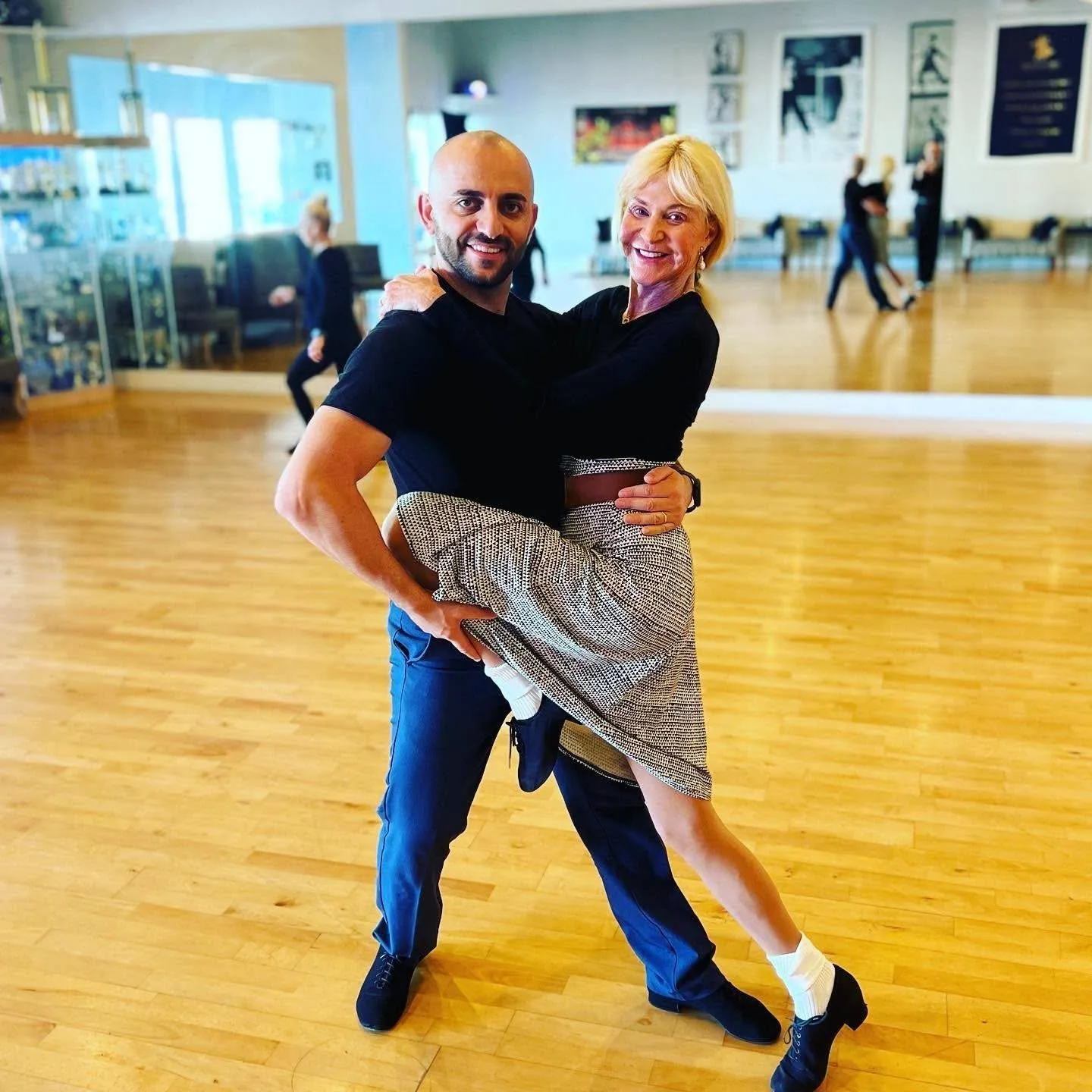
Rumba, Foxtrot and Waltz are good options to discuss for adapted beginner lessons. Their slower pace, controlled movements and lack of jumps make them easier to simplify. Choose the style whose music and movement appeal to you most, then talk through the steps and pace with your instructor.
Some movements may need to be adapted or avoided, including deep dips, sharp twists and bending forward from the waist. The Bone Health & Osteoporosis Foundation’s safe-movement guidance highlights forward bending and rapid twisting as concerns, especially after spinal fractures. Share your doctor’s movement guidance with your instructor, so they can leave out or adjust those steps.
Rumba
Rumba uses compact steps and it suits learners who prefer less travel across the floor. You can start with a small, simple pattern and practice its slow rhythm before adding turns. The Rumba’s hip movement should come from your knees and weight changes, not from twisting your spine, and your instructor can adapt it to your movement guidance.
Foxtrot
Foxtrot is a smooth ballroom dance built on walking steps, which makes it feel natural for many beginners. Short walking patterns let you learn its rhythm before trying longer sequences. Your instructor can shorten your steps and keep changes of direction gentle to match your comfort and ability.
Waltz
Waltz offers flowing movement, and its basic box step provides a clear pattern to learn. A slow, simplified version lets you focus on timing and small steps. Its turns, sway, and rise-and-fall action may need to be reduced or left out based on your movement guidance.
You can also browse our list of dance styles to find the ones that interest you. Even a style that suits beginners may still need some changes to fit your health needs, so share your interests with your instructor before your first lesson.
What to Expect at Our Dance Studio in West Palm Beach, FL
If you’re looking for osteoporosis exercise classes in West Palm Beach, FL, dance lessons can be an enjoyable addition to the exercise plan your healthcare team recommends. We’re not a clinical program, but we can add music, movement and social connection to your routine at a pace that feels right for you.
Your first lesson starts with a conversation. Tell your instructor what you’d like to learn, which styles interest you, and any movement guidance from your doctor. Together, we’ll plan steps, pace and rest breaks around your needs.
Students start with private lessons, where you can work at your own pace, ask questions and repeat a step as many times as you need before moving on. As you gain confidence, group classes and practice parties give you the chance to dance with others in a relaxed, friendly setting.
Discuss Your Needs With a Dance Instructor
Before your first lesson, share anything that helps your instructor plan a safe, comfortable session. If you have osteoporosis, that might include:
- Your doctor’s or physical therapist’s guidance, including any movements you’ve been told to avoid, such as bending forward from the waist or twisting.
- Any past fractures, especially in the spine, hips or wrists.
- How your balance feels, and whether you tire quickly or need to sit down now and then.
- Any pain or stiffness that affects how you move.
The more your instructor knows, the better they can plan a lesson that feels safe, comfortable and enjoyable.
Add Dance to Your Exercise for Osteoporosis in West Palm Beach, FL
Exercise for osteoporosis doesn’t have to feel like a chore. Alongside the strength and balance work your healthcare team recommends, dance adds music, movement and a chance to learn something new, at a pace that feels right for you.
At Fred Astaire Dance Studios – West Palm Beach, you’ll start with private lessons planned around your needs, your movement guidance and the music you love.
Once you’ve talked with your healthcare team, book your first lesson via our website or call us at 561-478-1400.