

If you’ve ever felt your hips start moving the moment a Latin beat hits the speakers, you’ve already taken your first step into the world of one of the most magnetic dance forms on the planet. But what is salsa dancing, really? It’s much more than just a few quick steps — it’s a vibrant cultural expression, a social ritual, and a full-body workout all wrapped into one unforgettable experience. Let’s break down 7 sizzling secrets that will help you understand and fall in love with this dance.
1. The Origins of Salsa
The story of salsa begins in the streets, clubs, and dance halls of New York City during the 1960s and 70s, where Cuban, Puerto Rican, and other Latin American rhythms collided beautifully. Drawing from older dance forms like Cuban Son, Mambo, Cha Cha, and Afro-Caribbean traditions, this style evolved into a global phenomenon that’s now enjoyed in every corner of the world.
The word itself means “sauce” in Spanish — a perfect metaphor for the spicy blend of music, movement, and culture that defines it.
2. The Sizzling Music Behind the Movement
The heartbeat of this dance is, of course, the music. Authentic salsa songs typically feature lively percussion (congas, bongos, timbales), bold horns, energetic piano montunos, and passionate Spanish vocals. Most songs are written in 4/4 time, with dancers stepping on counts 1-2-3 and 5-6-7, while pausing on the 4 and 8.
The genre owes much of its global recognition to legendary artists who shaped its golden era. Cuban American singer Celia Cruz, who reigned for decades as the “Queen of Salsa Music,” brought the genre to international audiences with her unforgettable voice, while icons like Héctor Lavoe, Marc Anthony, and Willie Colón helped define its sound across generations. Their music continues to fill dance floors decades later, proving the timeless power of these unforgettable rhythms.
3. The Surprising Variety of Styles
There’s no single “right” way to dance. In fact, several distinct styles have emerged across different regions:
- Cuban (Casino): Circular movements and playful partner work, often danced in groups called “rueda.”
- LA-Style (On 1): Linear, flashy, and theatrical — often seen in performances and shows.
- NY-Style (On 2): Smooth, elegant, and danced on the second beat for a more intricate feel.
- Colombian (Cali-Style): Fast footwork with minimal upper-body movement, perfect for high-energy nights.
- Puerto Rican Style: A foundational style emphasizing strong rhythm and tradition.
Each variation offers something unique, so trying a few styles helps you discover which speaks to your personality.
4. The Powerful Health Benefits of Salsa
Beyond the fun, this dance is also a phenomenal workout. Just one hour of salsa can burn 400 to 600 calories while improving your overall well-being:
- Cardiovascular health: Boosts heart rate and circulation.
- Coordination & balance: Sharpens body awareness and reflexes.
- Mental wellness: Reduces stress, anxiety, and depression.
- Brain power: Memorizing patterns enhances memory and focus.
- Social connection: Builds friendships and confidence.
Studies have shown that partner dancing can even reduce the risk of cognitive decline as we age — making salsa one of the smartest fitness investments you can make.
5. The Basic Steps Every Beginner Should Know
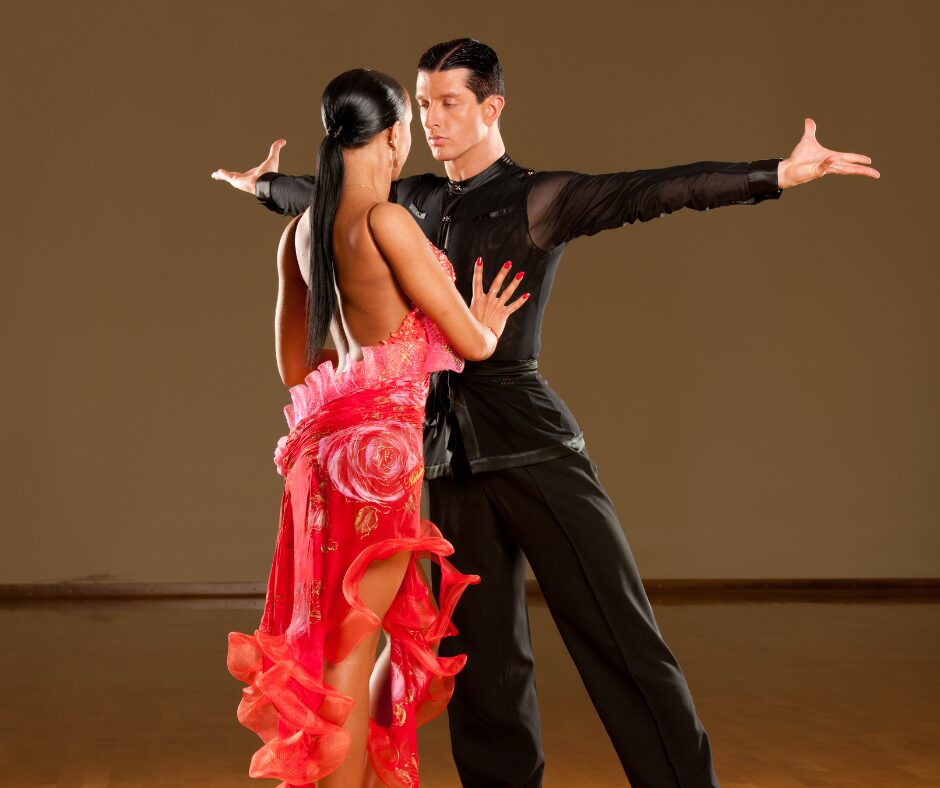
If you’re brand new, don’t worry — the foundation is surprisingly simple. The basic step pattern follows a “quick-quick-slow” rhythm, with weight shifts forward and back. Here’s how it breaks down:
- Counts 1-2-3: Step forward with your left foot, replace weight, step back.
- Count 4: Pause (this is where the magic lives).
- Counts 5-6-7: Step back with your right foot, replace, step forward.
- Count 8: Pause again.
Once you master the basics, you’ll quickly add turns, spins, and partner connections that make salsa so addictive.
6. The Etiquette of the Salsa Social Scene
Walking into your first salsa social can feel intimidating, but the community is famously welcoming. Keep these unspoken rules in mind:
- Always say yes (when comfortable). Saying yes to dances builds connection and confidence.
- Lead gently, follow attentively. Communication on the floor is everything.
- Respect personal space. Body awareness is a sign of a great dancer.
- Thank your partner after every song, regardless of skill level.
- Hygiene matters. Bring breath mints and a clean shirt — your partners will thank you.
The salsa community is one of the most diverse, friendly, and inclusive in the world, and these small courtesies go a long way.
7. How to Start Dancing Salsa Today
Ready to dive in? Here’s how to get started the smartest way:
- Take a beginner class. A qualified instructor accelerates your progress dramatically.
- Practice consistently. Just 10 minutes a day builds muscle memory fast.
- Listen to the music. Train your ear to recognize the count and feel the rhythm.
- Attend socials. Real-world practice is where confidence is built.
- Watch and learn. Videos of pros expand your vocabulary of moves.
Most students feel comfortable on the dance floor within just 4 to 6 weeks of consistent practice — and the journey only gets more rewarding from there.
Why Salsa Will Change Your Life
There’s a reason salsa has captured hearts across every continent. It’s more than steps — it’s connection, joy, fitness, music, and culture all rolled into one. Whether you want to impress at weddings, build social confidence, or simply have unforgettable Friday nights, this dance delivers like nothing else.
The unforgettable energy of salsa on a packed dance floor is something every person should experience at least once in their life.
Ready to Start Your Salsa Journey?
There’s no better time to take that first step onto the floor. At Fred Astaire Dance Studio of Ahwatukee, our expert instructors will guide you through every spin, step, and stylish move — whether you’re a total beginner or returning to the floor after years away.
Call us today at (602) 218-8578 to book your introductory lessons and start your fiery, unforgettable journey!