

Dance lessons for kids put them in situations where they try something unfamiliar, get better at it, and prove to themselves that they can do hard things. That process repeats every lesson. New step, awkward attempt, correction, improvement. Over weeks and months, it rewires how a child sees their own abilities.
But the confidence that comes from ballroom dancing is different from what most activities offer. It’s not just “I performed well.” It’s “I communicated with another person through movement, I carried myself with poise, and I handled something I wasn’t sure I could do.” That combination builds a kind of confidence that can show up in the everyday life of your child.
Here are the reasons to enroll your child in ballroom dance lessons.
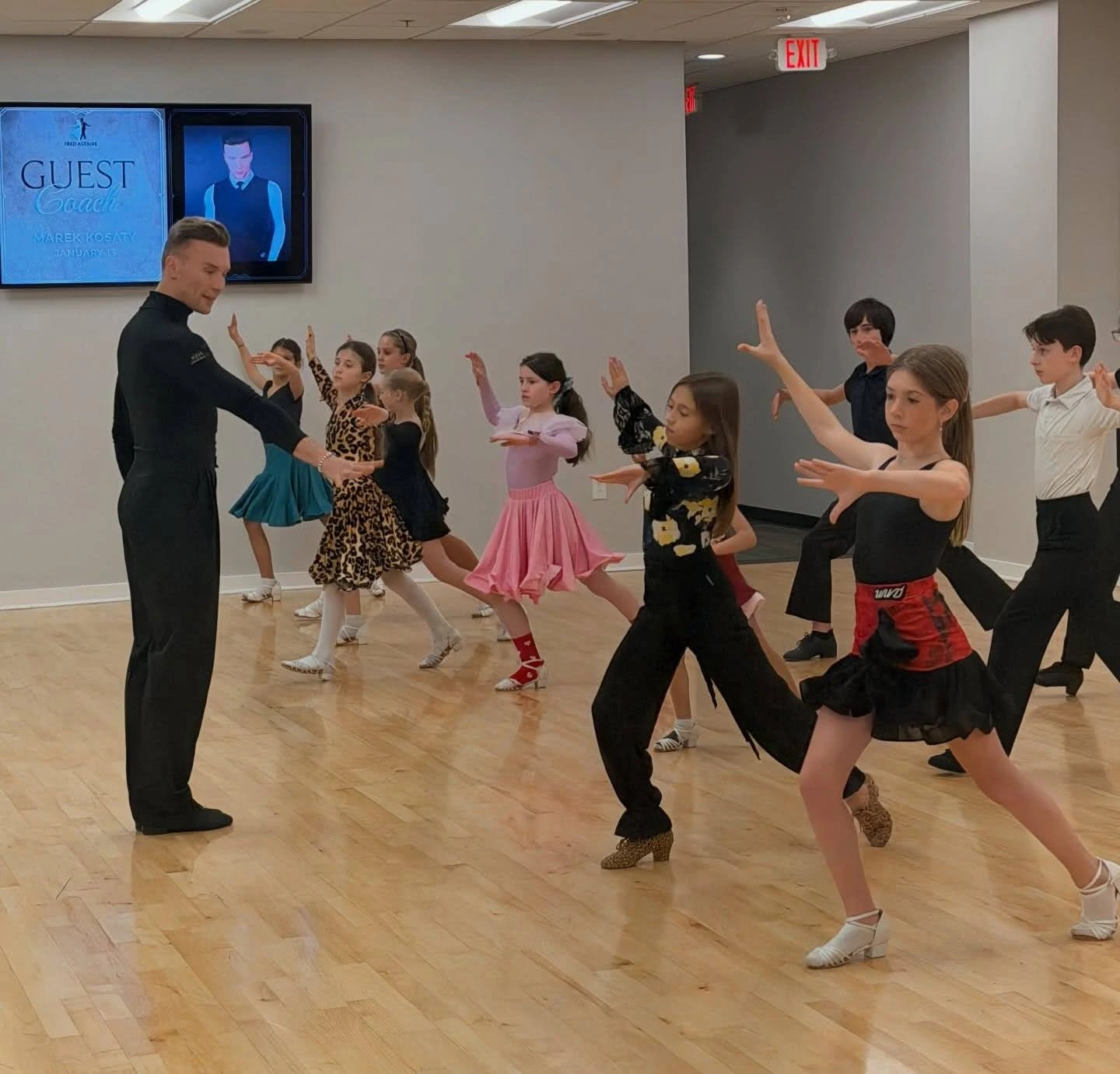
They Learn What Their Body Can Do
Most kids spend their days sitting in classrooms and looking at screens. They’re disconnected from their bodies in a way that previous generations weren’t. Dance can change that.
In their first few lessons, they can discover that their body can do things they didn’t know it could. They can move to a beat. They can turn without losing balance. They can control how fast or slow they step. These are small discoveries, but for a child who’s never been asked to use their body this way, each one is a revelation.
A study published in Taylor & Francis found something parents often confirm: the confidence kids build through dancing isn’t just internal. It’s visible. Teachers and parents in the study reported that children who danced carried themselves differently.
They walked into rooms with better posture. They made eye contact more easily. They took up more space instead of shrinking into corners. The change was physical before it was emotional, and other people responded to it, which reinforced the confidence even further.
They Learn to Communicate Without Words
This is where ballroom dance for children is different from almost every other activity.
In team sports, communication is verbal. In music lessons, a child performs solo. Partner dancing asks a child to do something none of those activities require: communicate with another person through physical touch, weight, and timing.
One child leads. The other follows. The leader has to be clear with their signals. The follower has to pay attention and respond. Both have to adjust to each other in real time. That’s a complex social skill disguised as a fun activity.
For shy kids, this can be transformative. They’re practicing connection and communication in a structured, low-pressure way. There’s no small talk required. No social script to follow. Just movement. Many kids who struggle in unstructured social situations find that dance lessons for kids are easier because the rules are clear and the interaction is guided by the music and instructor.
Small Wins Build Up Fast
Confidence doesn’t come from one big moment. It comes from a series of small ones.
In children’s dance lessons, those moments happen constantly. For example, they can master a step they couldn’t do last week. Remember a pattern without being reminded. Each one is a small win, and each one tells the child: I’m getting better at something.
A 16-week dance intervention study found significant improvements in self-esteem, measured using Rosenberg’s Self-Esteem Scale. The reason it works is the structure. Every lesson is slightly harder than the last. Kids are always reaching for something just beyond what they can already do, and when they get it, that win is earned, not handed to them.
Performing Can Change Everything
There’s a difference between practicing something and showing it to other people. Both matter for building children’s confidence. But performing is where the biggest leap happens.
Showcases, recitals, and practice parties put kids in front of an audience. That’s scary. The nerves are real. But when a child gets through a performance and hears applause, something changes. They realize that the thing they were afraid of didn’t destroy them. They survived it. They might have even enjoyed it.
Kids who’ve performed at our dance studio in Morrisville tell us they feel less nervous speaking up in class, trying out for school activities, and meeting new people.
They Stand Taller (Literally)
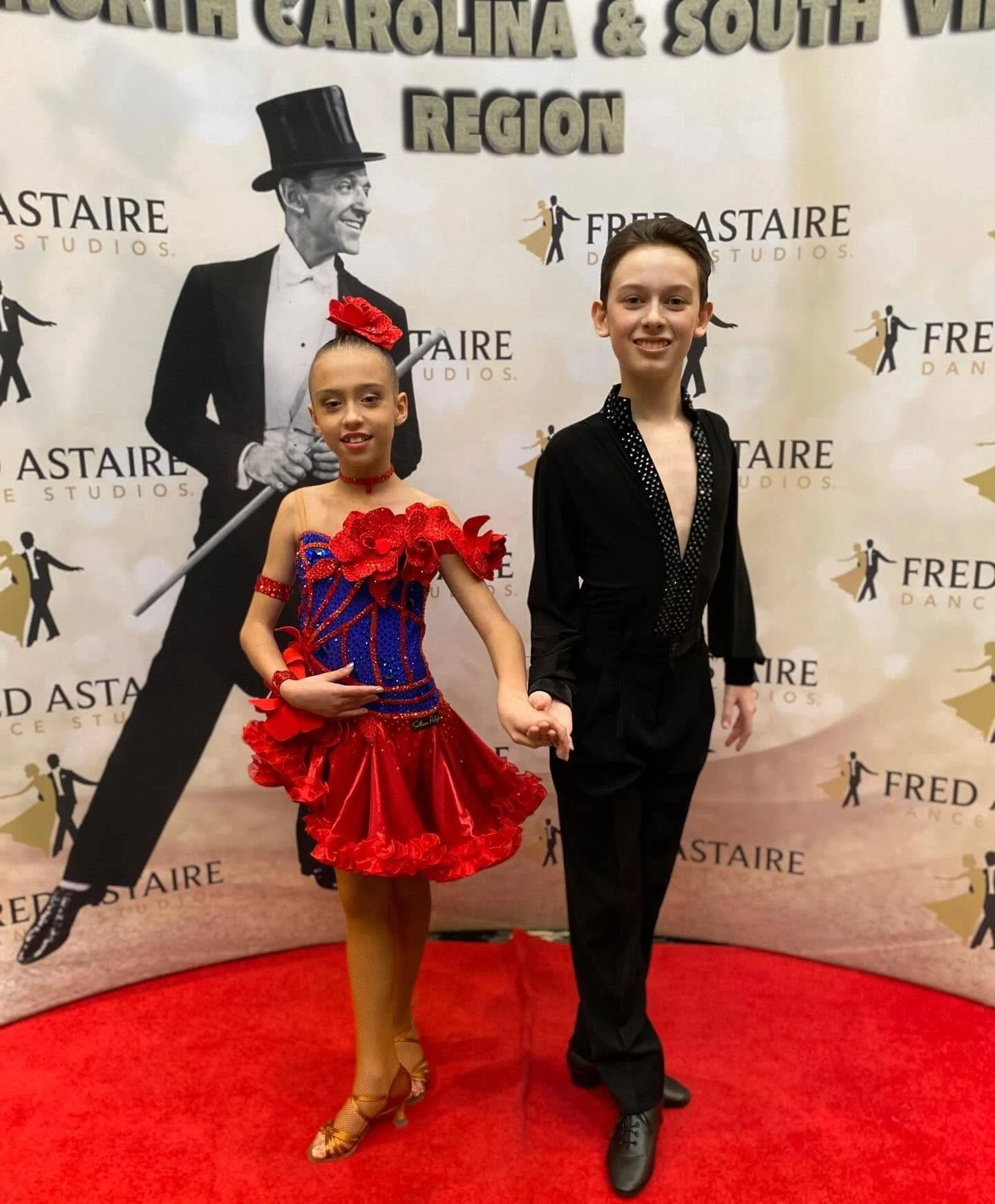
Ballroom dance teaches posture. Head up. Shoulders back. Core engaged. Frame connected. Kids practice this every lesson until it becomes automatic.
Here’s why that matters for confidence:
A study published in School Psychology International tested this with 108 fourth graders. Children who held open, upright postures reported higher self-esteem, more positive feelings, and better relationships with their teachers compared to children who slouched.
Frequently Asked Questions About Dance Lessons for Kids
What Age Can Kids Start Ballroom Dance Lessons?
The ideal age to start ballroom dancing is around age 5 or 6. At that age, they’re able to follow instructions, listen to rhythm, and coordinate basic steps. Some kids are ready earlier, some a little later. Your instructor can assess readiness in a first lesson.
Does My Child Need a Dance Partner?
At our dance studio in Morrisville, no. Your child can come alone. The instructor partners with them during private lessons and in group settings.
What should my child wear?
Comfortable clothing that allows movement. Avoid sneakers because the rubber sole grips the floor and makes turning difficult. Smooth-soled dress shoes work best. No special outfit needed for the first lesson.
My Child is Shy. Will They Be Ok?
Shy kids respond especially well to ballroom dancing. The structure of partner dancing gives them a clear framework for interacting with others. There’s no pressure to make conversation. The communication happens through movement, which many shy children find easier than unstructured social situations.
Can Dance Help Kids Who Do Other Sports?
Yes. Dancing builds coordination, balance, body awareness, and timing that transfer to nearly any sport. Many athletes, including professional football and basketball players, credit dance training for improving their footwork and agility.
Book Your Child’s First Dance Lesson in Morrisville, NC
Your child doesn’t need to be coordinated, outgoing, or “the dancing type.” The shy kids, the awkward kids, the ones who say “I can’t do that,” those are the ones who surprise everyone the most. Including themselves.
If you’ve been looking for an activity that builds real confidence, not just participation trophies, book a dance lesson at Fred Astaire Dance Studios – Morrisville and let them try dancing.