

Footwork in dancing is often called the hardest part, and there is real truth to that. It demands precise weight transfer, split-second timing, and control most beginners haven’t built yet. Footwork can also feel harder when you’re concentrating too much on your feet. Your posture, balance, and weight transfer all affect where your feet go. Once those pieces start working together, the steps usually feel much more natural.
So, is footwork difficult? It can be, especially at first. But improving it often starts with your posture, balance, timing, and weight transfer rather than focusing only on your feet.
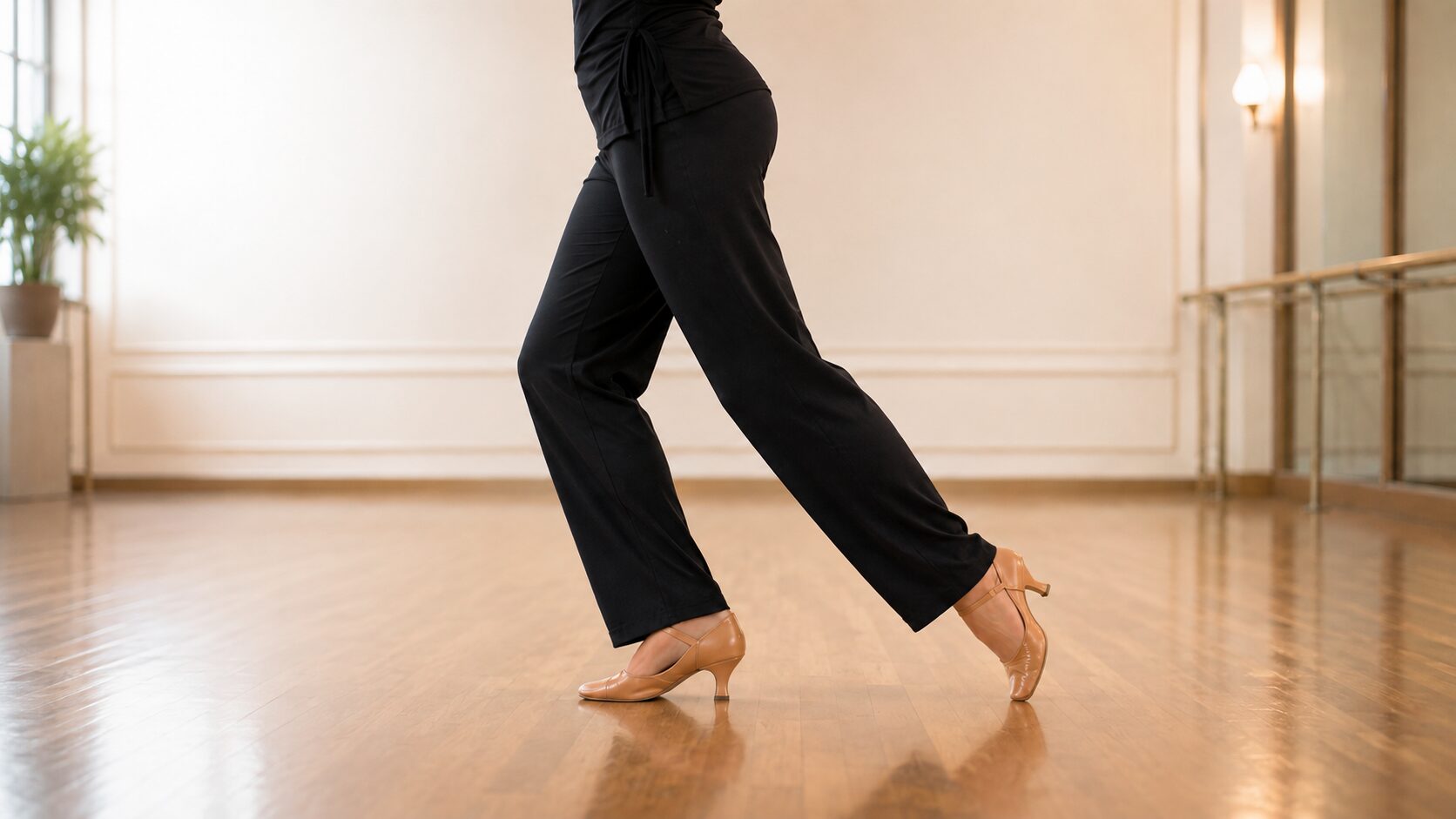
Why Footwork Is Considered So Difficult
Footwork earns its difficult reputation for a few legitimate reasons:
- Your feet carry your balance. Unlike arm styling or facial expression, your feet hold your actual center of gravity. If your weight placement is off by even a little, you can lose balance, and the mistake is immediately visible.
- It demands coordination under time pressure. Footwork asks your body to map out direction changes while staying locked to the rhythm of the music. That combination of movement and timing is a lot to manage at once when it’s new.
- The fine detail is real. Clean footwork isn’t just stepping on the beat. It involves how the heel, toe, and edges of the foot make contact and distribute pressure, and it’s a learnable technique that takes time.
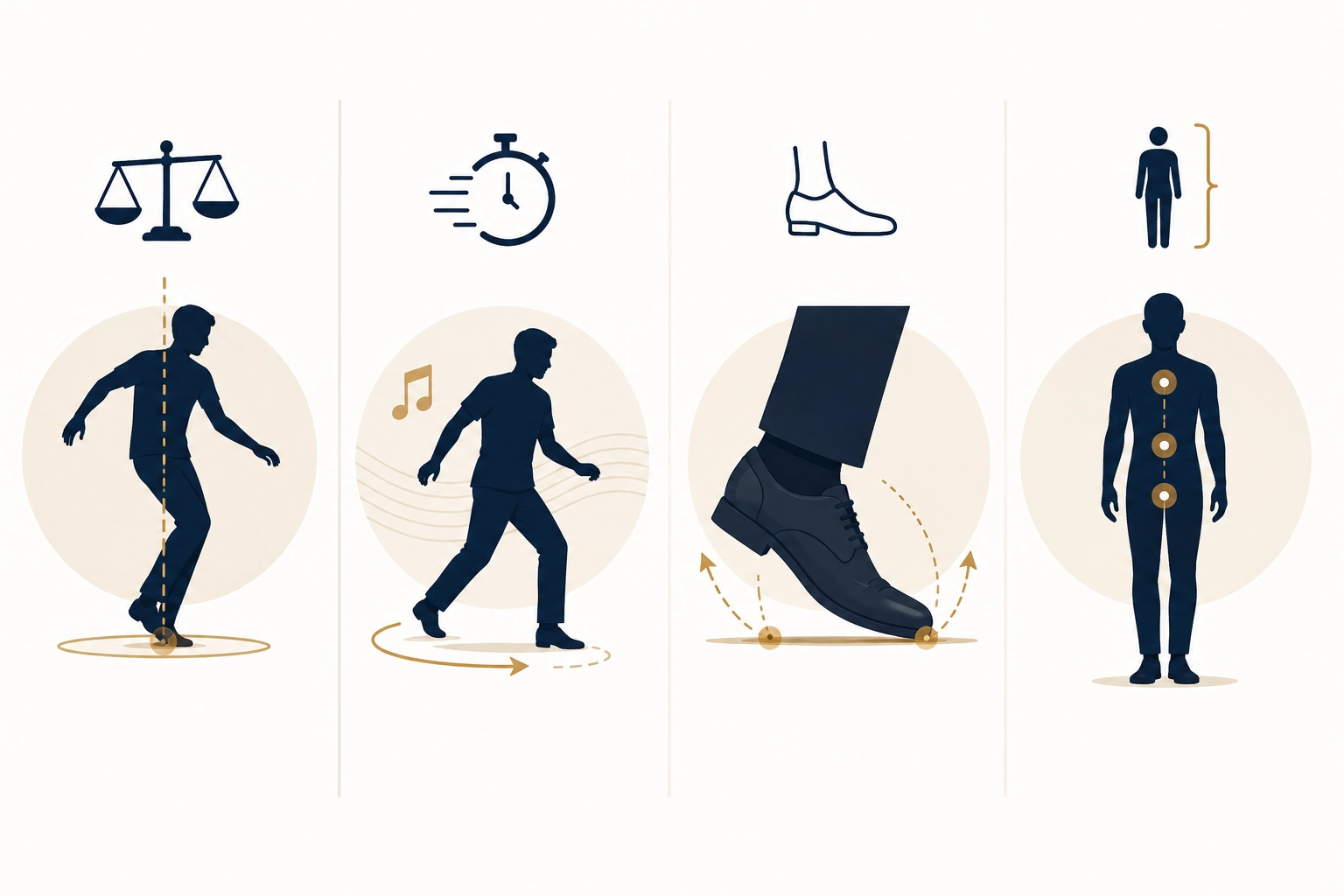
Why Focusing on Your Feet Can Backfire
When you look down and concentrate hard on where each foot lands, several things can go wrong.
Your head drops, which pulls your balance forward. Your upper body stiffens because all your attention is below your knees. And you place your feet like you’re solving a puzzle, one deliberate piece at a time, instead of moving naturally.
The result is the stiff feeling that makes many beginners wonder if they are doing something wrong. Often, the real issue isn’t the foot placement itself, but the posture, balance, and weight transfer guiding each step.
What Makes Movement Feel Easy
When a new student comes to us convinced their feet are the problem, the first thing we do is take their attention off their feet. During a private dance lesson in Morrisville, our instructors will look at your posture, balance, and weight placement.
- Posture. One of the earliest things we work on with beginners is standing tall and holding a steady frame. Get that, and you can move without wobbling. Slump or lean, and you’re fighting for balance before you’ve taken a step.
- Weight transfer. Strip dancing down and it’s really just moving your body weight from one foot to the other, in time with the music. A lot of what your instructor corrects in early lessons is helping you fully commit your weight to each step instead of leaving it hovering between both feet.
- Body movement. Your torso goes first, your legs answer, and your feet come along. When the movement starts in your body, footwork stops feeling like a job you have to concentrate on and starts feeling like a natural result of where you’re already going.
The simplest way to hold onto all of this is to change the question you ask yourself.
Instead of “where do my feet go?”, ask “how do I move my body?”
That small reframe can turn dancing from a checklist of foot positions into one connected motion. With your feet simply following where your body has already decided to go.
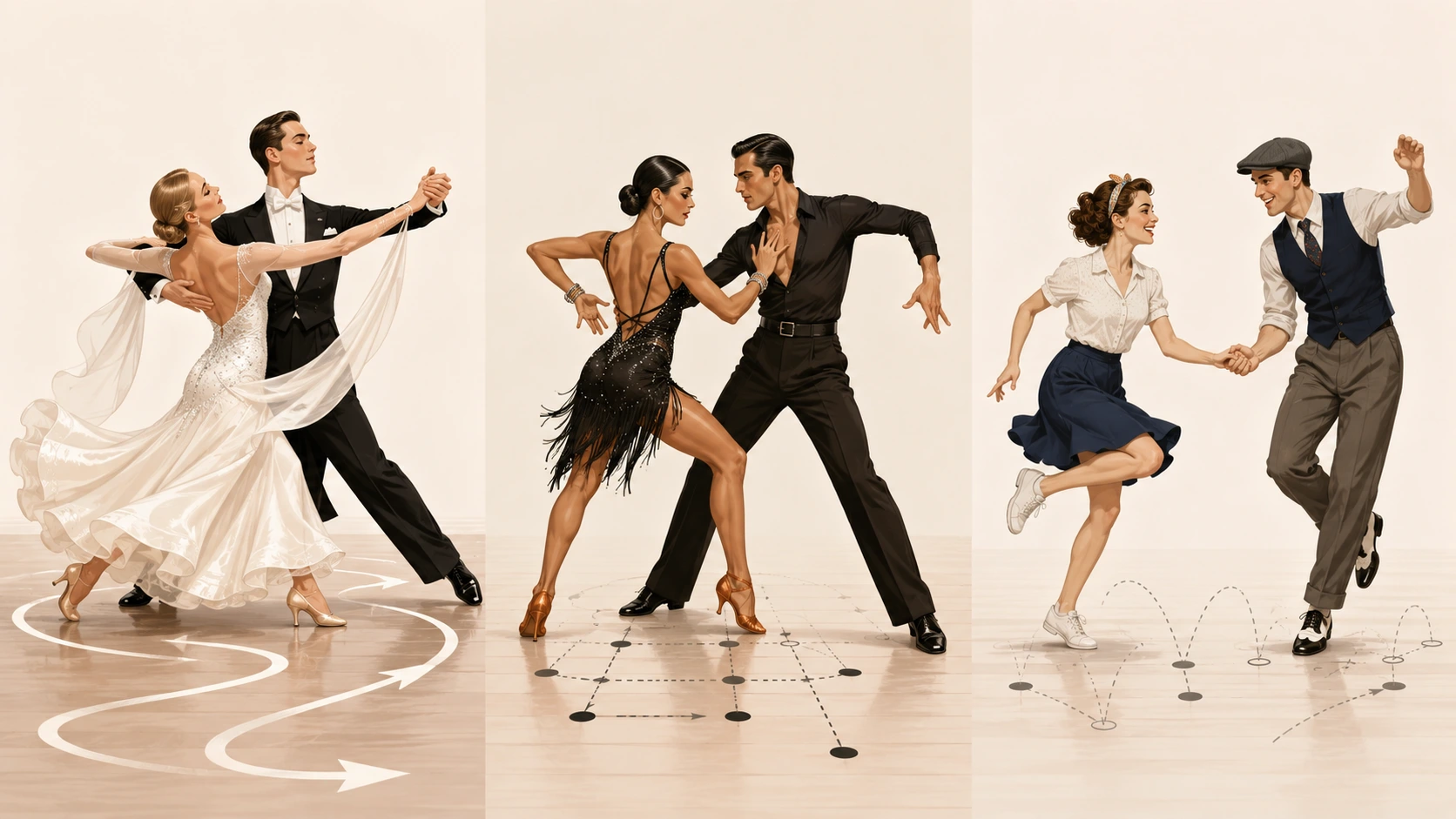
Footwork in Ballroom vs. Latin Dances
Footwork in dancing looks different depending on the style, which is part of why beginners find it confusing. Understanding the difference early takes a lot of the mystery out of it.
- In ballroom (smooth/standard) styles like Foxtrot and Waltz, footwork is about traveling smoothly across the floor. The feet should move through the floor, heel to toe, with a gliding quality and a rise and fall motion. The goal is to look effortless and continuous, as though you’re floating. That smoothness doesn’t come from the feet themselves. It comes from controlled body movement and weight transfer.
- In Latin and rhythm styles like Rumba, Cha Cha, and Salsa, the footwork is sharper and more grounded, with the hip action and weight settling into each step. Latin dances often use more compact steps, with greater attention to weight transfer, hip action, and precise timing.
- Swing styles like East Coast Swing feel different again. They use a lighter, more energetic action, with a noticeable bounce rather than the smooth movement.
The key point ties back to everything above: in all of these, footwork is a result. Beginners who understand this stop forcing their feet into the “right” place.
Three Things to Check When a Step Feels Off
Next time a step feels awkward, think about:
- Is your head up? The moment you look down, your balance shifts forward and everything gets harder. Keep your eyes up and trust your feet to do what you have practiced.
- Where is your weight? Most stumbles come from weight stuck between both feet instead of fully committed to one. Make sure each step fully transfers your weight before the next one.
- Are you relaxed? Tension makes movement stiff and tiring. If your shoulders are up by your ears, your feet do not stand a chance. Loosen up and let the movement flow.
Most of the time, when beginners struggle with footwork, the real issue comes down to one of these three things.
How We Teach Footwork at Our Dance Studio in Morrisville
This is one reason our beginner lessons start with private, one-on-one instruction. Before asking you to repeat a foot pattern over and over, your instructor can look at how you’re standing, where your weight is and how you’re moving.
Footwork problems aren’t always caused by the feet themselves. A step can feel awkward because your weight moved too early, your posture changed, or your body did not fully finish one movement before starting the next. Fixing those details first often makes the actual foot placement much easier.
Private lessons also make it easier to slow things down and focus on what you need most.
As the fundamentals become more natural, you can start paying more attention to the finer details of footwork. This can include heel and toe use, direction changes, and how your feet work differently across Ballroom, Latin, and Swing styles.
If you’re still deciding where to begin, our guide to the best dance style to learn first explains which ones tend to work well for beginners.
Start Dancing in Morrisville Without Overthinking Your Feet
Here’s the truth every one of our students figures out eventually: the people dancing confidently weren’t born coordinated. They just started, and let a good instructor do the rest.
You can keep wondering whether you’d be any good at it, or you can find out in a single lesson. There’s no experience required, no partner needed, and nothing to prepare. Just show up.
Book your first lesson at Fred Astaire Dance Studios – Morrisville and try dancing.
Follow us on Instagram, Facebook, or our YouTube to get a feel for the atmosphere at our Morrisville dance studio.