
The best clothes for ballroom lessons are comfortable, breathable and flexible enough to let you move freely. As a beginner, you don’t need expensive or professional dancewear.
Men can wear comfortable pants and a shirt, while women might choose leggings, fitted pants or a skirt that doesn’t restrict movement. For shoes, start with a comfortable pair with a smooth sole that stays securely on your feet. Once you know you’ll keep dancing, it’s worth buying proper ballroom or Latin shoes, which help you keep your balance and turn with more control.
Let’s take a closer look at what to wear, what to avoid and when to invest in your first pair of dance shoes.
What to Wear to Ballroom Dance Lessons as a Beginner?
Smart-casual attire is appropriate for most beginner ballroom classes. Choose comfortable clothing that lets you walk, step, turn, and practice basic patterns without restriction.
Select clothes that stay in place and don’t need frequent adjustment. Freedom of movement matters more than formal attire, since you’ll shift weight, move your arms, and rotate your body.
What Should Men Wear to Ballroom Lessons?
Men can combine dress pants, chinos, or comfortable pants with a breathable shirt. Aim to feel comfortable and move freely.
Practical options include:
- Pants: Select chinos, dress pants, or flexible pants that allow longer steps, knee bends, and comfortable changes in direction.
- Shirts: Wear a breathable, lightweight button-down, polo, or T-shirt. Moisture-wicking fabrics help you stay comfortable during longer sessions.
- Overall appearance: Formal attire isn’t required. Clean, comfortable clothes that fit well and let you move freely are perfect for your first lesson.
What Should Women Wear to Ballroom Lessons?
Women can wear comfortable pants, a skirt, leggings, or a dress that allows free movement. A blouse, fitted top, or lightweight shirt is practical for beginner Apex dance classes. Prioritize comfort and confidence in your clothing choices.
Here are a few practical options:
- Pants and leggings: Select flexible leggings or pants that allow longer steps, knee bends, and unrestricted turns.
- Tops: Choose a breathable blouse, fitted top, or lightweight shirt that stays in place as you move.
- Dresses and skirts: Select a skirt or dress that allows wide steps and easy turns. Avoid very short skirts that need adjustment or long, loose garments that may get caught underfoot.
What Are the Best Dance Shoes for Beginners?
For most beginners, the best first pair is practice ballroom shoes. They work for any style, so you can try different dances before deciding where to focus. Once you know which dances you love most, you can purchase footwear designed specifically for Standard or Latin styles.
Practice Ballroom Shoes
If you’re not sure yet which dances you’ll focus on, practice shoes are a great first pair. They’re designed to work for any style, from Standard and Latin to social dances like Swing and Salsa, so you can try different dances without buying a separate pair for each.
Practice shoes have a suede sole like other professional shoes, so you can turn and glide smoothly, but they’re built for comfort during long lessons and practice sessions. For women, they usually have a lower, wider heel, often around 1.5 to 2 inches, which feels more stable than a performance heel. Men’s practice shoes are typically lightweight lace-ups with a low heel and a flexible sole.
Standard Ballroom Shoes
Standard ballroom dances like Waltz, Foxtrot, Tango, and Viennese Waltz travel around the floor with long, smooth steps. Many of those steps begin with the heel and roll through to the ball of the foot, so Standard shoes are designed to support that movement.
That’s why they have a closed toe and a sturdy, supportive build. The closed toe also protects your feet in a close hold, where partners dance very near each other. Women’s Standard shoes are simple, closed-toe heels, similar to classic pumps, with a heel of about 2 to 2.5 inches. Men’s shoes are lace-ups that look like dress shoes, with a heel of about 1 inch.
Latin Dance Shoes
Latin dances like the Cha-Cha, Samba, Rumba, Paso Doble and Jive are built on quick weight changes, hip action and lively footwork. Most steps begin with the ball of the foot, so Latin shoes are designed to keep your weight forward and let your feet move freely.
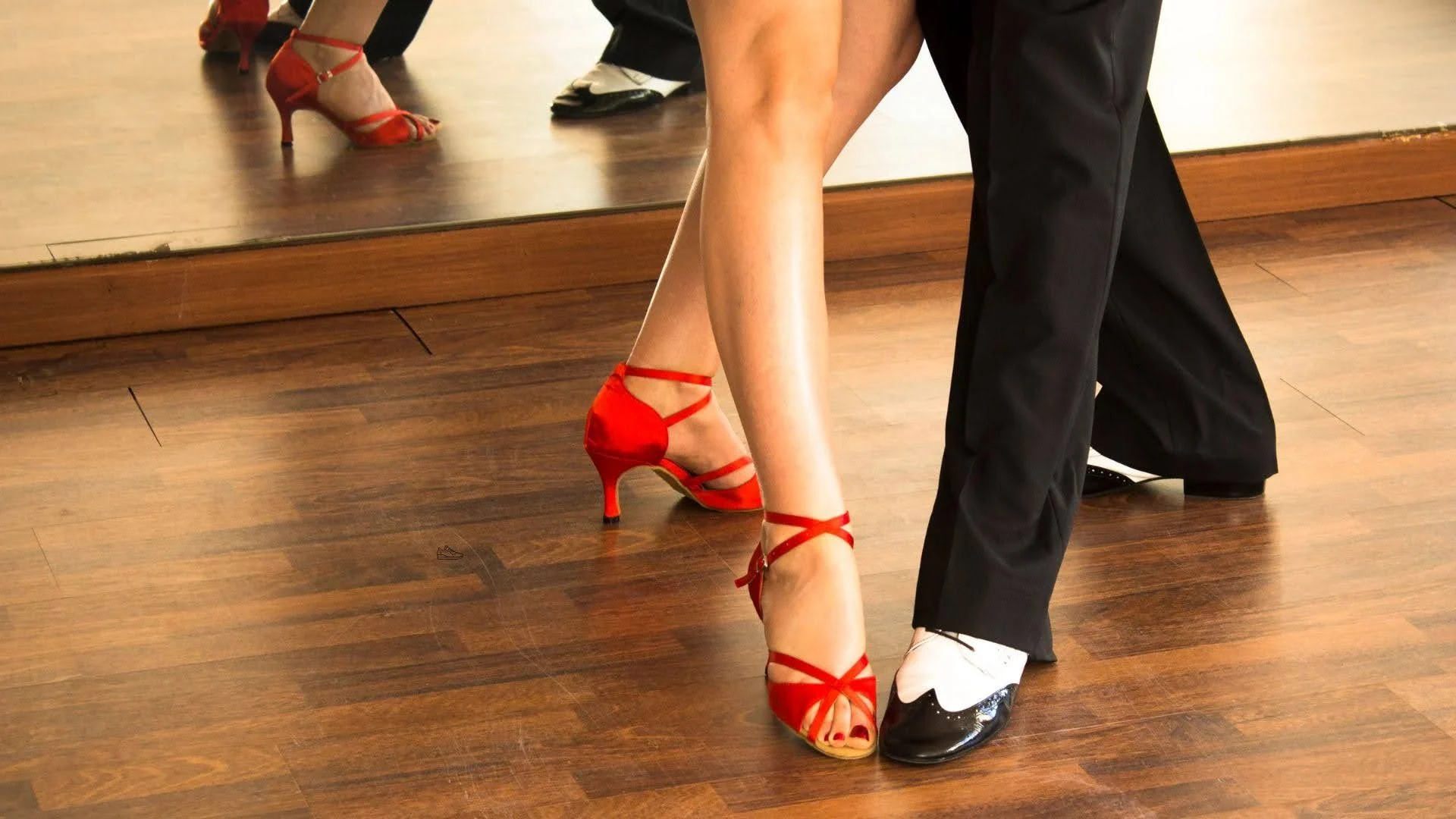
That’s why they’re lighter and much more flexible than Standard shoes. Women’s Latin shoes are open-toe sandals with straps across the foot and around the ankle, which keep the shoe secure during fast turns. The heel is typically 2.5 to 3 inches, and slimmer than a Standard heel. Men’s Latin shoes look similar to Standard shoes, with a closed toe and laces, but have a slightly taller Cuban heel of about 1.5 inches.
When trying on women’s Latin shoes, your toes should reach the front edge of the sole, and the straps should hold your foot firmly without pinching. If you’re just starting out, a lower heel of around 2 inches is a gentler way to build your balance.
What About Dance Sneakers?
Dance sneakers can be a great alternative for practice. They offer flexibility and built-in arch support, so you can stay comfortable during longer sessions. Their design lets you move naturally, making them a smart choice while you’re building your skills.
Unlike regular sneakers, they have a split sole and a smooth patch under the ball of the foot, so you can turn without sticking to the floor.
What Should You Avoid Wearing to Dance Lessons?
When choosing what to wear, avoid anything that restricts movement while you train. Tight jeans, stiff materials, and overly loose clothing can make it hard to take comfortable steps and turn freely. Long clothing edges and loose pants can also get tangled under your feet.
Footwear is just as important. Choose shoes that fit snugly and let you move with confidence. Flip-flops, loose shoes, or anything with sticky rubber soles can make it harder to turn or stay balanced, so leave those at home.
If you like wearing heels, make sure they offer good support. High heels without enough stability can make dancing harder, so choose a pair that helps you feel secure.
Finally, keep your accessories simple. Long necklaces, dangling earrings, massive bracelets, and large rings can catch on clothing or interfere with partner movements. Put aside unnecessary valuables so you can focus on dancing comfortably and confidently.
What to Wear to Your First Ballroom Lesson?
For your first lesson, comfortable everyday clothing is all you need. Just like other beginners at Fred Astaire Dance Studios – Apex, you can learn the basic steps without having to purchase professional dance attire or expensive shoes immediately. The goal is for you to feel comfortable, move freely, and enjoy learning something new.
As you progress, we’ll be happy to recommend shoes and clothing that fit your chosen style and help you feel even more confident on the dance floor.
Take Your First Steps at Fred Astaire Dance Studios – Apex
Worried about what to wear to ballroom dance lessons? Your enthusiasm and willingness to learn matter far more than your outfit.
Our instructors are here to guide you every step of the way. You’ll learn new movements, improve your coordination, and gain confidence with each lesson. Whether you’re brand new to dance or coming back after some time away, we’ll make sure you progress at a pace that feels comfortable for you.
If you’re ready to take your first step, we’d love to help you get started. Schedule your introductory lesson today or call us at 919-200-4021.