
Tango lessons are often seen as one of the hardest ways to start dancing. In reality, when taught the right way, they’re one of the most structured and beginner-friendly options for adults.
While it may seem advanced, it isn’t at the beginner level we teach at Fred Astaire Dance Studio in Apex.
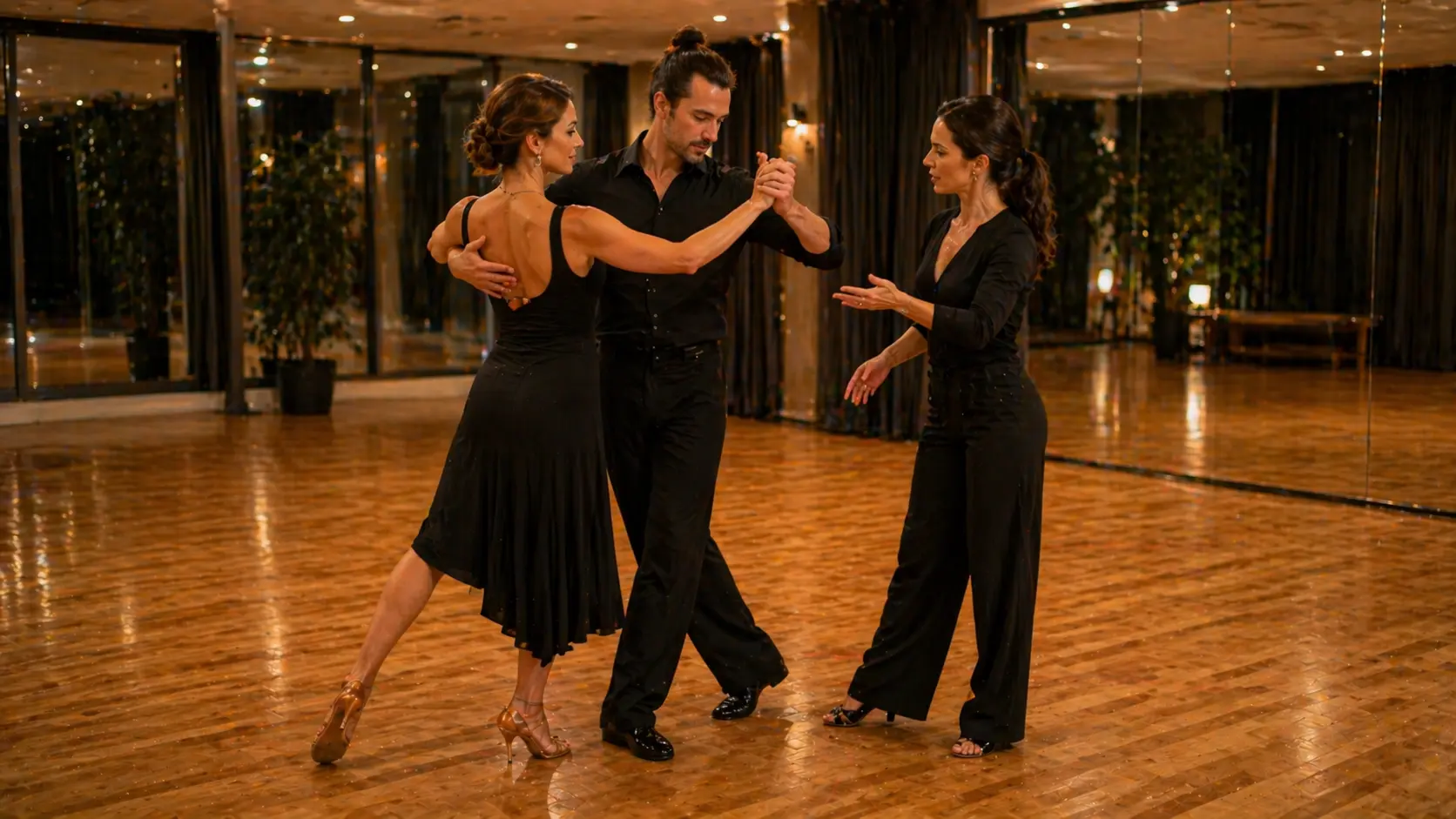
American Tango vs Argentine Tango
American Tango
Is structured, which makes it easier to learn, especially for beginners. There is a clear frame, a defined set of patterns, and a rhythm that’s simple to follow. The music has a steady, almost march-like feel.
What gives American Tango its sharp, dramatic look is not performance, but technique. The clean lines, controlled movements, and well-timed pauses all come from understanding the fundamentals, not from trying to “act” the dance.
Argentine Tango
Is more improvisational. Instead of following a set structure, the lead responds to the music in the moment, and the follower responds through a close physical connection, often guided by subtle weight shifts rather than clear arm or hand signals.
In Tango classes in Apex, we don’t typically start with this style. Not because it’s “harder,” but because it’s less structured. It’s a different art form.
| American | Argentine | |
|---|---|---|
| Structure | Defined patterns, teachable syllabus | Improvisation, no fixed sequence |
| Hold | Open frame, defined position | Close embrace, chest-to-chest connection |
| Music | March-like, clear rhythm | Emotional, nuanced, musically varied |
| Communication | Lead guides through frame and footwork | Lead communicates through body weight alone |
| Best for beginners | Yes — strong starting point | Better after the American Tango foundation |
| Character | Sharp, precise, dramatic | Intimate, musical, deeply expressive |
3 Reasons Why American Tango Works Well for Beginners (When Taught the Right Way)
There Is a Clear, Logical Structure to Learn
American Tango has a defined syllabus. There is a specific order to what you learn and a reason for that order. The walk comes first. Then the basic pattern. Then turns. Then more complex combinations. Each thing connects directly to what came before it.
That matters more for adult learners than most people realize. Children absorb movement through repetition without needing to understand it. On the other hand, most adults progress much faster when they do understand it. They want to know why the frame is held at a particular angle, why the weight transfers on that beat and not the next, why certain steps carry more importance than others.
The Steps Are Grounded and Controlled, Not Athletic
The steps are compact, heel-first, and deliberate. Each one is fully weighted before the next begins. In the early stages there is no spinning, no large traveling movements, nothing that requires quick reflexes or physical coordination you have not yet developed.
What it asks for instead is control. The ability to move with intention. To commit fully to each step before thinking about the next one. Those are things adults develop well, often faster than younger students who are used to learning through energy and speed rather than precision and attention.
Holding a correct frame engages muscles most people are not used to using. The core, the upper back, the arms. Most students notice it by the end of their first lesson. But that is a different kind of demand than fast footwork or quick direction changes.
What You Learn in Tango Carries Into Every Other Partner Dance
Frame, weight transfer, lead and follow connection. In most other dances, you can approximate these things and still get through a pattern. In Tango, if your frame is soft or your weight is not good, your partner will feel it immediately.
In our Tango lessons in Apex, we spend time making sure each step is actually finished. Weight fully transferred. Posture stable. Movement controlled before adding anything new. It’s slower at the beginning, but it removes a lot of confusion later.
So when someone who’s been learning Tango tries something like Waltz or Rumba, they’re not learning from scratch. They already know how to stand on one leg without drifting, how to move their weight cleanly instead of halfway, and how to stay connected without using their hands to compensate.
Why Private Lessons Make Starting Easier?
For adults, starting private dance lessons in Apex usually removes the biggest beginner problem: pressure. You are not trying to keep up with a room full of people. You are learning at your own pace with feedback made for you.
That matters for beginners because early habits are important. If your posture, timing, or connection is off, it is much easier to fix that one-on-one than in a crowded class.
Private lessons are especially helpful because:
- You get immediate feedback
- help you feel more confident
- fix small mistakes before they turn into bigger ones
- keep your practice focused on what actually needs work
- make the whole experience more comfortable, especially if you’re a bit unsure starting out
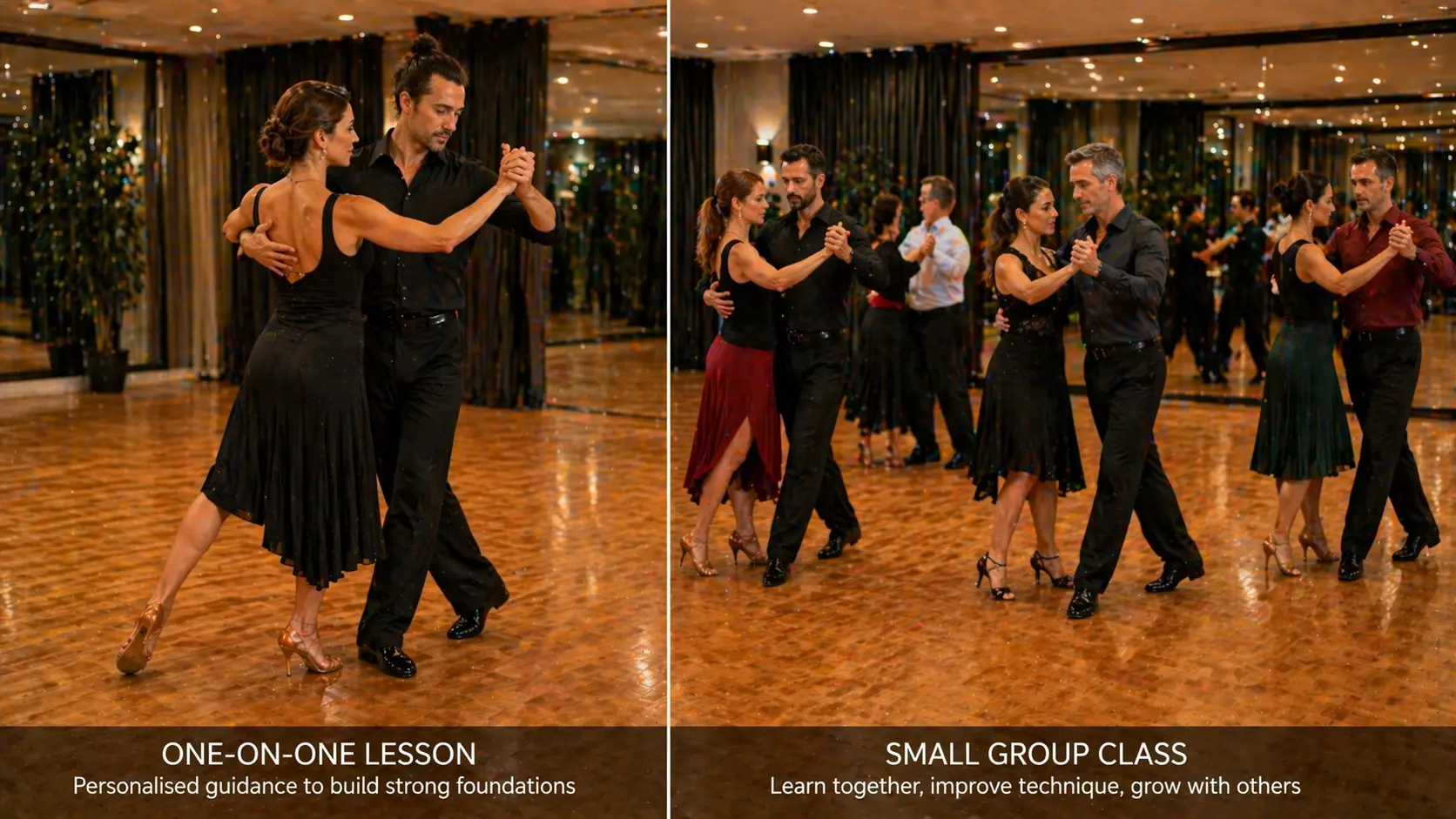
At our studio, we usually recommend starting with a few private lessons, then adding group classes and practice sessions. That combination tends to work best because you’re learning quickly, but also getting enough repetition to feel it stick.
What Tango Lessons in Apex, NC Look Like At Fred Astaire Dance Studios
Most studios teach Tango in group classes where you follow along. We don’t do it that way.
We start with private lessons. That means you and your instructor, or you and your partner working directly with an instructor, focusing on what you actually need.
With Tango, that matters. It’s not just about steps. It’s posture, weight transfer, and connection. These aren’t things you can fix from across the room. Your instructor either dances with you or watches you closely and corrects things right away, so you don’t build bad habits.
Our instructors teach both American and Argentine Tango. In your first session they will talk with you about your goals, introduce you to the basic movement and frame, and help you understand what a longer program would look like.