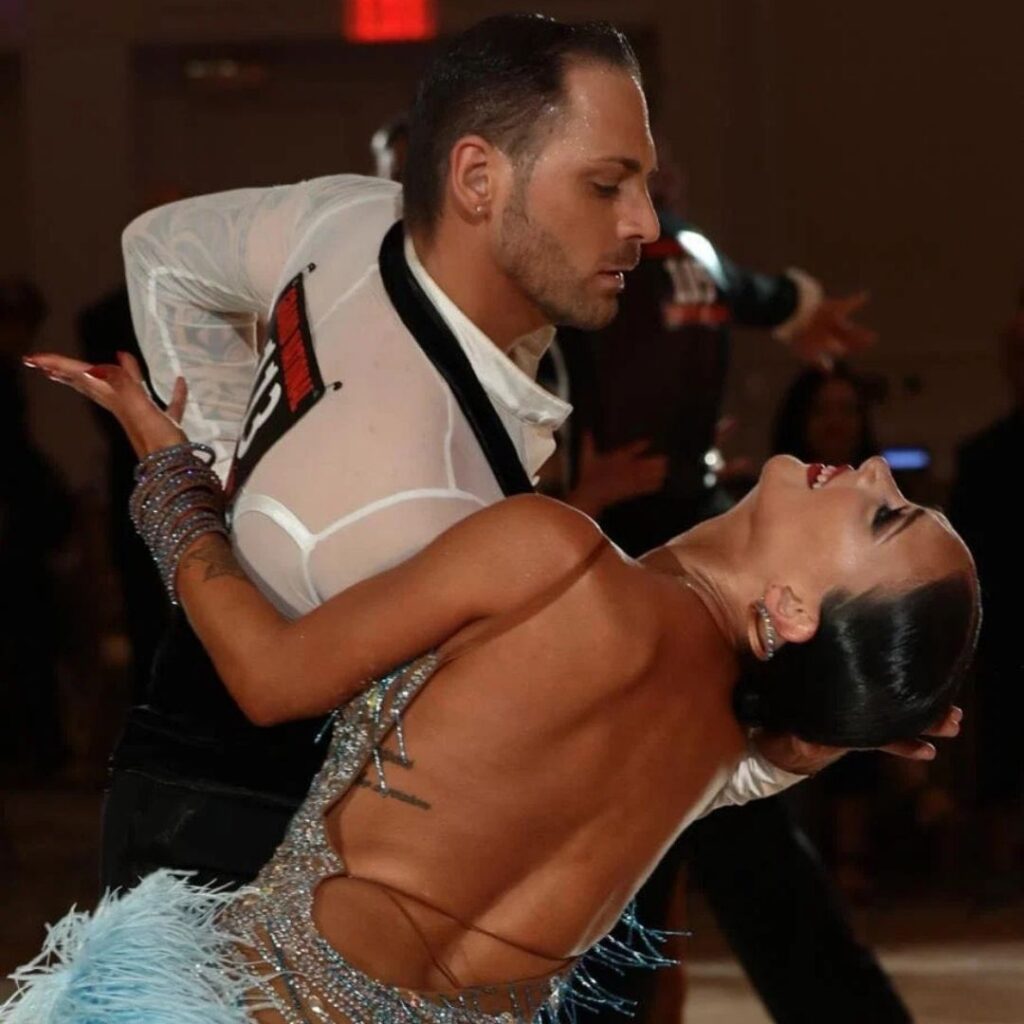
Cha-cha is a Latin partner dance with a playful rhythm, precise footwork, and unique hip movement. Its signature “triple step” makes it instantly recognizable, while the blend of rhythm and technique gives dancers plenty of room to grow.
But what is Cha-Cha beyond its lively steps and catchy music? Learning about its Cuban roots, how to count the rhythm, and practicing the basics can help you feel more confident on the dance floor.
Even if you’re a beginner, you can build a solid foundation by going at your own pace and focusing on one skill at a time.
Let’s take a closer look at what the definition is, where it comes from, and how you can get started with the basic steps.
Meaning and Definition of Cha-Cha
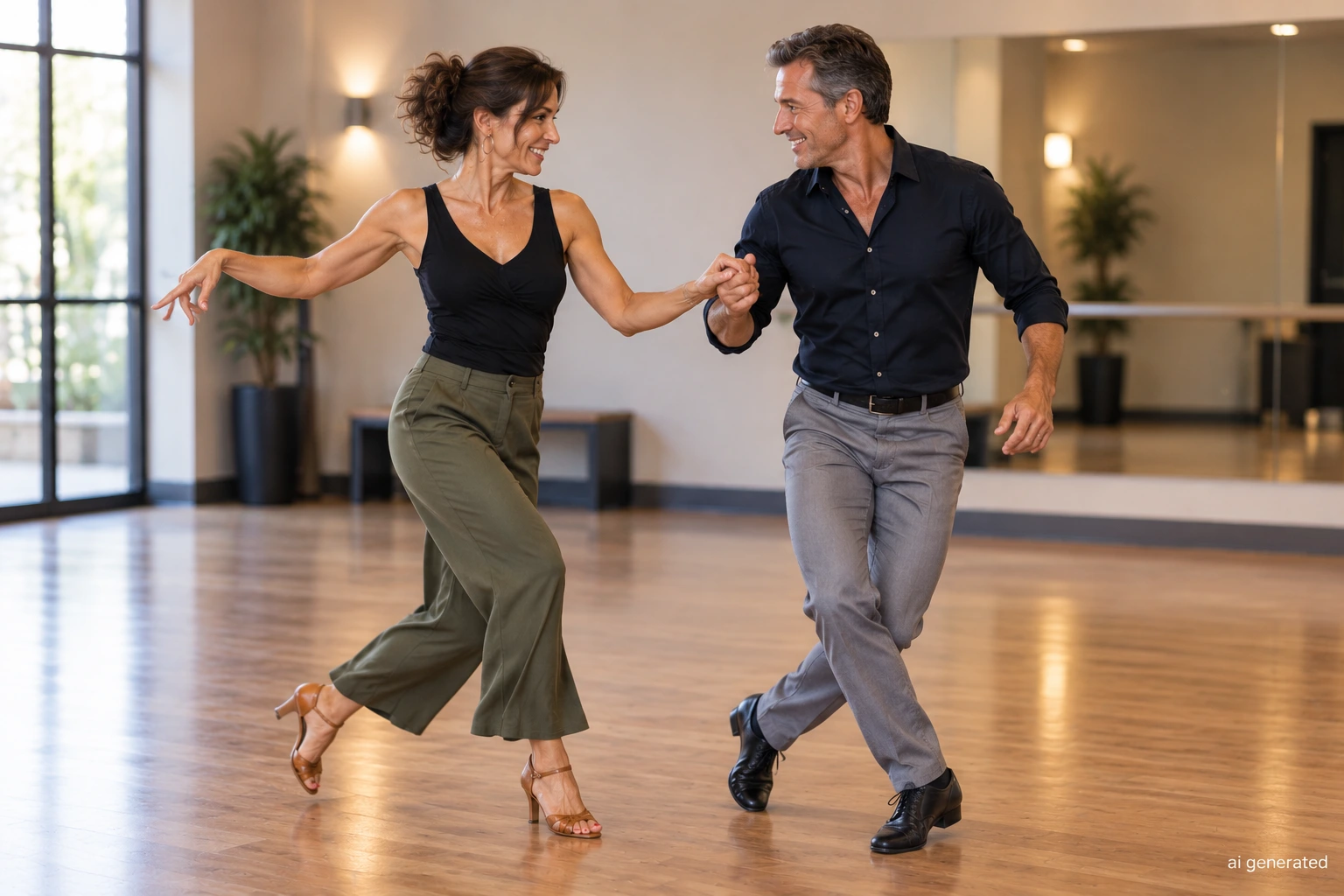
Cha-cha, sometimes called “Cha-Cha-Cha,” is a partner dance with a syncopated rhythm, lively hip movement, and compact steps. The music has a clear pattern that mixes slower weight changes with a quick triple step.
The name usually comes from the rhythm made by the dancers’ quick steps. As they move, the repeated triple step creates a sound that gives it a playful feel. This style stands out because it mixes structure with personality.
The timing gives you a clear pattern to follow, but you can also show your own style through direction changes, hip movement, and musical accents.
Cha-Cha History
Cha-Cha has its roots in early 1950s Cuba, where it grew out of the danzón and mambo. Cuban violinist and composer Enrique Jorrín noticed that dancers struggled with the off-beat rhythms of the music he played, so he simplified it into a steadier, more danceable beat.
Dancers responded with a quick triple step on the beat, and the name is said to come from the sound their feet made as they shuffled through it: cha-cha-cha. That simple, catchy rhythm is a big reason this dance is still so easy to recognize and fun to learn.
As the music caught on, the dance spread quickly beyond Cuba. By the mid-1950s, dancers in the United States and Europe were learning and adapting its steps, making it a favorite in both social settings and ballroom studios.
Today, it’s a must-know style for anyone interested in Latin ballroom dances. Its playful energy, sharp rhythms, and expressive hip action make it a hit at social dances and competitions alike.
Understanding Its Rhythm and Timing
Cha-Cha is danced in 4/4 time, and its counting pattern sets it apart from other ballroom styles. To make it easier to follow, we count the basic over eight beats: “1, 2, 3, 4-and-5, 6, 7, 8-and-1.”
The highlight is the chassé, a lively sequence of three quick steps that fit into just two beats. When you count “4-and-5,” you step on beat 4, again on the half-beat (“and”), and finally on beat 5. The second chassé works the same way on “8-and-1,” finishing as you start the pattern again. This quick triple step gives the dance its playful, unmistakable rhythm.
To really feel the dance, focus on clear footwork, quick weight changes, and Cuban motion, the relaxed hip action that comes from bending and straightening your knees with each step.
In most ballroom settings, the music plays at about 110 to 130 beats per minute, though the tempo can vary depending on the song and the style you’re dancing.
Basic Steps for Beginners
The basic step is a useful starting point because it builds rhythm, coordination, and weight transfer, all essential for more complex figures. A common beginner pattern is the basic forward-and-backward movement, though the exact sequence may vary by dance system.
Below is a simple pattern for the lead partner. The follower performs the corresponding opposite movement.
| Count | Steps ( Leader) |
| 1 | Left foot to the side |
| 2 | Right foot back for a rocking action |
| 3 | Place weight back on the left foot |
| 4 | Right foot to the side |
| and | The left foot closes to the right foot |
| 5 | Right foot to the side |
| 6 | Left foot forward for a rocking action |
| 7 | Replace weight back to the right foot. |
| 8 | Left foot to the side to start your side chasse |
| and | Close the right foot to the left foot |
Is Cha-Cha Beginner-Friendly?
Absolutely. This style is great for beginners because the basic steps are easy to learn, and the rhythm gives you a clear pattern to follow. You don’t need special coordination or any experience to begin.
Many of our students at Fred Astaire Dance Studios – Palisades started where you are now. During Cha-Cha dance lessons in Washington, DC, we’ll pay special attention to the basics so you can gradually develop the skills you need to move comfortably with a partner.
We’ll start at your pace and work on your footwork, timing, and hip action, everything that gives this dance its playful character.
Private lessons are helpful because we can match the pace to what you need, fix small mistakes, and help you build good habits from the beginning.
With regular practice, it can be a fun way to boost your coordination, sense of rhythm, and confidence. If you want more of a challenge, you can also try Pro-Am dancing.
Discover Cha-Cha Dance Lessons in Washington, DC
Learning the basic Cha-Cha steps is a great way to begin, but dancing really becomes enjoyable when you can move with the music naturally, without overthinking each step.
As you get better at timing, master the side chassé, and learn to shift your weight smoothly, you’ll start to feel more comfortable and confident on the dance floor. At Fred Astaire Dance Studios – Palisades, our private lessons help you focus on these skills one-on-one, with guidance that matches your experience and personal goals.
Schedule an introductory lesson or give us a call at 202-988-2758. To find out more about our studio, follow us on Facebook.