

For most beginners, Bachata is the easier place to start. That’s because it has a slower tempo and a side-to-side basic step. Salsa, on the other hand, calls for faster weight transfer and turns. It isn’t difficult, but it does take a little more time to feel comfortable.
That doesn’t mean the choice is made for you. Many new students try both dances before deciding which one suits them better, and some end up sticking with both.
What Is the Difference Between Salsa and Bachata?
Salsa is a fast Latin style built on a quick-quick-slow rhythm, while Bachata is slower and moves side to side, with a tap and a hip motion on the fourth beat. In the Salsa vs Bachata comparison, the difference starts with the music, and from there it spills over into everything else. The tempo, the direction of movement and the way you lead all change, so what changes too is how long it takes you to dance your first song.
| Parameter | Salsa | Bachata |
|---|---|---|
| Origin | Cuban son as the foundation, with the form danced today shaped in New York in the 1960s and 1970s | The Dominican Republic, a genre that emerged in the 1960s |
| Typical tempo | The NDCA reference for the nightclub category is 50 MPM, or 200 BPM | The NDCA reference for the nightclub category is 30 MPM, or 120 BPM |
| Basic step | Eight beats, with steps on 1-2-3 and 5-6-7 | Eight beats, three steps and then a tap on the fourth and eighth beat |
| How quickly you learn it | Figures come quickly, but the timing takes patience | You’ll pick up the basic step right away, with isolations coming later |
The numbers in the table aren’t strict rules. The reference tempos that the NDCA lists for social and nightclub dances give 200 BPM for Salsa and 120 BPM for Bachata, while the tracks a DJ plays in a club often sit outside those values. Bachata was added to the UNESCO list of intangible cultural heritage in 2019, and that entry defines the dance through a simple eight-step structure and pronounced hip movement.
How Salsa and Bachata Differ in Rhythm and Timing
Both dances count to eight, but you don’t step on every beat. In Salsa, there are three steps and then a pause, then three more steps and another pause, so the fourth and the eighth beat stay empty.
Bachata uses the same division, except there’s no pause. A tap comes instead, meaning you touch the floor with your foot and lift the hip, and that happens exactly on the fourth and the eighth beat. Since the tempo is slower, you’ve got more time to transfer your weight, which is why beginners get used to the rhythm more easily.
How They Differ in Footwork and Partner Connection
In Salsa, you travel across the floor, and turns appear in your very first figures. Bachata stays more compact: you dance mostly in place, stepping side to side. Because of that, Bachata uses a closer hold, and your partner is led through body contact rather than through long arm movements.
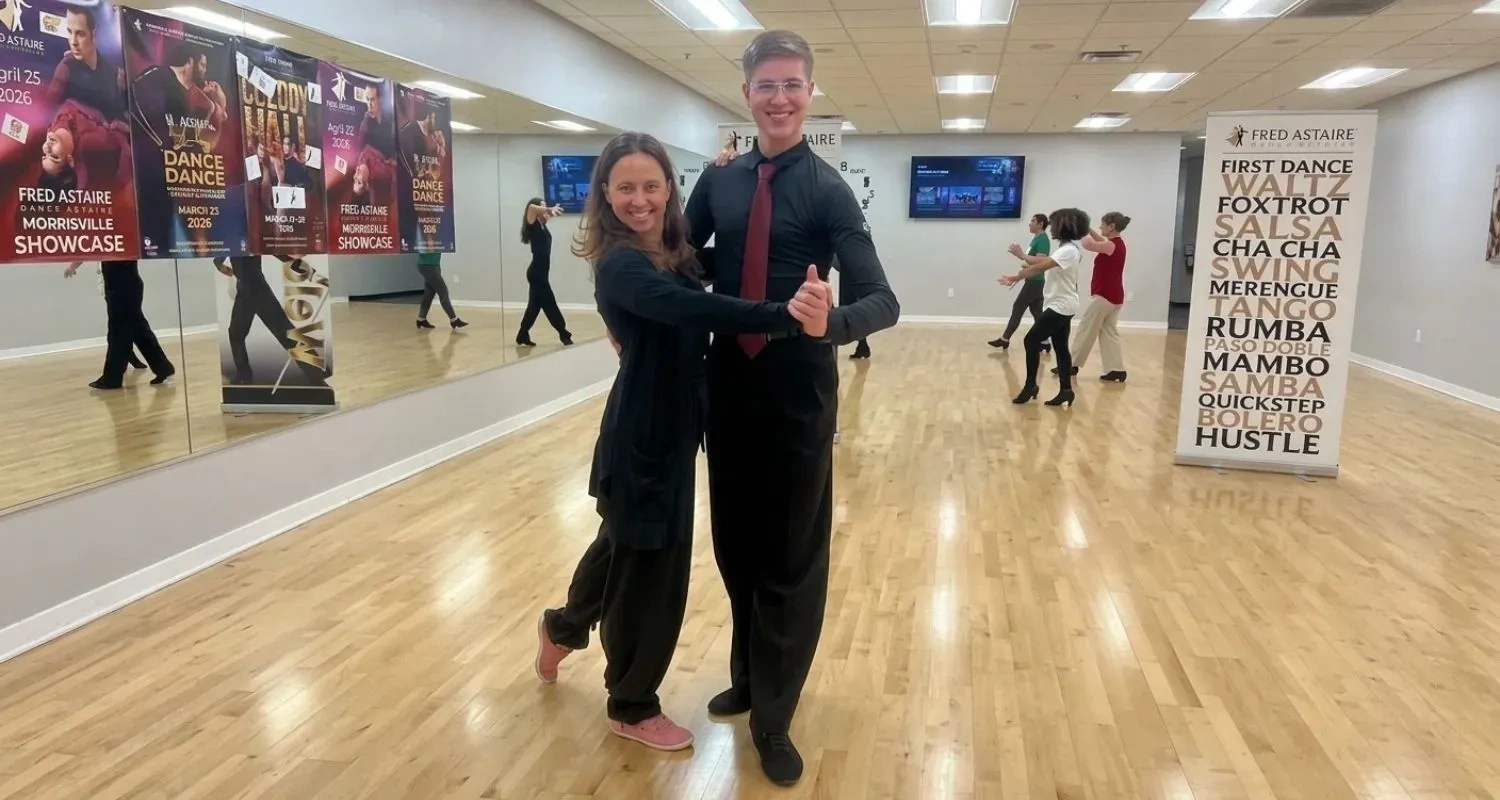
This difference shows up early in lessons. At Fred Astaire Dance Studios – Morrisville, a dance studio in Morrisville, NC that teaches both styles, beginners who start with Bachata often dance along with the music sooner. With Salsa, students first get comfortable with the timing and then add turns. For many people, that’s what helps them decide which dance to focus on first.
Are Salsa and Bachata the Same Dance?
No, they aren’t the same dance. They’re two separate dances, with a different rhythm, a different basic step and a different origin. As you’ve probably already gathered from the previous sections, Salsa draws its roots from Cuban son and got the form it’s danced in today in New York, while the other style emerged in the Dominican Republic.
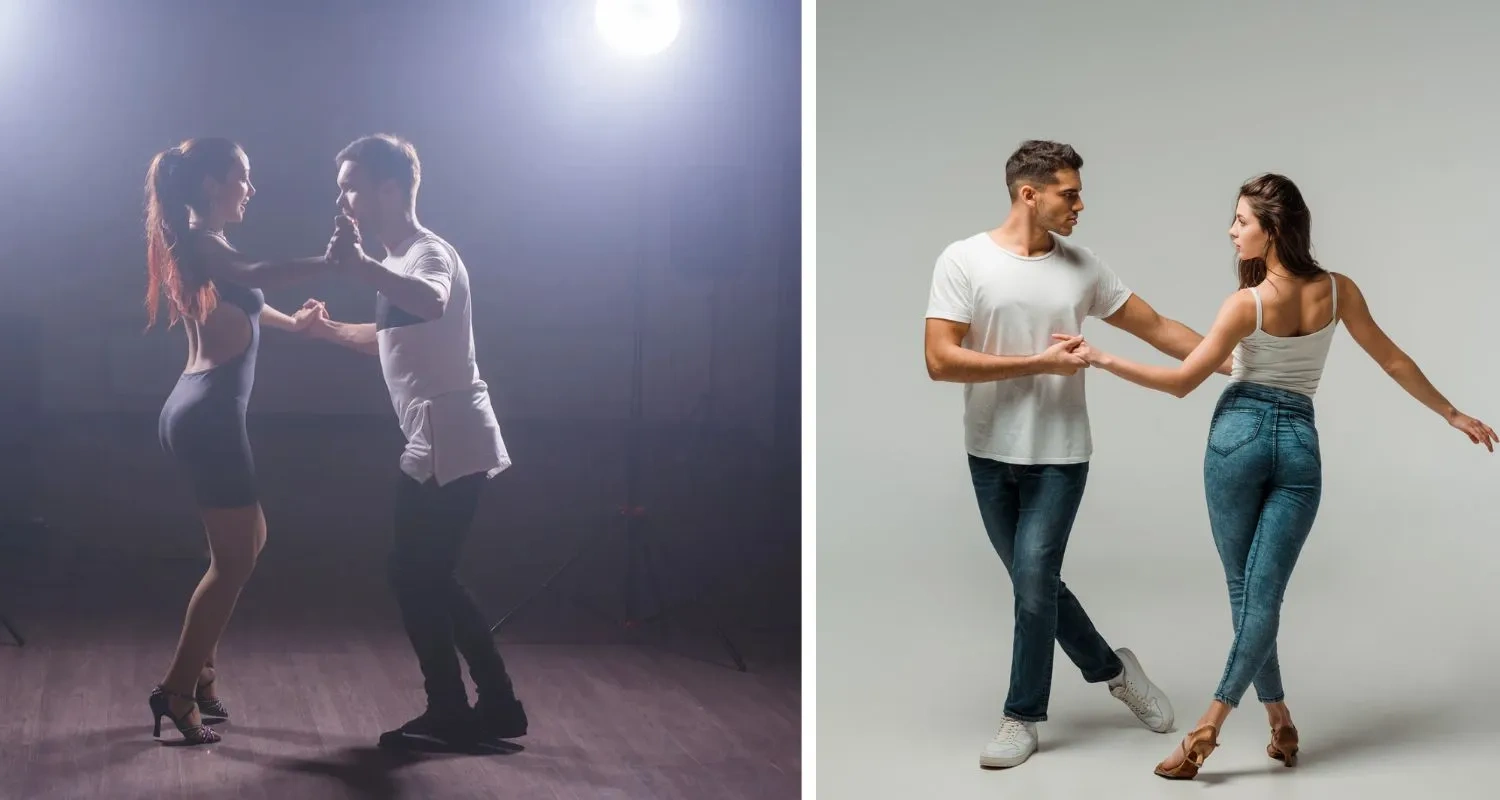
The confusion is understandable, though. Both dances count to eight, both are danced with a partner, and both get played at the same parties, often one after the other.
What sets them apart is the way the body moves. Salsa calls for turns and fast weight transfer, while the “Dominican style” needs only a few square feet and relies on contact with your partner. That’s why studios run these two dances as two separate programs, with a different pace of progress.
Is Bachata Easier Than Salsa?
Yes, Bachata is generally easier for beginners, because its basic steps move side to side and do so at a slower tempo. There are fewer things you have to do on the same beat, which is why your attention stays on the music instead of on your feet.
That, however, doesn’t mean it’s an easy dance. It may be less demanding at the start, but the higher levels call for body isolations, flawless hip control and precise weight in each step, which is something you build over months, if not years. With Salsa, the hardest part comes first. After you master the timing, each new figure builds on what you already know.
What Is the Hardest Latin Dance to Learn?
When people talk about the hardest Latin dances, Samba and Paso Doble usually stand out. Samba calls for a specific bounce, meaning work through the knees and feet that’s fairly demanding, while Paso Doble is defined by a posture and character that you learn as a separate skill.
Compared with Samba and Paso Doble, Salsa and Bachata are much easier to pick up, which is why they’re often recommended as a first step into Latin dancing. If you’re curious how other styles compare, our guide to choosing a Latin dance can help you find the one that suits you.
Salsa vs Bachata: Which One Should You Learn First?
Start with the dance whose music you already listen to, but if it makes no difference to you, begin with the slower one. The same logic applies to the other dances, so if you’re still not sure which dance family you want to settle on, you’ll find help in our article on which dance to learn first in Morrisville. Beyond that, the two criteria we’ll go through below can help you a great deal in making that decision.
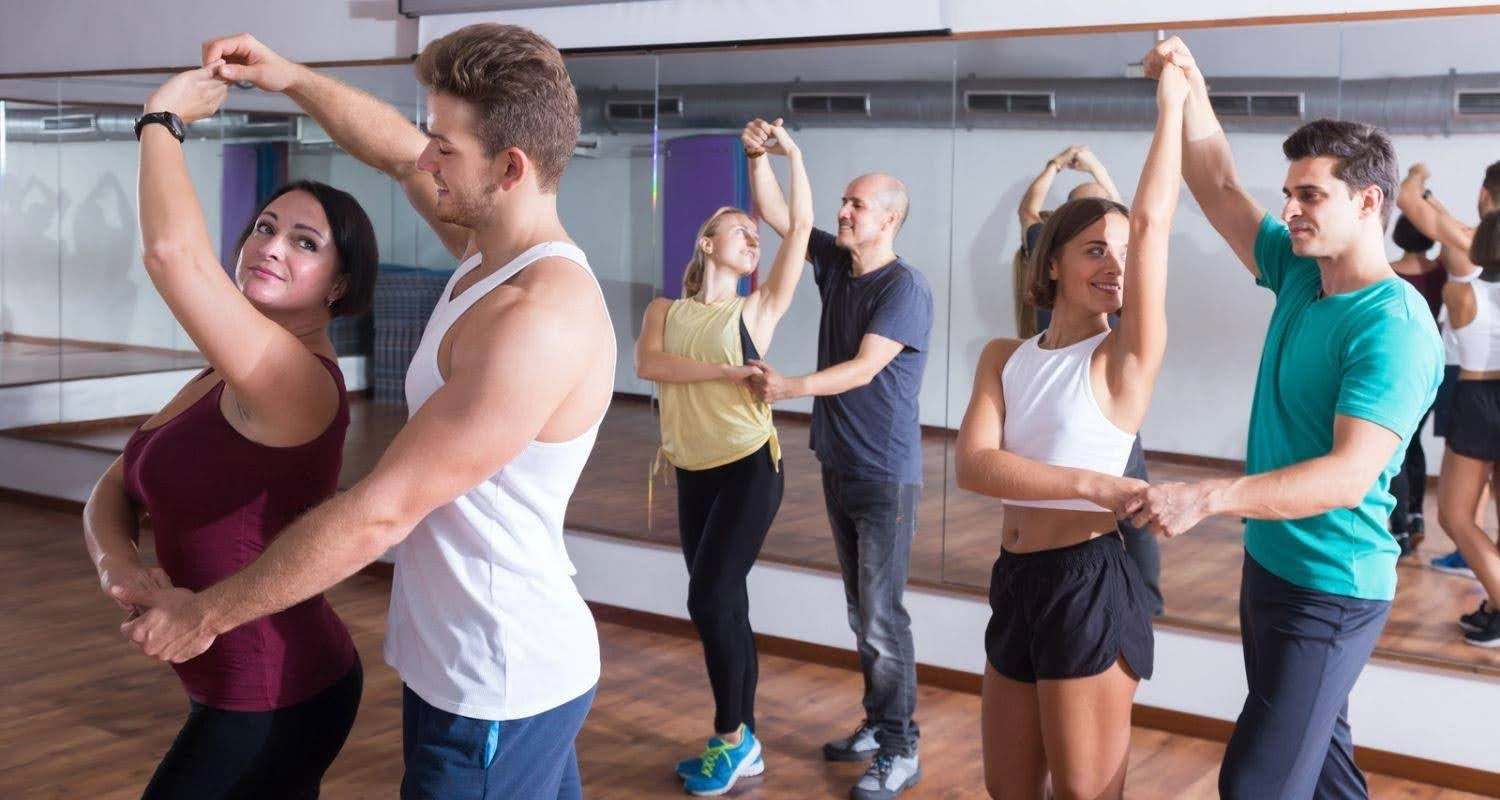
Start With Bachata If You Are New to Partner Dancing
Bachata is the safer first option if you’re entering the world of dance without any experience at all. We’ve already mentioned the reason, and that’s how the slower tempo leaves you time to think before every step you take.
We suggest you go with this style if:
- you’ve never danced with a partner
- you want to dance a whole song within a few lessons
- you have an event coming up soon, like a wedding or party
- you prefer slower music and a calmer rhythm
Start With Salsa If You Want More Energy
Salsa is the better choice if you already feel the rhythm and if fast music is something that suits you. It calls for a little more patience at the beginning, but you’ll start learning turns and figures much earlier than you would in Bachata.
We suggest you start with Salsa if:
- you follow the rhythm easily and count the music without thinking
- you like faster tracks and more energy on the floor
- you want a dance that gets played at almost every Latin party
- you don’t mind the first two weeks being a bit “chaotic”
Still torn between the two?
Our Latin dance classes in Morrisville, NC are a great way to try both before you decide.
What Happens in Your First Salsa or Bachata Class in Morrisville, NC?
Your first dance class at our studio starts with the basic step, not with choreography. Your instructor will first go through some of the most basic things with you, after which your first steps to the music will follow. No matter how you’ve settled the Salsa vs Bachata dilemma, the order we’ve just laid out always stays the same.
What follows after that is the hold with your partner and a first simple figure, usually a turn or a change of direction. What surprises most students is that by the end of the class they’re often already dancing to a song, though a considerably slower one than the songs advanced students dance to.
Private Lessons or Group Classes for Your First Latin Dance Steps?
You’ll make this decision based on your goals. In private dance lessons you work alone with an instructor, the class is tailored to you, and mistakes get corrected right away, which is why progress is much faster. On the other hand, in group dance classes you learn in a group, under an instructor’s supervision but with partners who rotate during the class.
If you’re coming as a couple, you can pick either of these two formats, since both can be adapted for two people. Couples preparing a wedding dance or wanting faster progress start with private dance lessons, while the group format suits those who want social interaction and a livelier atmosphere better.
A partner, however, isn’t a requirement for either one. If you’re curious about why that is, we suggest you read our article on whether you need a partner for dance lessons.
Salsa vs Bachata: Try Both at Fred Astaire Dance Studios in Morrisville, NC
To sum up, with Bachata you’ll get out on the floor faster, while with Salsa things go a bit slower at first, which pays off considerably later on.
The fastest way to find out from your own experience which dance suits you better is to dance it. That’s why we suggest you book an introductory dance lesson at our studio and see how the basic steps of both styles feel.
Contact us, schedule a time, and settle the Salsa vs Bachata dilemma in the most practical way possible, which is on the dance floor.
FAQ
Do you need any musical background to start?
You don’t need any musical training. It’s enough to focus on counting out loud and following the bass and the percussion, since they carry the beat you’re looking for, while the melody and the vocals often go outside it.
Can you learn both styles at the same time?
You can, but it’s more practical to add the second style only once you reach the level where you do the basic steps without thinking. If you start both at the same time, your timing can easily get mixed up, which tends to result in somewhat slower progress.
How much should you practice between classes?
Short and frequent gives a better result than doing longer sessions on your own right before class. Ten to twenty minutes a few times a week works best for most people and lets your body remember how to transfer weight and feel the rhythm.
Can you switch styles later if you pick the wrong one?
Of course, the Salsa vs Bachata decision isn’t final, and many students switch to the other style during the first few months or carry on with both. The basic steps and the work on timing you’ve mastered by then will stay useful to you either way.