
Argentine Tango is an improvised partner dance that originated in Buenos Aires and Montevideo. It’s usually danced in a close embrace and built on walking rather than on a learned sequence. Ballroom Tango works differently: partners keep a structured frame and move through set figures. The real difference between them isn’t the name, but how the next step is created, improvised in the moment or drawn from a learned pattern.
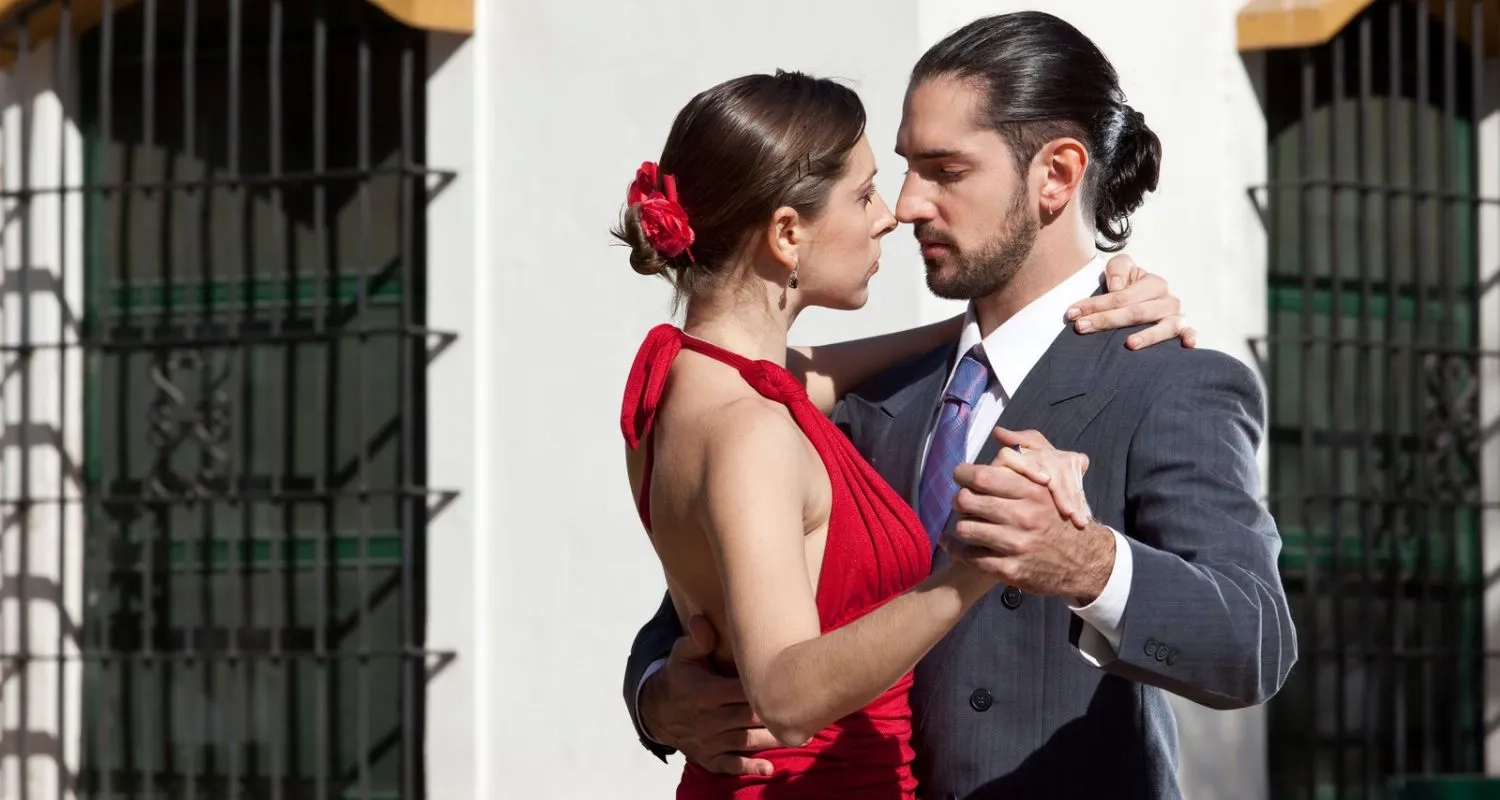
If you’re choosing between these two styles in Morrisville, NC, it’s good to know what you can expect once you step onto the floor. Both are taught at Fred Astaire Dance Studios, which is why below we’ll share with you, firsthand, the differences between these two styles so you can get an idea of which one will suit you better.
What Is Argentine Tango?
Among argentine dances, this is the one danced most outside Argentina itself. It’s a partner dance in which two people move through a shared walk, connected by an embrace that carries the information about every next step. That embrace is the foundation of how this style is danced.
According to UNESCO, which inscribed it on the Representative List of the Intangible Cultural Heritage in 2009 under a joint nomination by Argentina and Uruguay, it was developed by the lower urban classes of Buenos Aires and Montevideo, out of a mix of European immigrants, descendants of African slaves and local criollos.
Why This Dance Is Improvised Instead of Learned as Choreography
Since there’s no agreed sequence, a dancer in the couple doesn’t know which step is coming until they feel it. That’s exactly why the information about the next step has to be felt. It has to come through the body completely naturally, and not through the memory of a learned figure you’ve drilled countless times.
What follows from that is entirely logical, which is that the less is known in advance, the closer the contact has to be. That’s where the embrace with chest contact comes from, along with the smaller step that’s fairly easy to change mid walk. Ballroom Tango, on the other hand, replaces that freedom with structure, which is why the steps can be bigger and the frame firmer.
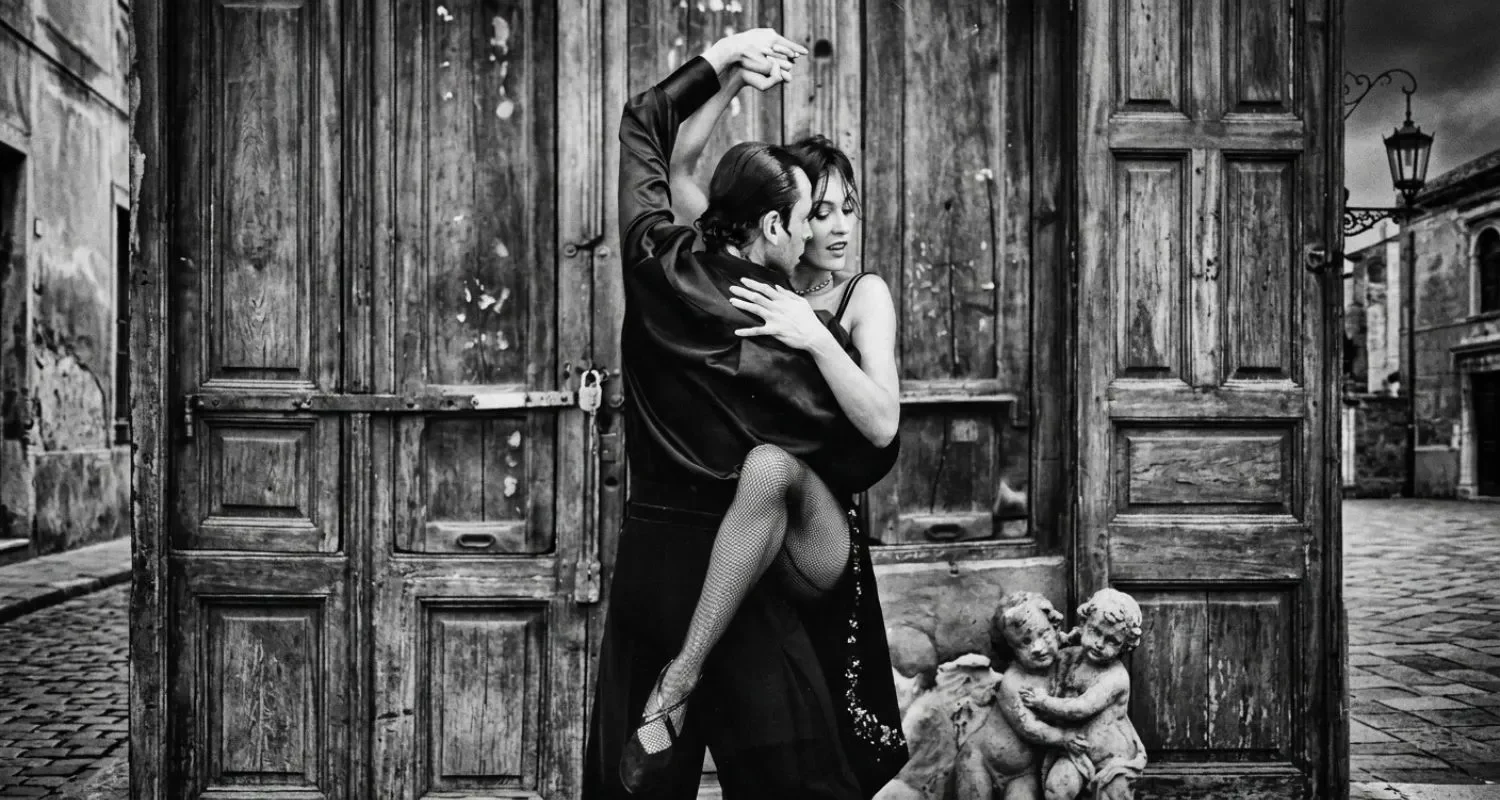
What’s the Difference Between Tango and Argentine Tango?
Ballroom Tango is danced in a fixed frame, with sharp, broken movement, while the Argentine version is improvised in a close embrace, softly and in a walk. And that, in short, is what sits behind the key difference between tango and Argentine Tango, while everything else is a consequence of that one difference.
In the table below, you can best see the comparison covering the differences between these two dances:
| Parameter | Ballroom Tango | Argentine Tango |
| Origin | European and American ballrooms, modeled on the Argentine original | Buenos Aires and Montevideo, late 19th century |
| Hold | Compact, structured frame with body contact | Close embrace, contact through the chest |
| Movement quality | Sharp and broken, with abrupt stops | Soft and unbroken, based on walking |
| Structure | Prescribed figures arranged by levels | Improvisation, with no sequence agreed in advance |
| Music | Orchestral arrangements with a pronounced rhythm | Tango orchestras, along with milonga and vals |
| Where it’s danced | Ballrooms and competitions | Milongas, meaning social dance nights |
It’s worth knowing that the Argentine version of this style has its own substyles. The best known are tango salón and milonguero style, which use a closer embrace and “circular” movement around the floor, and tango nuevo, in which the embrace is wider and room is left for bigger figures.
Tango salón is the version danced at milongas, in a social setting. The embrace is closed, the step is small, and the couple moves in a lane along the edge of the floor, counterclockwise. That movement is called la ronda and it works like traffic: you don’t cut across, you don’t stop in the middle of the floor, you respect the couple in front of you. That’s why the space there is limited and the figures are more modest.
Tango nuevo came about in the nineties, out of an analytical approach developed by Argentine dancers such as Gustavo Naveira and Fabián Salas. The embrace opens up, partners move slightly apart, and that opens room for bigger movement, rotations and off-axis steps. It calls for more space, so it’s danced less often at a crowded milonga. You can find an overview of what we practice in our studio on the page about Argentine Tango in Morrisville, NC.
How the Embrace Changes the Way You Move
In the ballroom hold, partners keep a firm, structured frame, and the lead comes through that frame. The Argentine embrace shifts that job to the chest, because both leading and following happen through movement of the torso. That’s where the softer movement comes from, along with the smaller step and changes of direction that feel softer and more fluid.
What confuses beginners at first usually isn’t the step, but the closeness. In their first lessons most students say it feels strange to hold someone they don’t know that close, which is perfectly normal, but that discomfort usually passes after a few lessons. The moment partners feel that the embrace is doing the work for them, everything gets much simpler.
Is Tango a Latin or a Ballroom Dance?
Tango is a ballroom dance, not a Latin one, despite its South American origin. In the American system, it belongs to the Smooth category, along with Waltz and Foxtrot, where couples travel around the floor. When people talk about Tango in a ballroom setting, this is usually the version they mean.
Argentine Tango isn’t part of the ballroom competition system. It has its own championships, but it’s mostly danced socially at milongas, nights where people dance without judges or a set repertoire. Still deciding which dance to start with? Our guide to the best dance style to learn first can help.
Which Tango Is Harder to Learn, Ballroom or Argentine?
Argentine Tango isn’t harder to start, but it is harder to master, because there’s no ready pattern you can fall back on when you stall. Ballroom Tango gives a beginner figures to memorize and repeat, while the Argentine version asks you from the very first lesson to lead or follow without that safety net.
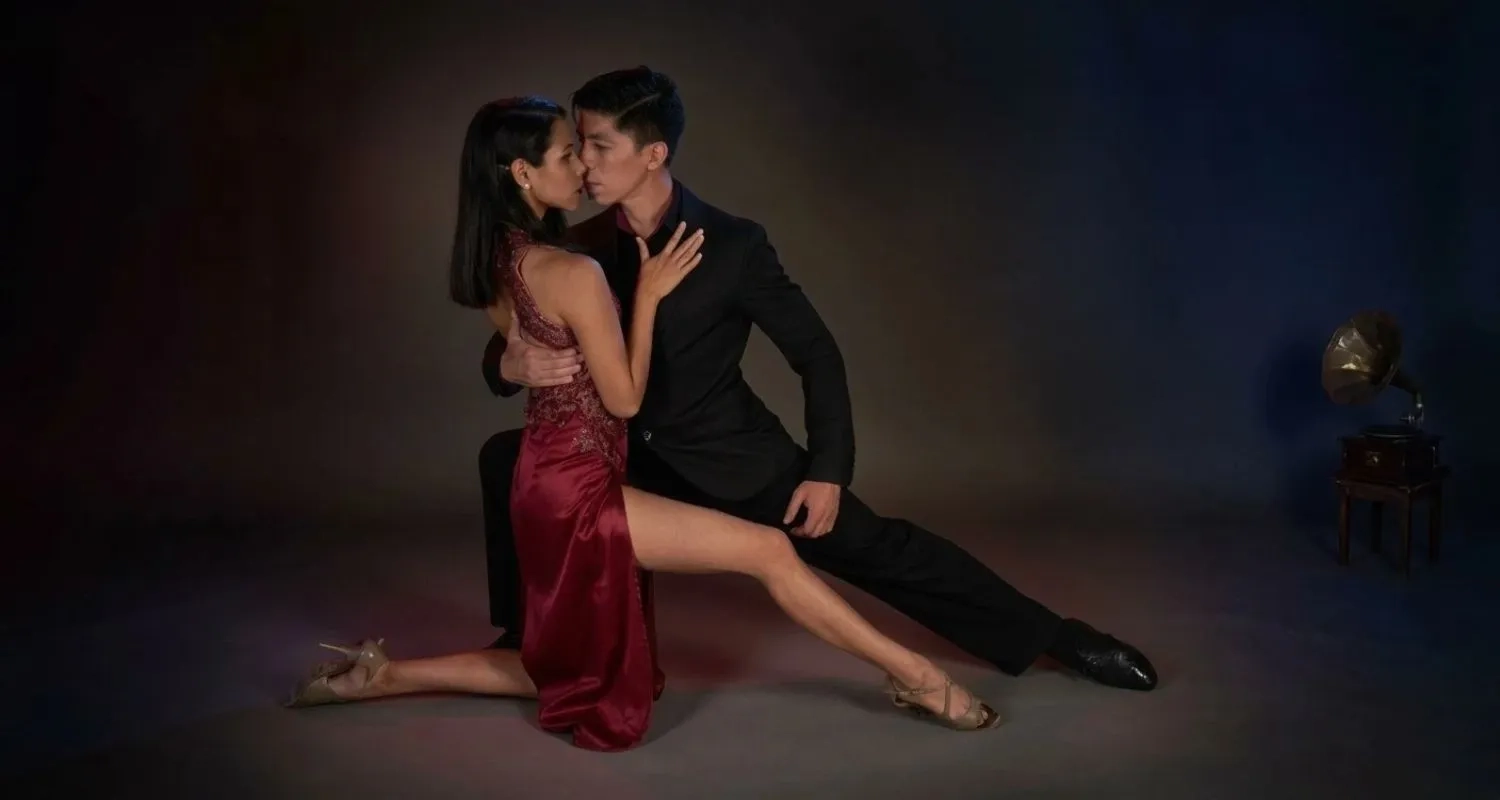
How Can Beginners Start With Argentine Tango
It starts with the walk and the embrace, never with figures. The first lesson is mostly walking to music, with your weight transferring fully from foot to foot and without a single learned sequence. It sounds simple until you try to do it in time and with a partner, and then it quickly turns out that footwork carries more of the load than it seems.
That’s exactly why we suggest you treat your first lessons as getting used to the dance, rather than as learning steps. If you’re held back by never having danced or by the feeling that it’s too late to start, you’re not alone in that, so we’d advise you to also read why age is no barrier to starting dance.
What Your First Argentine Tango Lesson in Morrisville, NC Looks Like
Your first lesson at our studio starts with a short conversation about what you want to achieve, after which the instructor will show you the basic walk, first without a partner and then in a couple. Only once you’ve got the most basic movement down does the embrace come in, along with transferring weight on the spot, until you start recognizing the moment your partner begins to move.
Beyond that, one thing that stands out is that you have the option to choose between several formats. Private lessons run at the pace you set and are tailored purely to you, while group classes keep a fixed schedule and rotating partners, which is why you’ll learn faster how to lead or follow someone you don’t know.
All in all, the fact is that you don’t need a partner in either case, because those who come on their own dance with an instructor. You also don’t need special footwear. For this dance, shoes with a smooth sole do an excellent job.
Feel Both Styles at Fred Astaire Dance Studios
Reading about the two styles only gets you so far. The difference is easiest to understand on the dance floor, the moment your partner signals a step to the side through the embrace while you’ve already started moving forward.
Book your first lesson and find out firsthand whether Ballroom Tango or Argentine Tango suits you better.
Call us at (919) 701-0000 or get in touch with our studio in Morrisville, NC to schedule your first lesson. You’ll find us at 3033 Village Market Place, Morrisville, NC 27560.
FAQ
What should I wear and what shoes should I bring to my first lesson?
Wear something that lets you bend your knees freely, and put on shoes with a smooth sole. Sneakers with a rubber sole stick to the floor and make turning harder, so leave them for another occasion. Apart from that, and maybe a towel and a bottle of water, you don’t need anything.
Can I Come Without a Partner?
You can, and it’s a very common thing. You should know that in private lessons you dance with an instructor, while in group classes partners rotate during the lesson, which is the fastest way to learn to lead or follow someone you don’t know.
Do I Need Dance Experience?
You don’t. Everything starts with the walk and weight transfer, and that’s the level people who’ve never stepped onto a dance floor start from as well. If you have experience from other styles, you’ll pick up the timing faster, but that’s not a requirement.
How Much Should I Practice Between Lessons?
Short and frequent gives a better result than one long session right before the lesson. Ten minutes or so a few times a week, in the kitchen or the living room, is enough for your body to remember the weight transfer, and that’s enough to start with.
Can I Learn Argentine Tango and the Ballroom Version at the Same Time?
You can, but most beginners get more out of starting with one. Argentine Tango and the ballroom version call for a different embrace and a different logic of leading, so learning both at the start tends to confuse. Once your walk becomes solid, the second style comes easier, and the difference between them becomes much clearer.