

If you’ve been wondering what East Coast Swing is, it’s a six-count partner dance danced to swing, rockabilly and early rock and roll, which makes it one of the easiest social dances to learn. The basic step repeats and often doesn’t change until the end of the song. That’s why a beginner can get into the rhythm from the very first lesson, instead of counting steps in their head and thinking about what comes next.
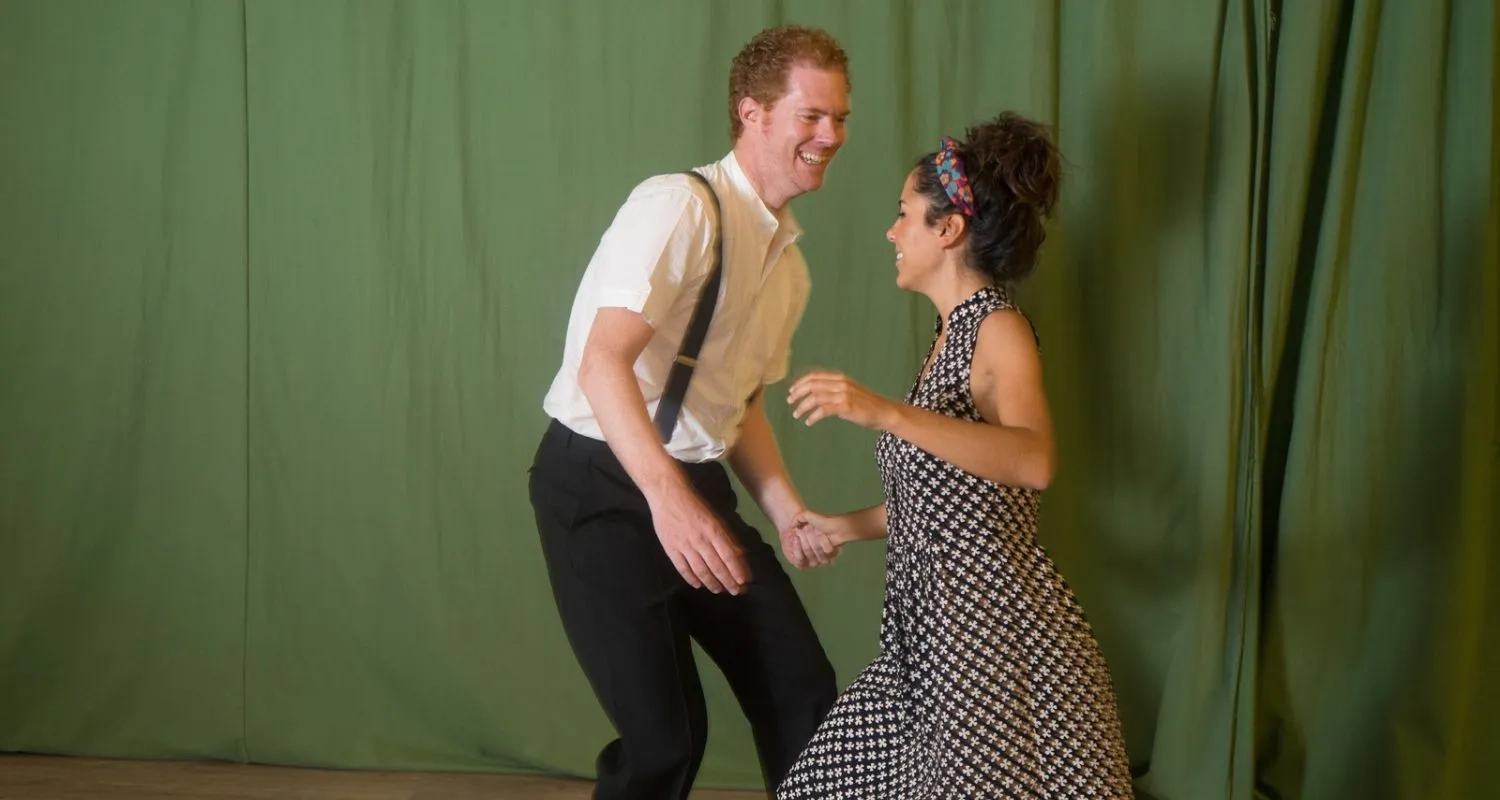
If you’re torn about whether to start dancing at all, what you should know is that this is probably the best dance to start with. The reason is that it gives you a sense of progress very quickly, which often turns out to be a strong motivating factor.
In this article, we’ll explain what that basic step is, where this dance comes from, how it differs from West Coast Swing, and what music you practice it to.
What Is East Coast Swing?
East Coast Swing is a simplified, standardized version of the original swing dances. It uses a six-count basic step, while most swing music is counted in fours. That means the step doesn’t always start on the “1” of the music, but with practice, you’ll feel it fall into place.
What Are the East Coast Swing Basics?
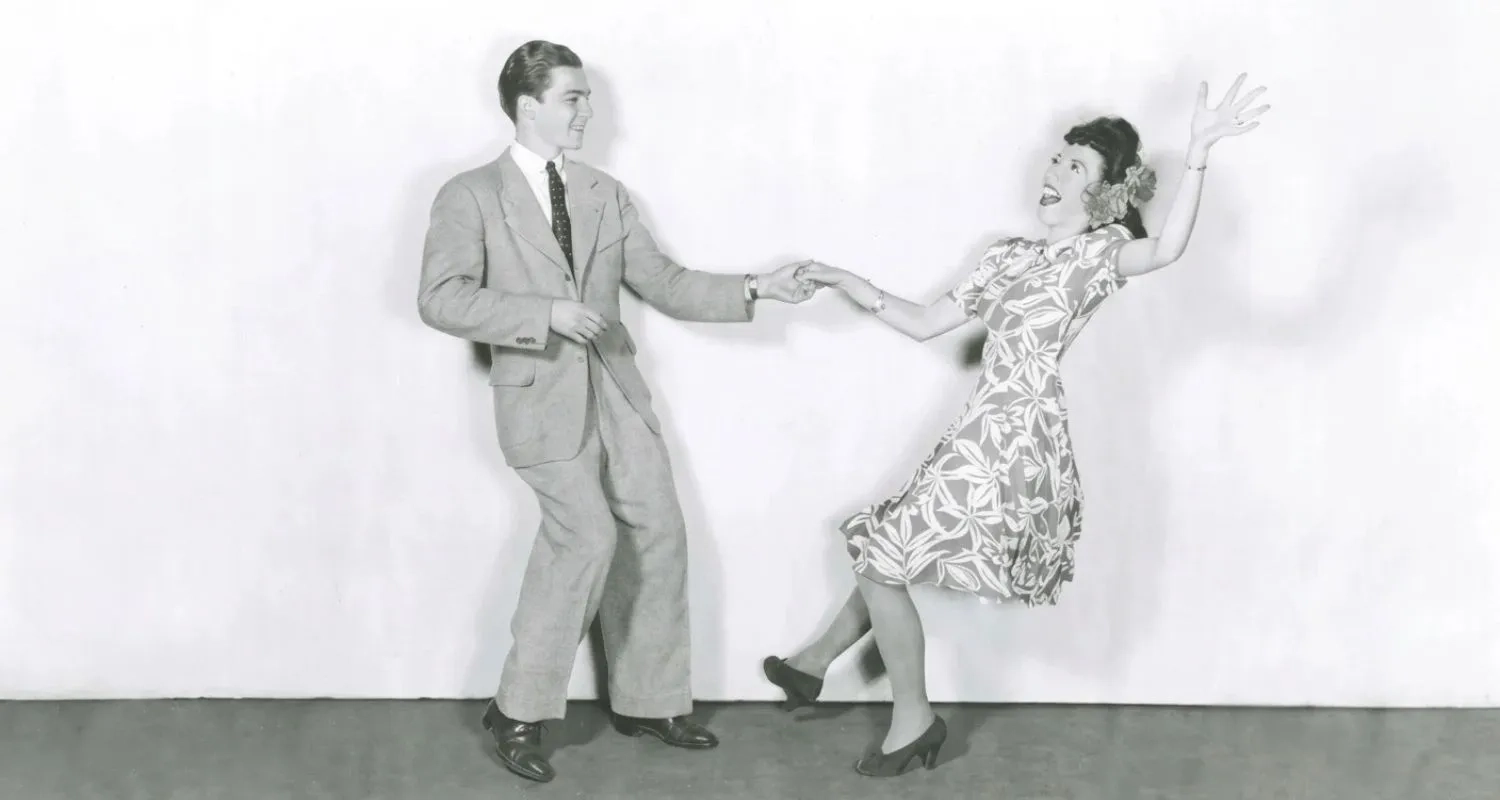
The basics fit into three elements: triple step, triple step, rock step. The count is 1-and-2, 3-and-4, 5-6, so three steps in the time of two counts, then three more, then a step back and a transfer of weight forward. The whole figure turns around the couple’s shared axis rather than in a straight line, which is why you only need a few square feet to practice at home.
What surprises beginners most is that the rock step isn’t a step backward in the full sense, but a short transfer of weight. Once you’ve got that down, the rest takes care of itself.
Where Did East Coast Swing Come From?
This dance came about as a simplified version of the Lindy Hop, a dance that grew out of Harlem in the late 1920s. As the Library of Congress notes, the name Lindy Hop appeared shortly after Charles Lindbergh flew across the Atlantic in 1927, and the dance was made famous at the Savoy Ballroom. In the 1930s, Frankie Manning added acrobatic “air steps” to it, which turned the Lindy into a spectacle but also into too demanding a style for the average dancer.
That’s exactly where the need for a simpler version came from. In the 1950s, dance studios took the basic rhythm, cut out the improvisation and the acrobatics, and ended up with a step you can learn in just a few lessons. That standardized version is still taught in American studios under the same name today.
Is This a Good Style for Complete Beginners?
Yes, East Coast Swing is one of the best first dances for adult beginners, because, as we’ve already pointed out, the basic step repeats in a fixed six-count pattern. When you don’t have to memorize the step, your attention shifts to leading, posture and the music, and that’s what turns steps into dancing. For that reason, the instructors at Fred Astaire Dance Studios in Morrisville, NC recommend it to new students.
How Long Does It Take to Learn the Basic Step?
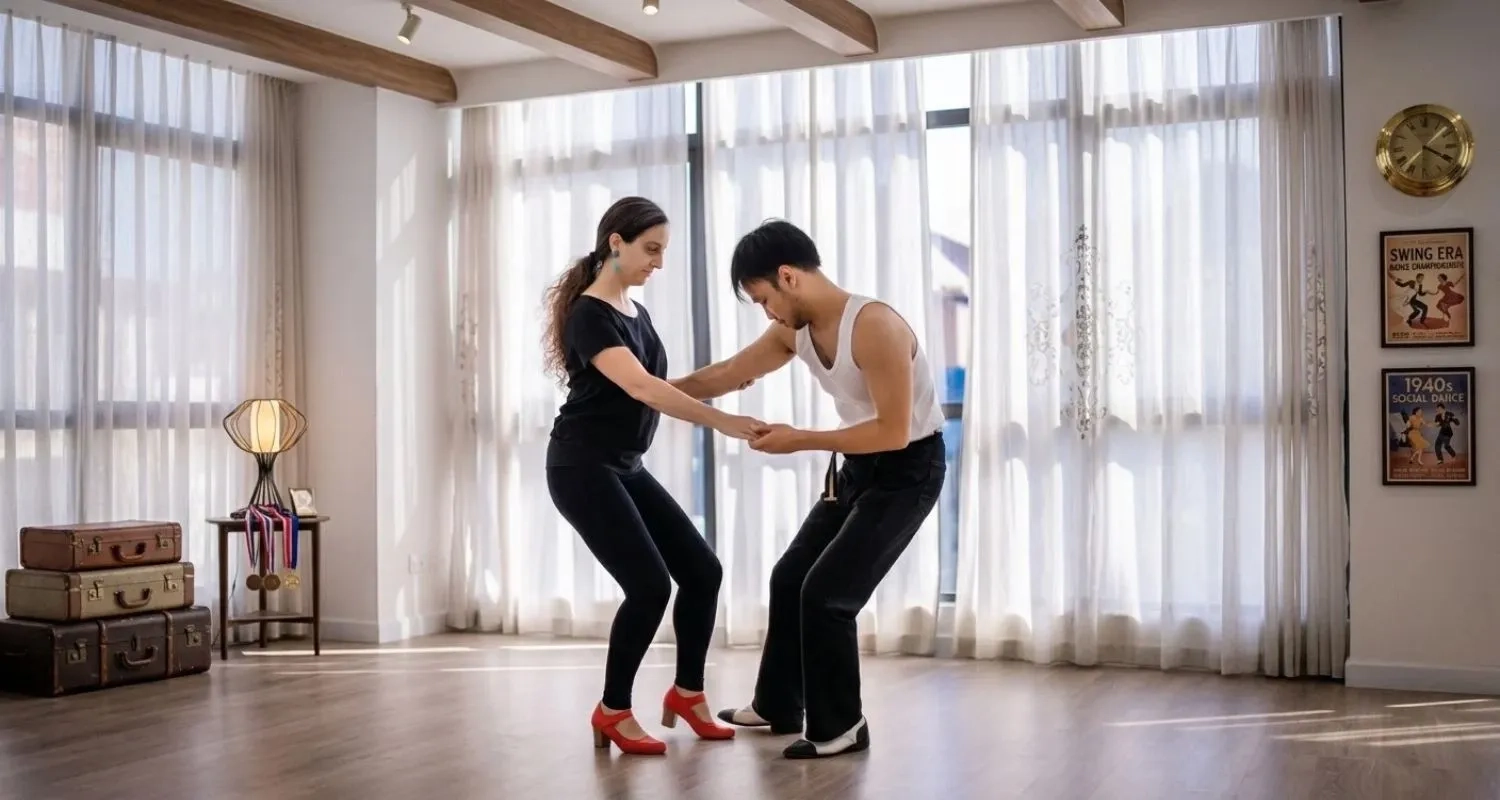
Students usually get the basic step down within their first few lessons, and most of them connect it to the music through their first few weeks of regular work. What takes longer is a clean triple step at a faster tempo, since your feet often struggle to keep up with the music at the start. We wrote about why footwork is the most demanding part of learning to dance in “Is Footwork in Dancing Really the Hardest Part?”, and we’d definitely recommend giving it a read.
It’s also worth knowing that the first couple of lessons usually come down to counting in place, the triple step without a partner, the rock step, and then putting all of that together. In the second week, an underarm turn gets added, and that’s when most people first feel like they’re really dancing rather than practicing. In any case, if you’re still not sure which style suits you and which dance you’d like to take up, we suggest reading our guide “What’s the Best Dance Style to Learn First in Morrisville?” as well.
What’s the Difference Between East Coast and West Coast Swing?
The East Coast is circular and bouncy, the West Coast linear and smoother, because West Coast Swing moves inside an imaginary strip on the floor called the slot. That’s where the difference in character comes from, so the first one feels cheerful and a bit playful, while the second leaves a more composed and elastic impression.
| Parameter | East Coast Swing | West Coast Swing |
| Count | Six counts: 1-and-2, 3-and-4, 5-6 | A combination of six and eight counts |
| Movement | Circular, the couple rotates around a shared axis | Linear, within the slot |
| Music | Swing, rockabilly, early rock and roll | Blues, R&B, slower pop |
| Tempo | Around 140 BPM per the NDCA tempo chart | Around 112 BPM per the NDCA tempo chart |
| Character | Bouncy and energetic | Smooth and elastic |
| Difficulty for beginners | Low | Medium |
Practically speaking, the East Coast Swing vs West Coast Swing comparison comes down to how quickly you want to dance your first song. Our recommendation is to get one of them down first and only then move on to the other.
Which Songs Work Best for This Style?
Good songs for this dance have a clear beat and a steady tempo all the way through. According to the NDCA tempo chart, the competition tempo for this style is around 35 measures, or 140 beats per minute. That’s why you should pick slower songs for your first lessons, since they make it easiest to hear exactly where the rock step falls.
For your first steps, 115 to 140 BPM:
- “Fly Me to the Moon”, Frank Sinatra (119 BPM)
- “Beyond the Sea”, Bobby Darin (136 BPM)
- “Come Fly With Me”, Frank Sinatra (139 BPM)
Once the step settles in, 140 to 160 BPM:
- “Peggy Sue”, Buddy Holly (148 BPM)
- “All Shook Up”, Elvis Presley (150 BPM)
- “L-O-V-E”, Nat King Cole (156 BPM)
Classics over 165 BPM:
- “In the Mood”, Glenn Miller (172 BPM)
- “Boogie Woogie Bugle Boy”, The Andrews Sisters (172 BPM)
- “Rock Around the Clock”, Bill Haley & His Comets (182 BPM)
The songs in the third group are the classic swing hits you hear in movies, but they’re too fast for triple steps. For songs like these, dancers switch to single rhythm, replacing each triple step with a single step: step, step, rock step. If you’ve ever felt like you couldn’t keep up with a fast swing song, this is usually why. The music isn’t the problem; the step just needs to change.
Where Can You Take East Coast Swing Dance Lessons in Morrisville, NC?
East Coast Swing dance lessons in Morrisville, NC at our studio are organized in three formats: private lessons, group classes and social nights where you put what you’ve learned into practice. A private lesson is one-on-one; the instructor follows your pace and corrects you when needed, which gives beginners the fastest results.
You don’t need a partner for any of it. Anyone who comes on their own dances with an instructor and gets full attention during the lesson, while in group classes, we rotate partners. We covered that topic in “Do You Need a Partner to Take Dance Lessons in Morrisville?”, so we’d suggest reading it and deciding for yourself what suits you best.
All in all, coming in is simpler than most people expect. At the start, you’ll have a short conversation with your instructor about what you want to achieve, and then you step straight onto the floor and begin with the basics.
Learn This Style With Our Dance Instructors in Morrisville, NC
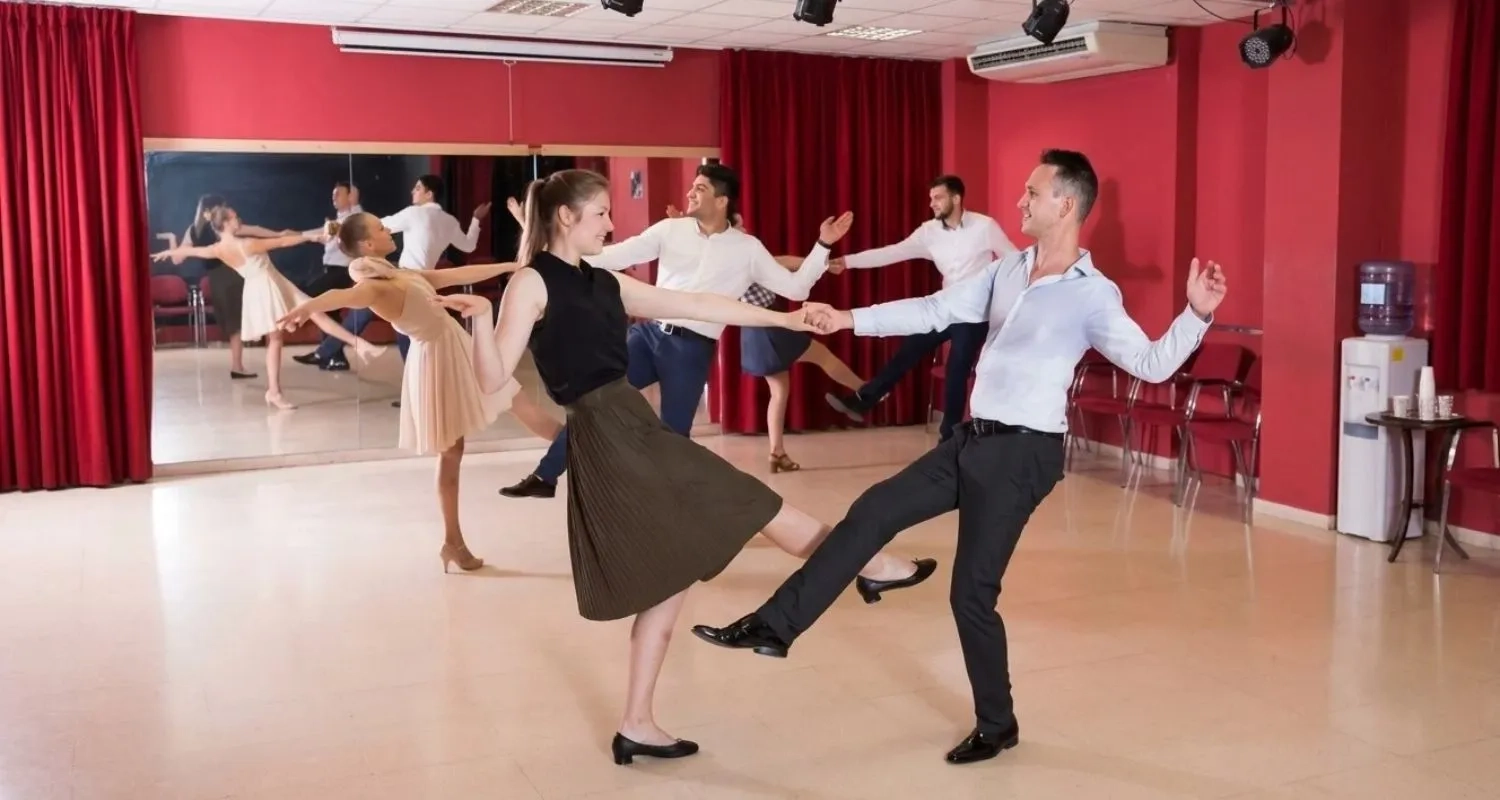
To sum up: East Coast Swing is a six-count dance, with a step that repeats, music you already know and a very short path to your first song on the floor. That’s why we at Fred Astaire Dance Studios in Morrisville, NC recommend it to people who have never set foot on a dance floor before.
If you’d like to try it before you make a decision, take advantage of our offer for new students, and if you have a question about the schedule or the levels, contact us and book your first appointment. We’re waiting for you!
FAQ
What Do You Wear to Your First Lesson?
Wear something you can bend your knees freely in, and for footwear, shoes with a smooth sole are best. If you don’t have shoes like that, come in whatever you’ve got, since the first lesson is slow and stays in a small space anyway.
What Do I Do If I Lose the Step in the Middle of a Song?
Stop for a moment, wait for the strong beat and start again from the first triple step. Don’t try to jump into the middle of the figure, because that way you lose what was working up to that point. Experienced dancers do this several times in a single song, just faster and without a pause anyone notices.
How Is This Dance Different From Jive?
Jive is the competitive Latin version of swing, it’s danced noticeably faster and it calls for a pronounced knee lift and a sharp chasse step. East Coast Swing stays lower in the knees and allows a more relaxed posture, so it’s easier to keep going all evening. That’s why Jive sits in the Latin program, while swing is taught as a dance for nights out and celebrations.
Can You Learn To Dance Later in Life?
You can. East Coast Swing has no jumps, no lifts and no sudden changes of direction, so the physically demanding side of the work is smaller than in the faster Latin dances. The tempo is chosen to suit the student, so you start from slower music and shorter sets of repetitions.