

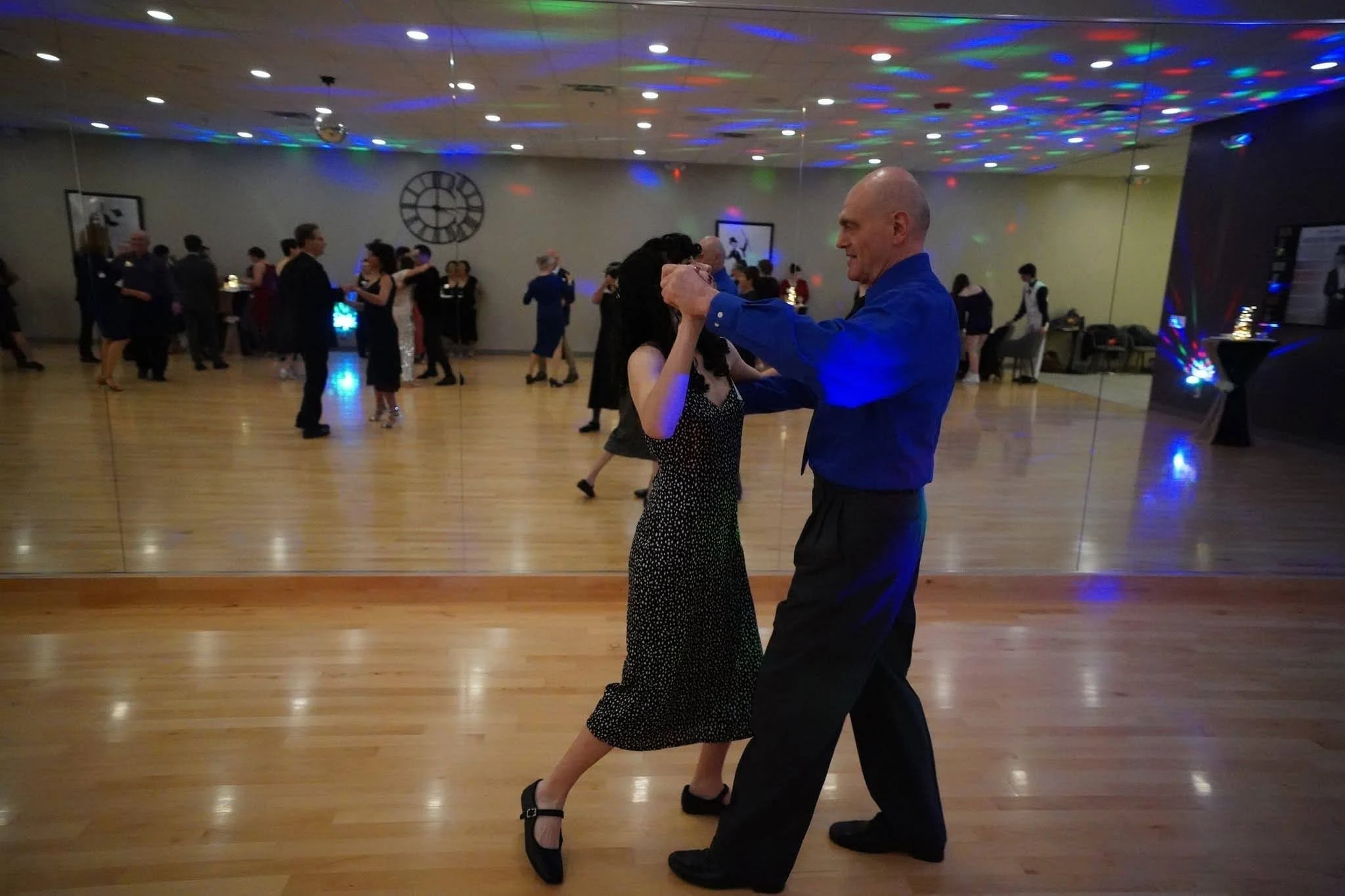
Argentine Tango is an improvised partner dance with no set choreography, so beginners start with the embrace and the walk. Once those two feel natural, moves like the ocho come next.
On screen, Tango usually looks dramatic and complicated. The first lesson tends to surprise people, because you simply walk, listen to your partner and get used to dancing close to someone.
How Is Argentine Tango Different From Other Dances?
This style shares its name with Ballroom Tango, but it runs on very different rules. The biggest difference is improvisation.
Improvised, Not Choreographed
There’s no fixed pattern that repeats through a song. The leader chooses each step in the moment, and the follower feels it through the embrace and responds.
The Encyclopedia of Latin American History and Culture, in its entry on the history of Tango, traces the dance to the poor outskirts of Buenos Aires around 1880. It blended the Spanish-Cuban habanera, the Argentine milonga and the dance traditions of Afro-Argentine communities. In 1913, it set off a full-blown craze across Western Europe.
Ballroom Tango vs. Argentine Tango
Put the two side by side and the differences show up right away. As we mentioned in our overview of ballroom dance styles, the ballroom version moves in sharp, quick bursts as it covers the floor. The Argentine style is softer and built around the embrace.
| Ballroom | Argentine | |
|---|---|---|
| Hold | Closed ballroom frame | Embrace, open or closed |
| Movement | Travels around the floor in long, sharp bursts | Travels around the floor in the ronda, with frequent pauses |
| Character | Sharp, staccato | Soft, walking, with pauses |
| Structure | Set figures | Improvisation |
What Do You Learn First in Argentine Tango?
At our dance studio in Ann Arbor, MI, your first lesson focuses on three things: the embrace, the walk and your first figure. Each one builds on the one before, so the order isn’t random.
The Embrace
In Argentine Tango, the embrace, or abrazo in Spanish, is how partners hold each other. In an open embrace, partners keep a little space between them for figures, while in a close embrace they connect through the upper body.
Every signal travels through the embrace, so instructors start building it in the very first lesson.
The Walk
The walk, or caminata, looks ordinary, but each step starts from the body, not the feet. The follower usually walks backward, so a lot of early practice goes into balance.
Washington University School of Medicine’s article on Tango and balance in Parkinson’s disease describes a study of 19 patients and points out that Tango involves balance, turning, walking backward and changes of speed. The dance group improved more in balance than the exercise group, though the researchers called the results preliminary.
The Ocho and the Basic Eight
The ocho is a figure where the follower steps and pivots, so their feet trace a figure eight on the floor. Beginners usually learn it right after the walk.
The basic eight, often called the básico, is an eight-step pattern many instructors use to show the dance’s structure. It isn’t a routine you repeat through a whole song, but a map you later improvise from.
What Is a Milonga?
A milonga is a social dance night where people gather to dance Argentine Tango. In Buenos Aires, milongas are a long-standing tradition, and many dancers return week after week for the music, the atmosphere and the chance to dance with different partners.
The word also refers to the milonga dance, a faster, more playful style you may hear at these events. As a beginner, though, the social night is the meaning you’ll come across first.
How a Milonga Works
Music plays in tandas, sets of three or four songs in the same style, separated by a cortina, a short break when couples leave the floor. At traditional milongas, you invite someone with the cabeceo, a glance and a small nod across the room. Couples then move counterclockwise around the floor in a circle called the ronda.
What Happens in Argentine Tango Lessons for Beginners in Ann Arbor, MI?
Every studio teaches Argentine Tango a little differently. At Fred Astaire Dance Studios – Ann Arbor, beginners learn through a mix of private lessons, group classes and practice parties. You build the basics with personal attention, practice them with other students, and then use them in a relaxed social setting. Along the way, you’ll work on the embrace, the walk and your balance.
Building the Embrace One-on-One
The embrace is hard to explain in words but easy to feel with an experienced partner. In your private lessons, your instructor dances with you and corrects pressure, posture and direction on the spot. Our guide to private dance lessons explains how 1-on-1 sessions work.
Learning With Others in Group Classes
In group classes, the instructor guides you and other students through new steps and techniques, offering tips and corrections along the way. Partners rotate during class, so you get used to different embraces and learn to lead or follow someone new, an important skill in an improvised dance like Argentine Tango.
Practice Parties to Build Your Confidence
Unlike group classes, practice parties aren’t a lesson. They’re a relaxed social evening at the studio where you dance freely to music, choose your own partners and use the steps you already know. It’s the closest thing to dancing at a real social event, with friendly fellow students and instructors around if you need a hand.
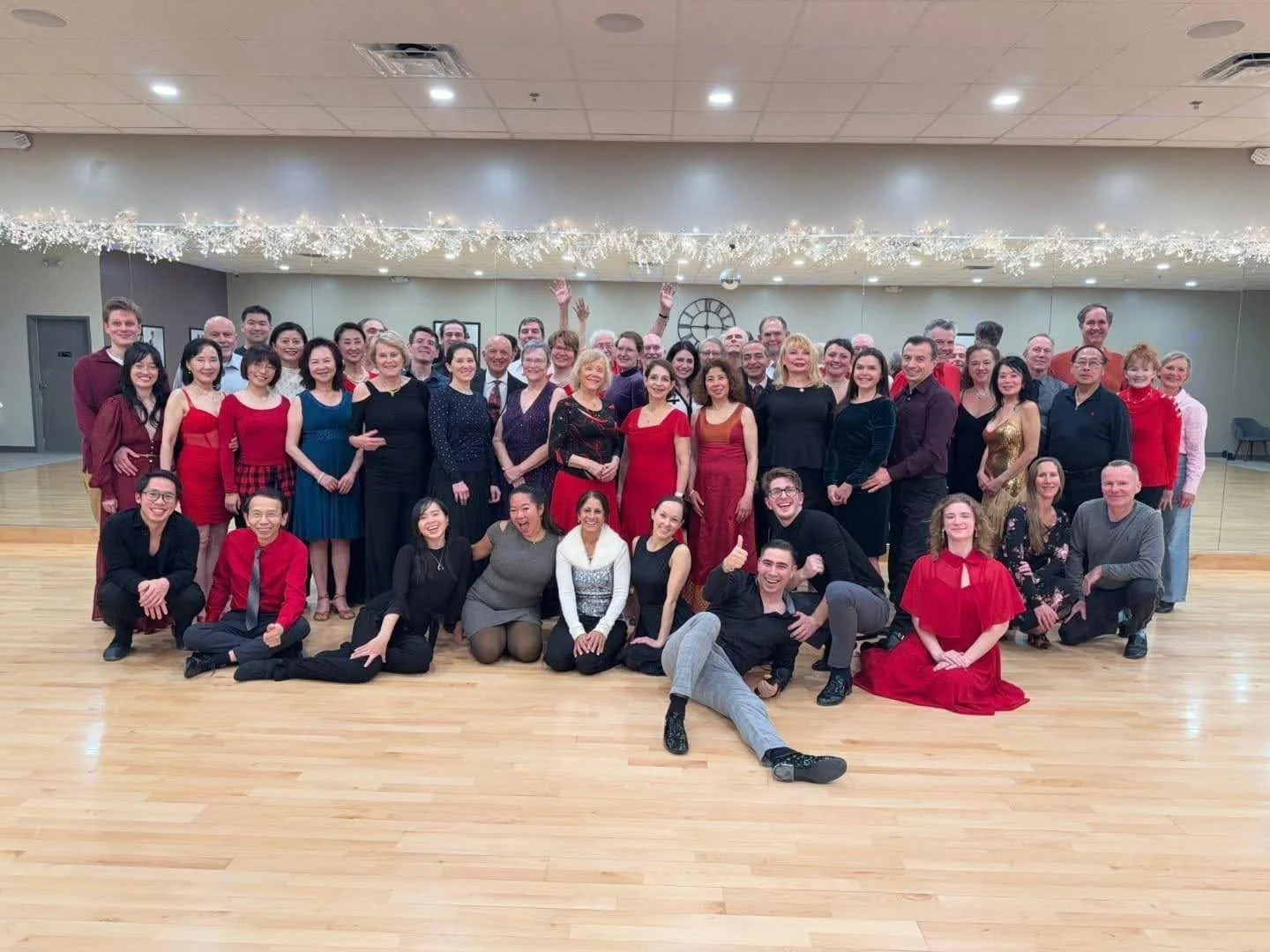
Start Argentine Tango Classes in Ann Arbor, MI
Fred Astaire Dance Studios – Ann Arbor teaches both Argentine Tango and Ballroom Tango, so you can feel the difference firsthand. Our seven instructors work with every level, and students join us from Ann Arbor, Saline, Novi, Milan and other nearby towns.
Visit us at 337 N. Maple Rd, Ann Arbor, MI 48103. Call us at 734-622-0373, or claim our introductory offer to book your first lesson.
Frequently Asked Questions
Why Does Tango for Beginners Start With Walking?
Every figure grows out of the walk, so instructors make sure it’s steady first. Early lessons are also more about attention than fitness, since you’re tuning in to two things at once, the person in your arms and the orchestra.
Can Couples Take Argentine Tango Classes Together?
Yes, and learning the embrace together is a good way to spend time as a couple. In group classes, you’ll usually also dance with other students, which helps you both get comfortable with different partners.
Can You Take Argentine Tango Lessons Without Dance Experience?
Yes. Beginner lessons start with walking, so you don’t need any background in ballroom or Latin dances. Comfortable shoes with a smooth leather or suede sole are all you need to bring.
Can You Learn Both Tango Styles at Once?
Yes, though keeping them apart for a while makes life easier. The two styles differ in the hold, the movement and the lead.