

When it comes to ballroom dancing, the distinction between the styles can be a bit overwhelming for beginners. Whether you’re looking to impress on the dance floor at a wedding or simply want to enjoy the rhythm of dance, understanding the differences between ballroom and Latin dance styles is a great first step. In this blog, we’ll break down the unique characteristics of each style to help you decide which one speaks to you.
1. Ballroom Dance Overview
Ballroom dance refers to a set of partner dances that are performed in a formal style, with elegance and grace. These dances are generally slow-paced, with movements focused on maintaining smooth and controlled steps. The main goal of ballroom dance is to create a polished, timeless appearance that complements the music and its rhythm.
Popular Ballroom Dances:
- Waltz: A graceful and elegant dance characterized by smooth, flowing movements.
- Foxtrot: A versatile dance with a combination of slow and quick steps, known for its relaxed, flowing style.
- Tango: A dramatic, passionate dance with sharp movements and bold expressions.
- Viennese Waltz: A faster-paced variation of the traditional waltz, known for its continuous spinning.
Ballroom dance often relies on structured formations and precise footwork, with partners working closely together, usually in a closed position.
2. Latin Dance Overview
Latin dance, by contrast, encompasses a variety of energetic and fast-paced partner dances, known for their rhythmic movements and sensuality. Unlike the formal nature of ballroom dancing, Latin styles are typically more playful and focus on body movement and footwork.
Popular Latin Dances:
- Salsa: A lively and fast-paced dance, known for its vibrant energy and intricate footwork.
- Cha-Cha: A fun, playful dance with a distinct rhythm characterized by quick foot movements.
- Rumba: Known for its slow, sensual movements, Rumba emphasizes hip action and connection with the partner.
- Samba: A lively Brazilian dance that features quick, bouncing steps and a joyful rhythm.
Latin dances are often characterized by their emphasis on rhythm, with an energetic and expressive style that differs greatly from the more formal ballroom dances.
3. Key Differences Between Ballroom and Latin Dance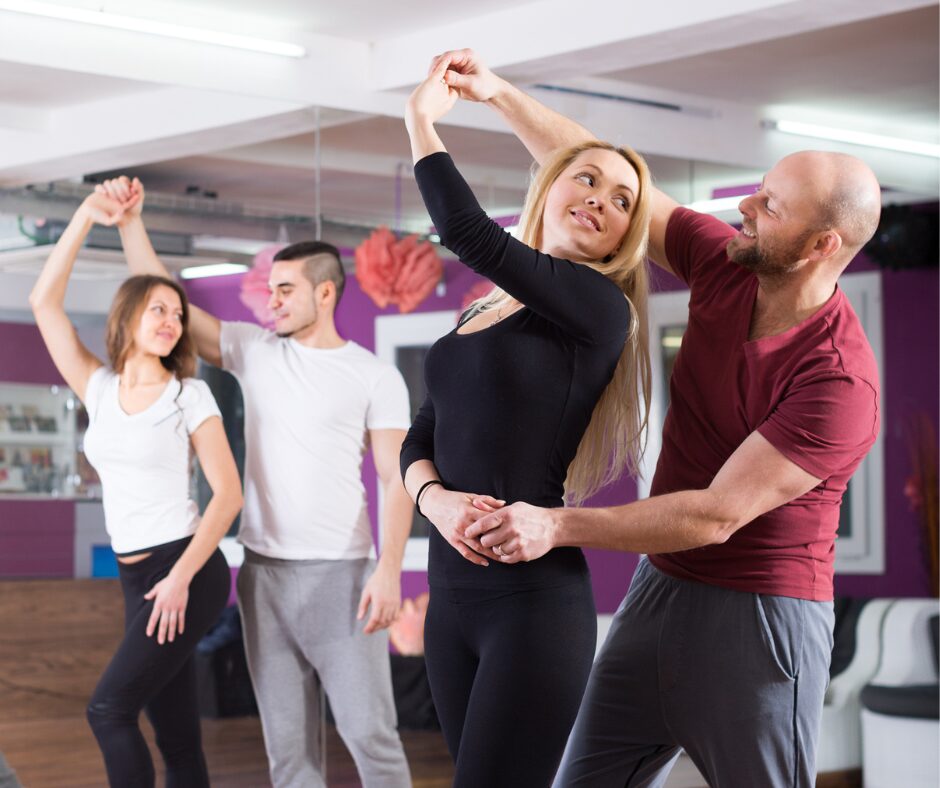
While ballroom and Latin dances may share a similar foundation, their differences lie in the tempo, style, and movements.
- Tempo and Rhythm:
- Ballroom dances are generally slower-paced, focusing on smoothness and elegance. For instance, the waltz is performed in a 3/4 time signature, while the foxtrot alternates between slow and quick steps.
- Latin dances are faster and more rhythm-based, with dances like salsa and samba incorporating syncopated steps and faster footwork.
- Movement Style:
- Ballroom dance often involves gliding movements, where dancers maintain a more upright posture and remain in a close, formal embrace. The steps flow seamlessly across the floor, with minimal hip movement.
- Latin dance is more about individual expression and body movement. Latin dances feature more noticeable hip action, faster spins, and a looser hold between partners. The movements are often more isolated, emphasizing body control.
- Expression and Energy:
- Ballroom dances typically focus on grace and elegance, requiring dancers to maintain a calm and composed demeanor, even when executing fast or intricate steps.
- Latin dances encourage more expressive, sensual movements, with dancers often smiling, adding playful gestures, and showing off their individual style through more pronounced body movements.
4. Choosing the Right Style for You
Both ballroom and Latin dance styles offer a wealth of beauty, expression, and excitement. The choice between the two often comes down to personal preference and the type of dancing experience you’re looking for.
- If you prefer elegance, romance, and classic movements, ballroom dance might be the best choice for you. These dances are perfect for formal occasions like weddings, where you can glide across the floor with your partner in a smooth and sophisticated way.
- If you’re drawn to rhythm, energy, and excitement, Latin dance might be more your speed. It’s ideal for those who want to let loose, express themselves, and enjoy dancing to upbeat music with lots of energy.
Understanding the differences between ballroom and Latin dance styles can help you make an informed decision on which one to try. Whether you enjoy the graceful, flowing movements of ballroom or the high-energy, rhythmic steps of Latin, both offer an incredible way to connect with your partner and enjoy the art of dance.
Ready to start your dancing journey? At Fred Astaire Dance Studios in Summerlin, we specialize in both ballroom and Latin dances, offering personalized instruction to help you master each style.
Call us at (702) 242-4400 or visit Fred Astaire Dance Studios in Summerlin today to schedule your first lesson and get dancing!