

To dance with confidence, focus on a few simple movements you know, keep a relaxed posture, and enjoy the music instead of worrying about getting every step right.
Whether you’re a complete beginner or an experienced dancer, here are seven practical ways to feel more at ease, move more freely, and find your own confidence on the dance floor.
1. Build Confidence From the Basics
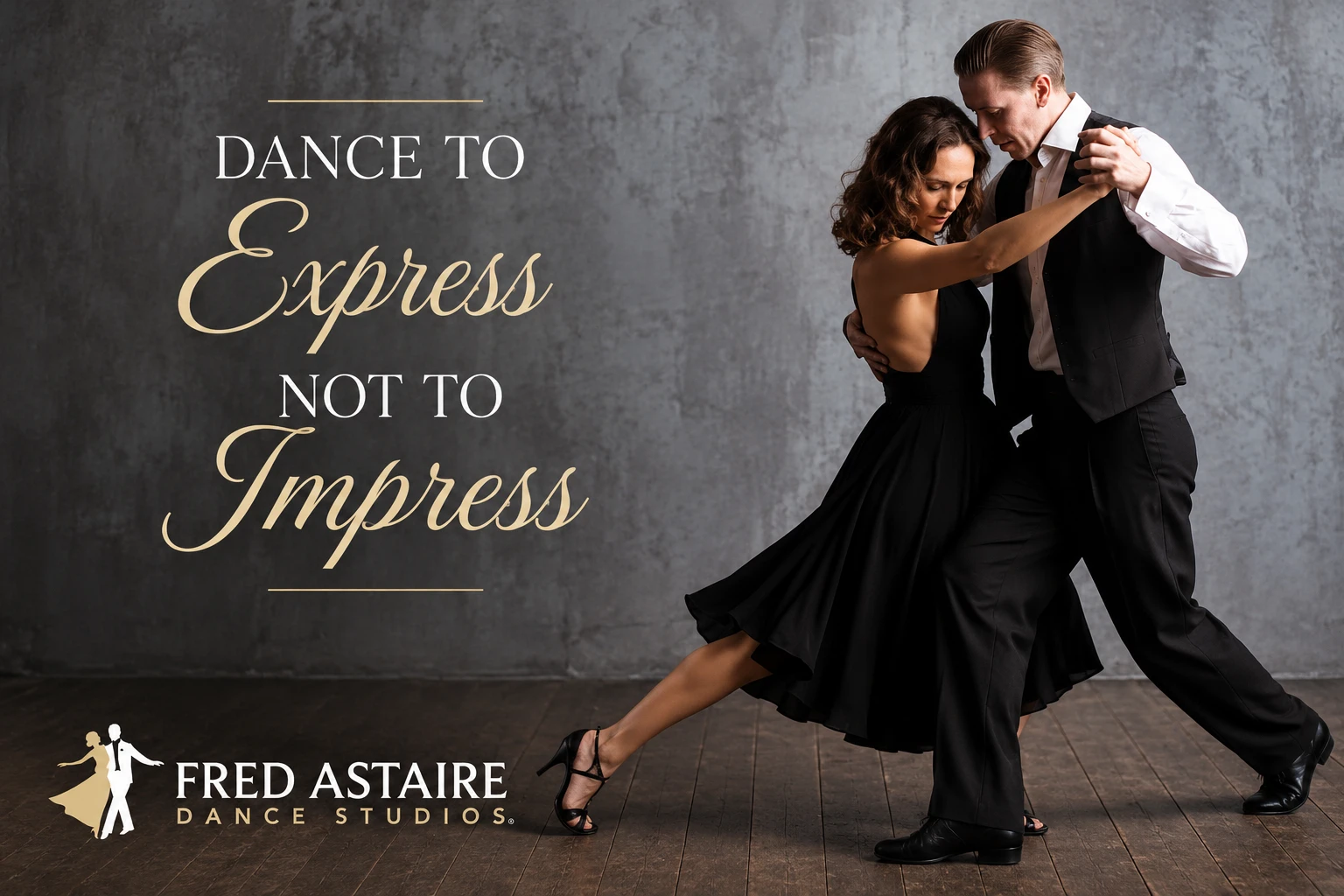
Whether you’re a beginner or an experienced dancer, the basics always matter. Simple movements you know well give you something reliable to fall back on, and the more comfortable they feel, the more relaxed you’ll be.
For Beginners: Start With Three Simple Movements
You don’t need an entire routine to enjoy your favorite music. In your first private lessons in Paradise Valley, AZ, you’ll often start with three simple movements:
- Weight shift: Transfer your weight from one foot to the other while keeping your balance.
- Side step: Take a comfortable step to either side, bringing your weight onto the stepping foot.
- Forward and backward steps: Take a small step forward or backward, paying attention to your balance and direction.
Then try following a steady beat and notice how your steps respond to different rhythms. These simple exercises can help you feel more comfortable moving to music.
Learning to dance with confidence starts with small, manageable steps. You don’t need complicated figures to begin enjoying yourself.
If you’re not sure where to begin, our guide to the best dance style to learn first in Scottsdale can help.
For Experienced Dancers: Rediscover Your Confidence
Experienced dancers can sometimes lose confidence, too. The pressure to perform well, fear of making mistakes, or feeling that you’ve stopped improving can take the joy out of dancing.
Return to familiar patterns and focus on what you already do well. Then revisit movements that still feel challenging. Working on your balance, weight transfers, and musical timing can help you recognize your progress and rebuild trust in your abilities.
Try dancing with beginners more often. Adapting to a less experienced partner gives you a chance to practice clearer communication and more attentive leading or following. Instead of worrying about impressive figures, focus on creating a comfortable experience together.
For a fresh perspective, try switching roles. In Argentine Tango, for example, experiencing both leading and following can help you understand your partner’s movements and strengthen your connection. It can also remind you that there’s no need to know everything to enjoy dancing.
Confidence doesn’t mean performing perfectly every time. Sometimes, it means letting go of expectations, appreciating what you’ve learned, and allowing yourself to enjoy the music differently.
2. Build Confidence by Watching and Learning From Others
Confidence doesn’t only grow on the dance floor. Often, it starts from the side, when you take a moment to watch, listen and see what’s possible.
Watching others helps you understand a movement before you try it, so you feel more prepared when it’s your turn. A 2022 systematic review of 18 studies found strong evidence that observational learning helps people develop motor skills.
Just choose carefully who you compare yourself to. Watching professionals who have trained for years can knock your confidence, even when you’re making real progress. Instead, watch someone just a little more experienced than you. Their dancing feels within reach, and seeing what’s possible for you is far more encouraging. Your instructor, meanwhile, can show you each step in a way that’s easy to follow.
Watch others for inspiration, not as a reason to doubt your own abilities. Confident dancing isn’t about copying someone else’s style. It’s about growing into your own.
Listen to the Music Instead of Counting Every Step
Counting beats is useful when you’re learning a new pattern. But if you spend the entire song thinking about numbers, you may forget to listen to the music itself.
Start by finding the steady beat. Tap your foot, shift your weight, or gently bounce before attempting a complete step pattern.
As your movements become familiar, pay attention to changes in the music. You might notice a stronger accent, a pause, or a phrase that invites a different movement.
The goal isn’t to stop counting altogether. It’s to develop enough familiarity with the rhythm that you can enjoy the music while you move.
When you’re not busy counting, you can relax into the dance, and that ease is what others see as confidence.
3. How to Look Confident When Dancing: Start With Your Posture
Stand comfortably upright, allow your shoulders to relax, and avoid constantly checking your feet. When appropriate, look in the direction you’re moving.
Your arms matter, too. Nervousness can make your movements look hesitant. Keep your arms relaxed and in a comfortable position that suits the dance you’re performing.
Don’t forget your facial expression. Concentrating on the steps can leave your face tense and your gaze drifting toward the floor. Practice relaxing your facial muscles and allowing yourself to smile when it suits the music. At first, this may take conscious effort, but with practice, your expressions can become more spontaneous.
A simple movement performed with balance and clear intention can look more assured than a difficult figure performed without conviction.
4. Feel the Movement Instead of Watching Yourself
Try dancing a familiar pattern without looking in the mirror. Notice how you shift your weight, find your balance, and respond to the music. Then check your reflection. Does what you see match what you felt?
Constantly checking your reflection can make you question even the steps you know well. You don’t need to watch every movement to trust yourself on the dance floor. The less you depend on checking your reflection, the easier it may become to dance with confidence, even without a mirror nearby.
An instructor can also help you identify what you’re already doing well and which details need attention. That’s one reason private dance lessons near Scottsdale can be useful when you’re working on both technique and confidence.
The goal isn’t to stop improving. It’s to feel free enough to enjoy the movements you’ve worked so hard to learn.
Connect With Your Partner
Body awareness becomes even more valuable when you’re dancing with someone else. Pay attention to your partner’s timing, maintain a comfortable connection, and allow your movements to respond to one another.
You don’t have to predict every step perfectly. Good partner dancing involves communication and adjustment, not simply memorizing a sequence.
Remember, dancing isn’t just something others see. It’s something you experience with your entire body, through the music, the connection with your partner, and the joy of moving together.
If you don’t have a dance partner, that shouldn’t stop you from learning. Discover how you can take dance lessons without a partner at Fred Astaire Dance Studios – Paradise Valley.
5. Keep Dancing When You Make a Mistake
Missing a beat, forgetting a step, or moving in the wrong direction doesn’t mean the dance is ruined.
You don’t always need to stop when something goes wrong. Return to a familiar movement, find the beat, and continue. More experienced dancers may even turn an unexpected step into part of their improvisation.
But if you need a moment, it’s perfectly fine to pause. Find the rhythm again and restart when you’re ready.
Try not to dwell on the mistake. Repeatedly drawing attention to it may make your partner feel uncertain, too, even when they haven’t done anything wrong.
The step has already happened. You can’t change it, but you can choose what comes next. Smile, reconnect with your partner, and enjoy the rest of the song.
6. Practice a Little Before You Dance a Lot
You don’t need hours of practice to prepare for your next dance night. Even a short, focused session at home allows you to become more familiar with your movements.
In a private lesson, you and your instructor will choose things to work on. It might be a turn that feels awkward, a change of direction, or staying on the beat during a faster song.
Practicing at home can help you review familiar steps and feel more prepared for your next lesson. Fred Astaire Dance Studios also offers an Online Trophy System that allows students at participating studios to review dance patterns between lessons.
Ask for Feedback and Keep Improving
Nothing replaces practicing with a professional instructor. They can spot mistakes you might not notice, help you recognize what you’re already doing well, and offer immediate feedback. Combining guided lessons with practice at home can help you dance with confidence and make the most of every session.
Your fellow dancers can also offer useful perspectives. Don’t hesitate to ask how a movement feels from your partner’s perspective. Exchange experiences with someone who has faced similar challenges.
Feedback isn’t a sign that you’re doing something wrong. It’s an opportunity to discover what you can do better.
7. Get Comfortable Dancing Around Other People
Practicing at home can help you remember your movements. But feeling comfortable alone and feeling comfortable on a busy dance floor are two different experiences.
Private lessons help you build the skills and confidence you need on the dance floor. Group classes and practice parties give you additional opportunities to put those skills into practice. You can practice with different partners, get comfortable sharing the floor with other couples, and enjoy the social side of dancing. You might even make a few new friends.
Dancing with different partners can feel unfamiliar, even when you have years of experience. But each new connection gives you a chance to practice adapting, communicating, and feeling more comfortable in a social setting.
If you’re deciding how to continue learning, explore the differences between group and private dance lessons. You can also check our Paradise Valley studio calendar for upcoming opportunities to practice and connect with fellow dancers.
How Long Does It Take to Become a Confident Dancer?
With regular private lessons, you may start feeling more comfortable after just a few sessions. Many beginners develop confidence in one dance style within 8 to 12 private lessons. Becoming comfortable with two or three styles may take 3 to 6 months of weekly lessons. Explore these timelines in our guide, Is It Hard to Learn Ballroom Dancing in Scottsdale, AZ?
But learning the steps and feeling confident aren’t always the same thing. You might know an entire routine and still hesitate when the music starts. Or you might know only a few movements and enjoy every moment.
So when do you truly dance with confidence?
When you begin to trust what you’ve learned and permit yourself to enjoy it.
Find Your Confidence at Fred Astaire Dance Studios – Paradise Valley
What makes Fred Astaire Dance Studios special? It’s more than learning steps. It’s finding encouragement, sharing the joy of dancing and becoming part of a welcoming community.
At Fred Astaire Dance Studios – Paradise Valley, every dancer has room to grow. Our instructors help you build confidence and explore new possibilities.
Come as you are, bring your curiosity, and leave perfection at the door.
Your next step is to schedule your first dance lesson and discover how far the FADS team can help you go!