

The 3 most popular social dances to learn in Saratoga Springs are Salsa, Bachata and Swing.
At Fred Astaire Dance Studios – Saratoga Springs, we’ve been teaching adults to dance since 2017. These social partner dances are among the most requested, most talked-about, and most transformative styles we offer.
Whether you want to feel more confident at a wedding, enjoy a night out, or simply move in a way that feels genuinely fun, these three dances are the best places to start.
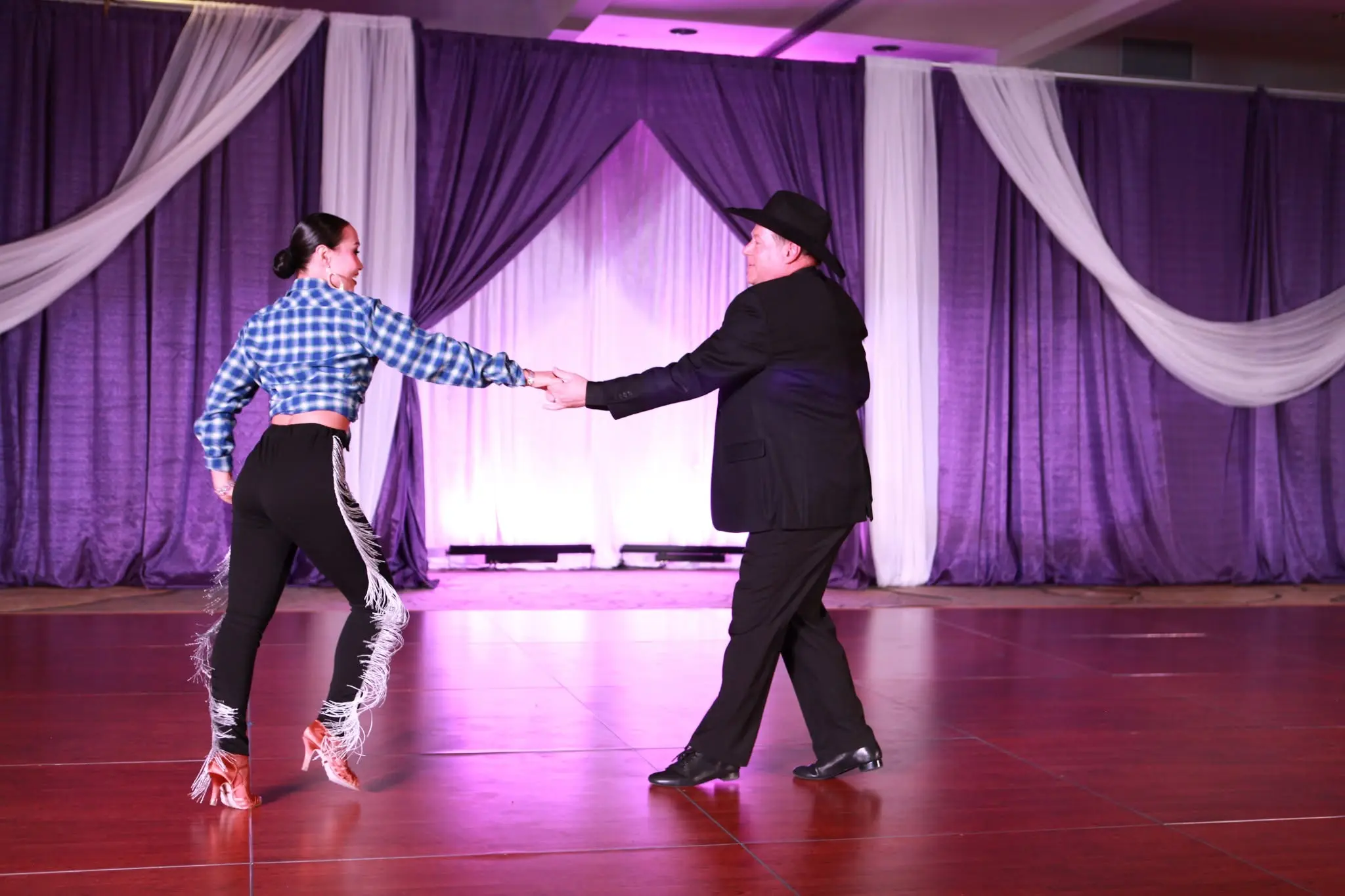
Why Social Dancing Belongs in Your Life
Social dancing is about more than footwork. It’s about learning to communicate through movement, read a partner, and stay present with music. In a world dominated by screens, it offers something genuinely rare: eye contact, physical coordination, and real-time connection with another person.
At our dance studio in Saratoga Springs, we see this transformation constantly. Students arrive wanting to feel less awkward at events, and within weeks, they’re looking forward to every lesson.
People of all ages join us for social events, private lessons, and group classes. And what keeps them coming back is how quickly dancing becomes part of who they are, not just something they do.
If you’re still deciding whether lessons are right for you, 5 Things to Know About Adult Dance Lessons in Saratoga Springs answers the questions most beginners have.
3 Popular Social Dances in Saratoga Springs, NY You Should Learn
Salsa
Salsa is probably the most well-known social dance. This is an energetic social dance known for its forward-and-back steps and sharp rhythmic feeling. It follows an eight-count rhythm structure, stepping on “1-2-3” and “5-6-7” with pauses on counts four and eight.
The movement is grounded in body weight control and timing, and beginners usually start with three key steps: the forward and backward basic, the sideways basic, and a simple right turn called “vuelta.”
Forward and Backward Basic Step
The forward-and-back basic is the core salsa movement. It begins by shifting body weight onto one foot before stepping. The dancer steps forward on count one, replaces weight back on count two, and brings the feet together on count three. Count four is a brief pause. On count five, the dancer steps backward with the opposite foot, replaces weight on six, and closes feet on seven before another small pause.
Side Basic Step
The second fundamental movement is the sideways basic step. Instead of traveling forward and backward, the dancer steps to the side on count one, places weight in the center on count two, and collects the feet on count three. After a pause, the dancer repeats to the opposite side for counts five, six, and seven. The sideways basic shares the same rhythmic structure as the forward-and-back step, teaching dancers how to maintain posture, foot placement, and timing while moving in a new direction.
Right Turn (Vuelta)
The third beginner movement is a simple right turn known as the vuelta. The turn begins from the forward step: stepping ahead on count one, rotating toward the right on count two, and completing the turn on count three before pausing. The second half of the turn finishes the basic pattern on counts five, six, and seven. This movement introduces rotation, spotting, and directional change, allowing dancers to begin linking patterns and building confidence with partner transitions.
Bachata
When teaching Bachata, we introduce our students to three beginner steps: the side basic, the forward and back basic, and simple turns. These movements form the foundation of this dance style and help new dancers feel rhythm, weight transfer, and connection.
Side Basic Step
The Side Basic is the starting point for bachata. The dancer moves left for counts one, two, and three and taps on four before repeating the same structure to the right for counts five, six, seven, and a tap on eight. This step teaches control, balance, and rhythm. The tap naturally leads to hip articulation as dancers begin to relax into the movement, creating bachata’s smooth look.
Forward and Back Step
Another key pattern of this social dance is the forward and back step. Instead of traveling sideways, the dancer walks forward for three counts and taps, then walks backward for three counts and taps, using the same eight-count rhythm. This movement develops flow and directional control. It encourages dancers to feel weight transfer clearly and prepares them for more dynamic partner movement.
Simple Bachata Turns
Bachata also introduces turning early in the learning process. A simple three-step rotation to the left or right builds confidence in balance and foot placement. The dancer steps, rotates through the center, completes the turn on the third count, and taps on the fourth before repeating in the opposite direction. These turns become the basis for partner rotations and more expressive patterns as dancers progress.
Swing
Swing uses simple walking steps and a distinctive rock step to create its signature bounce and playful feel.
Side Basic with Rock Step
The first movement is a side basic built around two walking steps followed by a rock step. The dancer prepares by stepping to the side twice, then crosses one foot behind the other into a rock step before returning to the side rhythm. This creates swing’s essential feel: step-step, rock-step, step-step, rock-step. The shoulders should move naturally with the rhythm, which gives the dance its characteristic bounce and energy.
Underarm Turn
After the basic motion feels comfortable, we teach the underarm turn. The dancer begins with the same side-and-rock setup, then rotates the body to a new direction while maintaining the rock step timing. This is one of those social dances that teaches rotation, alignment, and fluid movement across the floor.
Swing Kicks
The final step of this social dance is its kicking sequence. It starts from the same side basic and rock step, then adds backward steps followed by alternating kicks. These kicks face forward, then diagonally, encouraging control, balance, and musical accenting. Kicks also teach spacing and awareness between partners, since the movement travels forward and sideways. This pattern blends momentum with style and gives the dance a lively, playful look.
How These Social Dances Compare
| Feature | Salsa | Bachata | Swing |
| Rhythm | 1-2-3 pause 5-6-7 pause | 1-2-3 tap 5-6-7 tap | Rock-triple-triple |
| Movement | Forward/Back linear | Side-to-side | Bouncy, circular feeling |
| Feel | Energetic & sharp | Smooth & romantic | Playful & upbeat |
| Body Focus | Foot speed & rotation | Hips & frame | Bounce & pulse |
The Benefits of Learning Social Dances at Fred Astaire Dance Studios in Saratoga Springs
If you’re excited to try Salsa, Bachata, or Swing, we’d love to welcome you to Fred Astaire Dance Studios – Saratoga Springs. Whether you come alone or with a partner, we teach adults of all backgrounds, and we help complete beginners feel confident from day one.
If you want to see what our student community is like, follow us on Instagram, or Facebook, where we share training clips, success stories, and studio updates.
When you’re ready to visit us in person, you can click here to get directions.