

Swing dance is an umbrella term for a family of dance styles that grew out of jazz music in the early twentieth century. Lindy Hop, East Coast Swing, West Coast Swing, Jitterbug, Charleston, collegiate shag, Carolina shag, and jive all fall under that umbrella, and within the ballroom community, “swing” is often used as shorthand for the whole group.
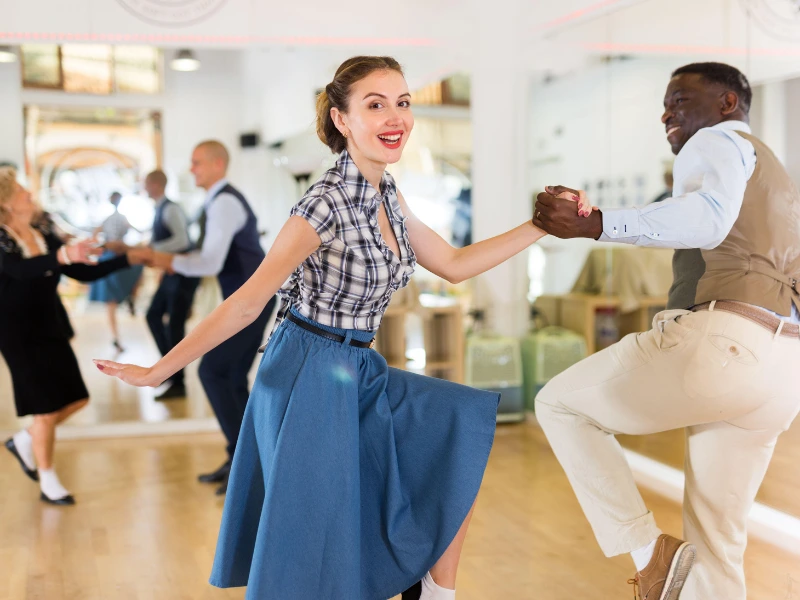
Comparing these two dance styles side by side is the fastest way to understand what makes each one distinct. Both dances trace back to the same historical roots and can be danced to the same swing music, but their timing, footwork, and overall feel set them apart. Once you can hear the difference between an eight count rhythm and a six count rhythm, the different styles in the swing family start to make more sense.
Join us as we compare Lindy Hop vs East Coast Swing side by side, including history, rhythm, and feel, plus where West Coast Swing fits in and the questions we hear most from students choosing their first swing dance lessons.
Table of Contents
What Is Lindy Hop?
Before we compare Lindy Hop vs East Coast Swing dance styles, let’s explore what the Lindy Hop is and how it origniated.
Lindy Hop began in the 1920s as a social dance among Black dancers in Harlem, New York City, and it became closely tied to the Savoy Ballroom, the jazz era’s most famous dance floor. Dancers such as “Shorty” George Snowden are often credited with early versions, and Frankie Manning and Norma Miller performed and taught the style for decades, shaping the version still taught today. Lindy Hop is often called an eight count dance, since its swing-out and core patterns run on an eight count phrase.
There was no fixed routine. Dancers borrowed steps from one another, reacted to the band in real time, and found their own dance style on the spot. That openness to improvisation is still one of the biggest reasons people fall for this swing dance.
What Lindy Hop Feels Like
Lindy Hop feels grounded and connected to the floor, even at a fast tempo. Slow, mellow jazz brings out smaller, more controlled movement, while fast music calls for quicker footwork and more energy.
The aerials Whitey’s Lindy Hoppers performed on stage and film belong to the dance’s performance history. You can find video footage of those routines online, but they are not where a beginner starts. In a first lesson, the focus is on hearing the pulse, shifting weight cleanly, and staying connected to a partner.
How Beginners Learn Lindy Hop
Learning the Pulse Before the Pattern
- Keep the knees relaxed and shift your full weight from one foot to the other
- Listen for the syncopated rhythm instead of every single sound
- Start small. Clear weight changes make the eight count patterns easier later
Connecting With a Partner
- Begin in a closed position to feel the shared timing
- Leaders suggest direction without pushing or pulling
- Followers respond while keeping their own balance
- Keep your eyes up. Watching your feet tends to tighten your posture
Adding Musicality
- Hold a beat or shorten a step when the music calls for it
- Add kicks, pauses, Charleston rhythms, or six count patterns borrowed from other swing styles
- Change the size and energy of a step to match the song
- Make your own choices while staying connected to your partner
Learning the Swing-Out
- Practice the footwork alone first, and watch a video of the pattern if one is available
- Learn the path each partner travels
- Move from a closed connection into an open one
- Keep the eight count rhythm while managing momentum
- Reconnect without pulling or stiffening the arms
What Is East Coast Swing?
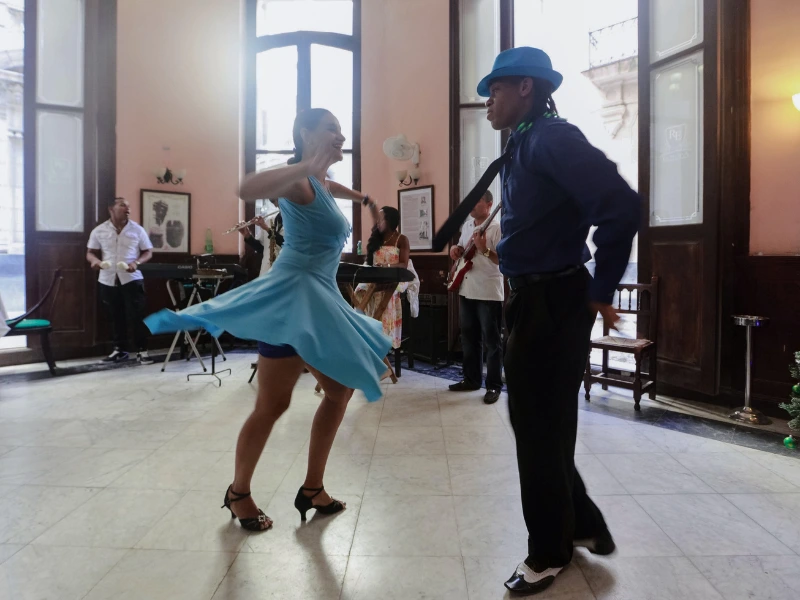
East Coast Swing grew out of Lindy Hop but was reorganized into a repeatable six count pattern built around triple steps and a rock step for ballroom studios in the 1940s. Arthur Murray studios get much of the credit, though other ballroom studios taught different styles of the same basic before the Murray version became standard. In 1950, California instructor Laure Haile wrote a Sophisticated Swing syllabus for Arthur Murray to describe the regional differences dancers were seeing in Lindy Hop. This style is also called Eastern Swing, Triple Swing, or Jitterbug, and uses a more mechanical, upright footwork style than its predecessor.
The names vary by region, but the underlying rhythm stays consistent, which is exactly why dance studios built their beginner curriculum around it.
For many new dancers, East Coast Swing is the clearest first step into partner dancing. The rock step repeats, and the same rhythm carries through several turns and changes of place, so this swing dance builds confidence quickly.
What East Coast Swing Feels Like
East Coast Swing feels upright, lively, and compact. Quick triple steps give every phrase a slight bounce and energy, a bit like a livelier cousin of Jive. Partners tend to move around one another instead of traveling along the narrow slot used in West Coast Swing.
The six count rhythm can feel odd at first, since it doesn’t line up neatly with an eight count musical phrase. Then, for most students, it clicks, and turns get easier from there.
How Beginners Learn East Coast Swing
Start With the Six Count Basic
- Practice the rhythm in place: triple step, triple step, rock step
- Use three quick weight changes during each triple step
- Keep the steps small and controlled rather than rushing
- Finish with a compact rock step that sets up the next pattern
Build a Better Rock Step
- Rock back only far enough to change direction
- Keep your weight centered instead of leaning away
- Use your hands to communicate, not for balance
- Return smoothly into the next triple step
- If your studio records lessons, rewatching that video before your next class helps the pattern stick
Add Turns and Changes of Place
- Begin in closed position, then move into an open hold - Practice underarm turns, tuck turns, and changes of place - Keep the same rhythm as the direction changes - Lead through the body rather than pulling with the arms
Adjust the Footwork to the Music
Because East Coast Swing rests on repeating triple steps, adjusting them to the tempo matters most.
- Use triple steps for most swing, big band jazz, and rock and roll songs
- Switch to single steps when the tempo becomes too fast for comfortable triples
- Use smaller movements at higher speeds
- Let slow music soften the bounce and leave more room for styling
Where Does West Coast Swing Fit?
West Coast Swing belongs to the same broad family but developed on the opposite coast and looks noticeably different from its East Coast counterpart. Dancer Dean Collins brought his New York style of Lindy Hop to Southern California in the late 1930s, and his smooth, grounded swing-out heavily influenced what became West Coast Swing. Murray studios helped popularize the style through the 1950s under the name Western Swing, and Southern California instructor Skippy Blair later helped standardize West Coast Swing technique and push for the name, which California officially recognized in 1988. Western swing also holds up well at a slow tempo, since the slot keeps movement efficient no matter the speed.
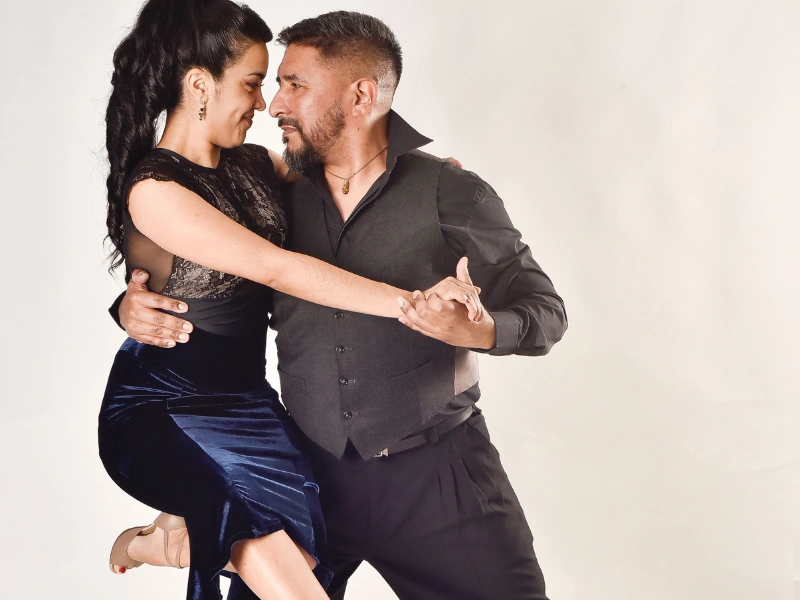
The follower in West Coast Swing typically travels along a narrow slot while the leader redirects the movement from a fixed spot. The result is smoother and less bouncy than East Coast Swing, and that difference in slot versus circular movement is what most dancers notice first. Western swing music is broader, too. It’s danced to blues, pop, R&B, country, contemporary music, and some traditional swing songs, and country western dance nights sometimes feature West Coast Swing DJs for exactly that reason.
What Dance Style Is Similar to Lindy Hop?
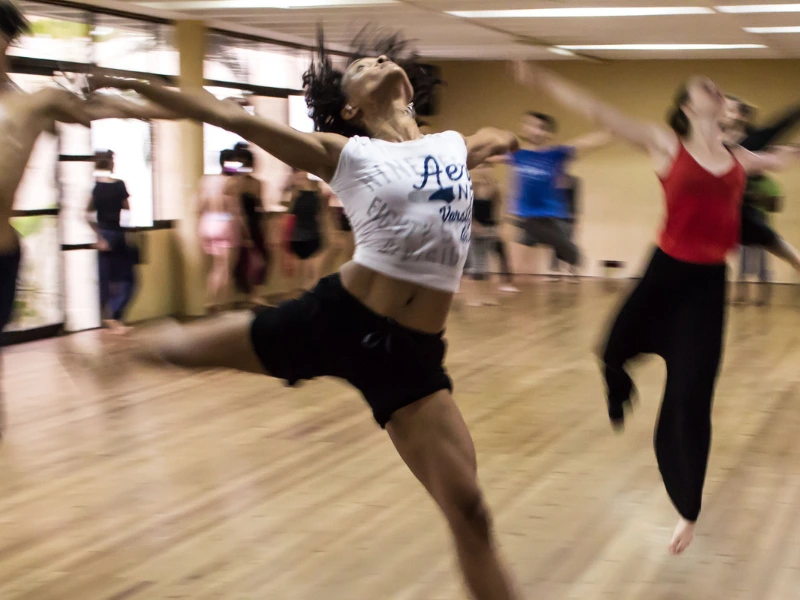
If you already love Lindy Hop, a few close relatives are worth trying. Jitterbug is often used as another name for Lindy Hop itself, so you may already be dancing Jitterbug under a different label. Charleston shares many of the same roots and rhythm patterns, and many Lindy dancers weave Charleston kicks into their swing-outs for fun. Balboa, a smaller, close embrace style from the same period as the Black Bottom, is another natural next step for anyone who loves the eight count feel but wants something more compact.
What Is the Hardest Ballroom Dance Style?
There’s no single answer, since difficulty depends on what a dancer finds hard. Among swing styles, most instructors point to West Coast Swing as the hardest to master, since both partners improvise in real time within a slot with little set choreography to fall back on. Lindy Hop asks a lot of a dancer’s musicality, while East Coast Swing was built to be easier to teach, which is exactly why so many dance studios use it as a first swing dance lesson.
Which Swing Dance Should You Learn First?
When it comes to choosing between Lindy Hop vs East Coast Swing, you don’t have to choose one or the other! Fred Astaire Dance Studio of Durham offers two introductory lessons for $59, and pairing the two most common styles is one of the most popular ways to use them. Ask your instructor for a video reference between lessons if you want extra practice at home. Some students also ask about Jitterbug classes, which at most studios is just another name for East Coast Swing. One lesson can cover the East Coast Swing basic steps, including the rock step and a first turn. The second can introduce Lindy Hop and its eight count patterns, taken slow enough to feel each weight change.
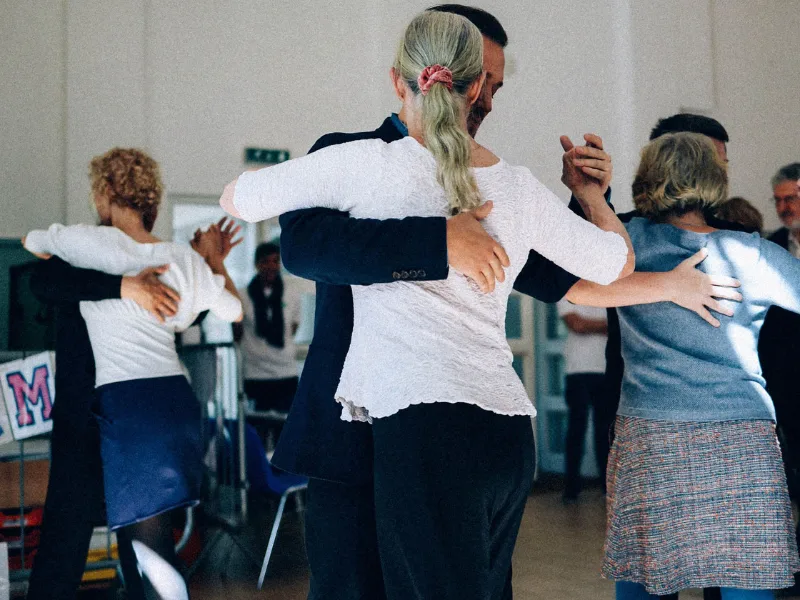
Other combinations work just as well:
East Coast Swing and West Coast Swing, to compare two very different dance styles back to back
Lindy Hop and another type of ballroom dance lesson
One swing lesson and one Latin dance lesson
Two lessons focused on one style, if you already know which dance you want to chase
Try Swing Dance Lessons in Durham
Fred Astaire Dance Studio of Durham teaches swing dance, ballroom, and Latin dance styles for beginners and experienced dancers alike, and lessons are built to be fun as much as technical. Whether you’re drawn to the free-spirited energy of Lindy or the crisp structure of East Coast Swing, two introductory lessons for $59 give you room to compare swing dance styles or spend extra time on one.
Call 919-489-4313 or fill out the form below to schedule your lessons.
Start Dancing Today!
Just fill out the form and you will be contacted soon!