

It’s normal to feel a little unsure before your first salsa dance class, wondering whether you’ll keep up with the music, remember which foot moves first, or know what to do once you begin dancing with a partner.
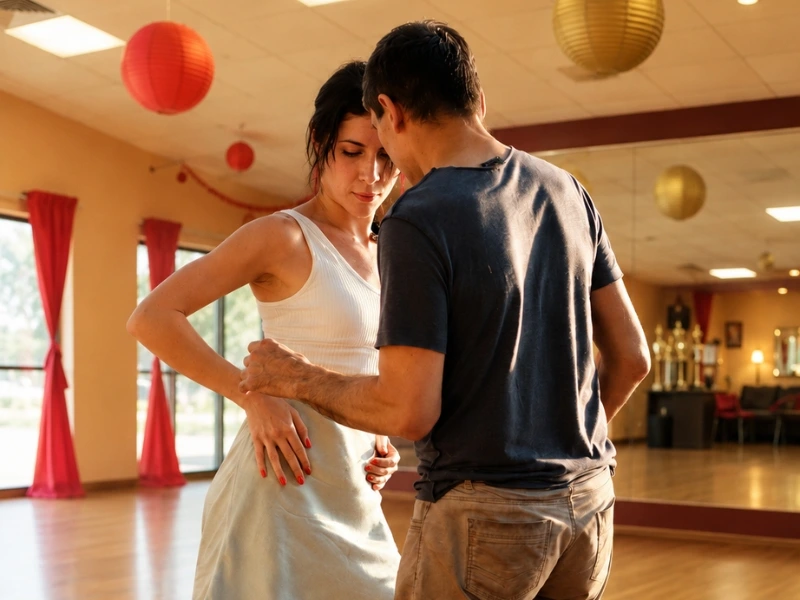
Salsa dancing for beginners starts with learning the rhythm, basic footwork, and how to move comfortably with a partner. At Fred Astaire Dance Studio in Durham, you can expect your instructor to begin by breaking down the basic salsa steps, practicing timing with salsa music, explaining the lead-and-follow connection, and gradually introducing simple turns and patterns.
As a beginner salsa dancer, plan to start with the fundamentals of learning to salsa dance, then gradually add new movements as you become comfortable on the dance floor. Join us as we explain salsa dancing for beginners, step-by-step.
Table of Contents
What Do You Learn First During a Salsa Dance Lesson?
Most salsa dance steps come back to a small group of fundamental skills. Before worrying about complicated combinations, you’ll work on foot placement, weight changes, timing, and rhythm.
These are the building blocks that make later salsa moves easier to understand and perform.
1. The Basic Salsa Step
The basic step introduces the forward-and-back movement used throughout basic salsa dance.
A pattern common to salsa and other Latin dances follows a 1-2-3, 5-6-7 count. Depending on your role and the movement you’re practicing, you’ll learn to transfer your weight between the left foot and right foot while staying with the beat.
Your instructor may first have you practice without music so you can concentrate on:
Which foot moves first
Where your weight should shift
When to step forward or backward
How to return to your starting position
How each movement fits the count
At first, you may have to think about every foot placement. With repetition, those movements start requiring less conscious thought.
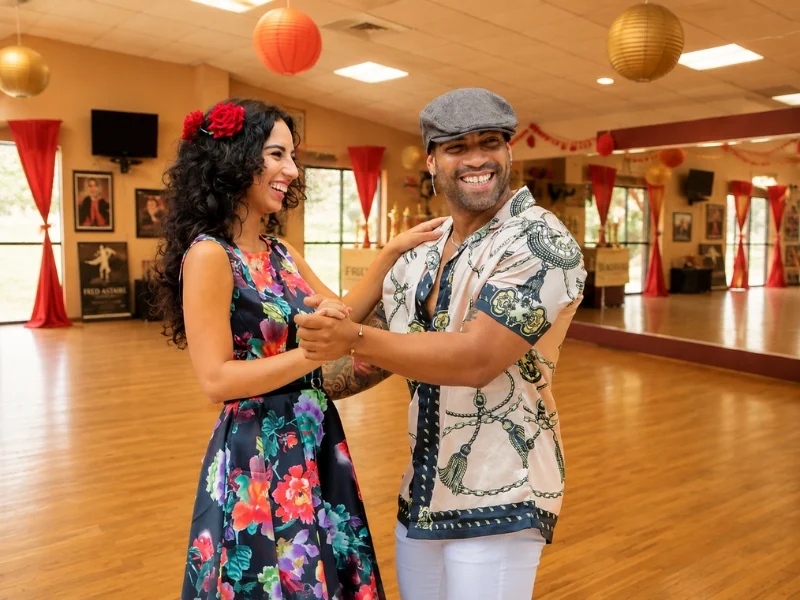
2. Learning to Hear the Salsa Rhythm
Footwork becomes easier once you can hear where your movement belongs in the music.
Beginner lessons introduce you to the count within salsa music, including how the first beat, second beat, and third beat relate to your steps. You don’t need musical training. Counting while dancing is common when you’re learning, and your instructor can help you hear the rhythm instead of trying to guess when to move.
As the count becomes familiar, you will find you start spending less time thinking about numbers and more time actually dancing salsa.
What to Expect from Salsa Dance Lessons at Fred Astaire of Durham
A first class generally progresses from simple movement to partner work. Your instructor demonstrates each part, lets you practice it, and makes adjustments before adding something new.
Getting Comfortable With the Basics
Early in your lesson, you’ll spend time getting used to the rhythm and transferring your weight from one foot to the other. This is also where your instructor will identify habits that may be making the movement more difficult. A step that’s too large, an incomplete weight transfer, or rushing the count can make the next movement harder than it needs to be.
Learning How Partner Dancing Works
Salsa is a partner dance, so you’ll also begin learning how two dancers communicate through movement. Both you and your partner will learn timing, body position, connection communicate movement, and direction. You’re not expected to understand every part of a partner connection during one lesson. Your first partner dance lesson introduces the concept and gives you an opportunity to experience how salsa feels.
Trying Your First Salsa Moves
Once the basic salsa pattern becomes more comfortable, your instructor may introduce a few new beginner salsa moves.
Depending on your progress, these could include:
A simple right turn
A left turn
A cross body lead
Changes in direction
Short combinations using movements you already know
A cross body pattern, for example, changes the dancers’ positions while still using familiar timing and weight transfers.
You aren’t learning an entirely new dance every time another movement is introduced. You’re applying the same foundation in a different way.
Is Salsa an Easy Dance to Learn?
Salsa can be approachable for beginners because its first patterns are built around repeatable steps and timing. That doesn’t mean everything will feel easy immediately. Like any physical skill, learning salsa takes practice.
During your early lessons, you may spend a lot of mental energy thinking about the count and where your feet belong. Over time, those movements can become more automatic, allowing you to focus on your partner, turns, technique, and the music.
You also don’t need to consider yourself naturally coordinated before you begin. Coordination develops as you learn and repeat the movements.
When Can I Learn Advanced Salsa Dance Techniques?
More advanced salsa techniques usually come after the basic timing, footwork, and partner connection start to feel natural. There isn’t one set timeline since dancers progress at different rates.
As you become comfortable with the basic salsa steps, your instructor can begin connecting them with turns, cross body leads, changes in direction, and longer combinations. From there, you can work on more advanced patterns, styling, faster transitions, and musicality.
The goal isn’t to rush through the basics. A strong foundation makes it easier to learn more challenging salsa moves while staying on beat and connected with your partner.
Tips for Your First Salsa Dancing Class
You don’t need special preparation before learning salsa, but a few simple choices can make your first experience more comfortable.
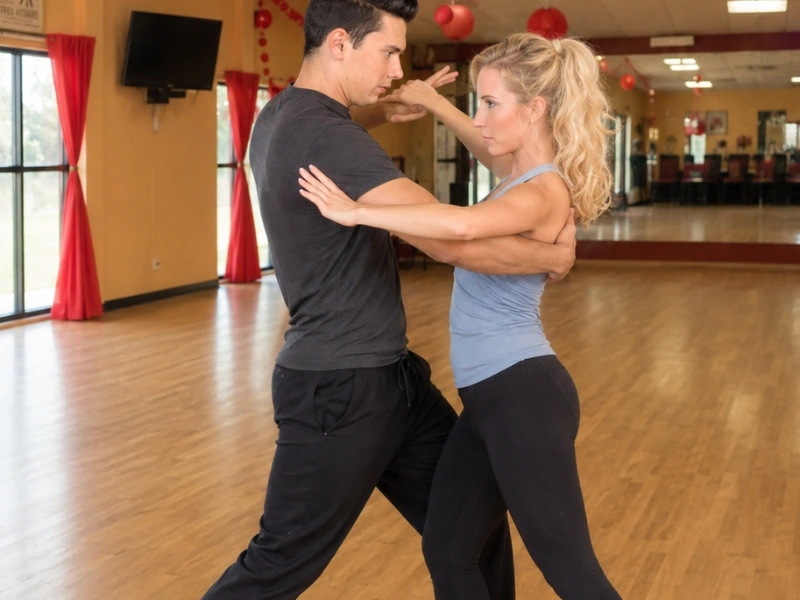
Choose clothing that gives your legs, hips, and arms room to move. There’s no need for an elaborate dance outfit for your first lesson.
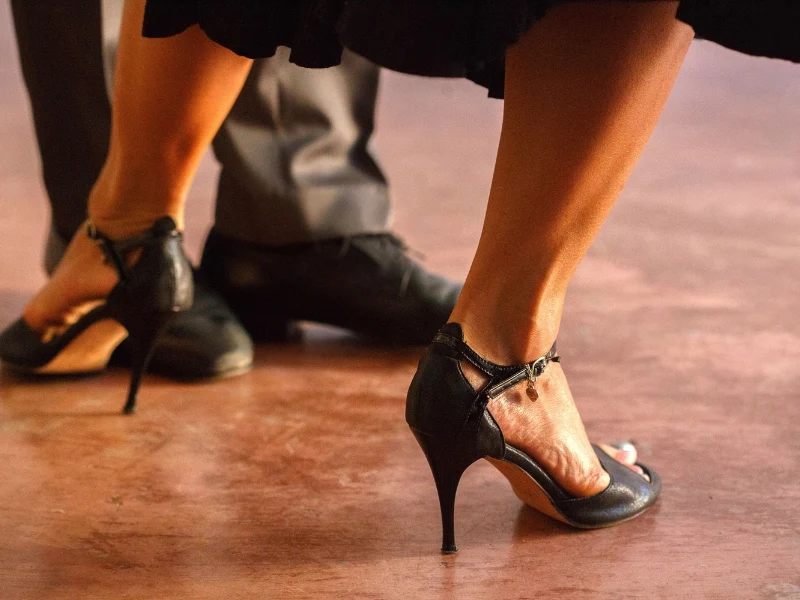
Footwear can affect how easily you move on the dance floor. Wear shoes with a relatively smooth sole to make turning and pivoting easier.
It’s easy to watch experienced salsa dancers and notice their hip movement, turns, arms, and individual style. Those details are fun to perform, but they come during later lessons.
For your first lessons, pay more attention to the rhythm, timing, and weight changes. Once those fundamentals become comfortable, you’ll have more freedom to add flair without losing the basic pattern.
Repetition is a large part of learning to do any type of dance, whether you’re learning ballroom dancing, swing dancing, or salsa dancing. You may practice the same basic pattern many times before adding a turn or changing direction. That gives your body time to learn a movement your brain currently has to think through step by step.
Repeating a movement isn’t a sign that you’re behind. It’s how the movement becomes familiar.
Learn Salsa at Fred Astaire Dance Studio of Durham
Your first salsa lesson isn’t about performing complicated combinations. It’s about learning the count, becoming comfortable with the basic steps, moving with a partner, and beginning to recognize how those pieces work together.
At Fred Astaire Dance Studio of Durham, we teach salsa dancing for beginners, and new dancers can get started with two lessons for $59, giving you a low-commitment way to try salsa and see how you like it.
To schedule your first lesson today, contact us at 919-489-4313 or fill out our contact form to get on the schedule.