

Learning ballroom dancing in Scottsdale, AZ, isn’t as hard as you may think. You can learn the basic steps in a few lessons, but to truly master the style, it takes consistent practice and, of course, good instruction.
Most adults picture competition-level dancing when they ask that question. Perfectly timed footwork, dramatic technique, years of training. That version is hard. The version you’ll be working toward is something most beginners reach within a few months of consistent lessons.
Of course, you can later on participate in all kinds of competitions (studio events, regional/national competitions).
Here is what makes Ballroom dancing challenging, what makes it easier, and what to expect from adult dance lessons in Scottsdale, AZ.
The Short Answer: Is Ballroom Dancing Hard to Learn?
No, not with the right instruction. Yes, if you try to figure it out on your own.
That is the most honest answer we can give. Ballroom dancing has a reputation for being complex and formal, and at a high level, it absolutely is.
But the version most students are trying to learn, enough to feel confident at a wedding, move comfortably with a partner, or simply enjoy a night out, is completely accessible to anyone willing to show up and practice.
The difficulty people experience usually comes from one of two things: the wrong learning environment, or unrealistic expectations about how quickly it should feel natural.
| Most beginners feel genuinely comfortable on the dance floor within 8 to 12 private lessons. A solid social foundation across one or two styles typically takes about 2 months of consistent lessons. |
Why Do Most Students Assume It Will Be Harder Than It Is?
Most of what adults know about ballroom dancing comes from watching it rather than doing it.
Competitions, TV shows, and professional performances usually showcase ballroom dancing at its highest and most polished level. That is what gets filmed. What doesn’t get filmed is the beginner who walked in for the first time three months ago and is now dancing a Foxtrot competently enough to enjoy themselves at any social occasion.
A few other reasons why adults think ballroom dancing is hard:
- They have not danced since childhood, or ever. So any movement that requires rhythm and coordination with another person feels unfamiliar. That’s normal, not a talent deficit.
- A beginner Waltz and a competition-level Waltz are connected, but they are completely different levels of difficulty.
- They tried to learn it from a YouTube video or a group class with no private instruction and it didn’t click. That is a method problem, not a you problem.
- They think they’re not musical. In our experience, musicality develops with practice. It’s rarely a prerequisite.
These aren’t reasons not to try dancing. They are simply reasons to find the right environment and the right dance teachers in Scottsdale, AZ when you begin.
The right studio changes the entire experience. It affects how quickly you progress, how confident you feel, and whether you genuinely enjoy learning. Once you find a place where you feel comfortable and supported, the process will become much more rewarding.
If you want to learn more about how dance can impact your confidence, health, and everyday life, our blog on the benefits of adult dance lessons explores the topic in more detail.
The Easiest Ballroom Dances to Start With as a Beginner in Scottsdale, AZ
Not all ballroom styles have the same learning curve.
Some dance styles are easier for complete beginners, and starting with the right one can help you build confidence and a strong foundation that makes future learning much easier.
These are the 3 styles we recommend to adult beginners at Fred Astaire Dance Studios – Paradise Valley:
Foxtrot
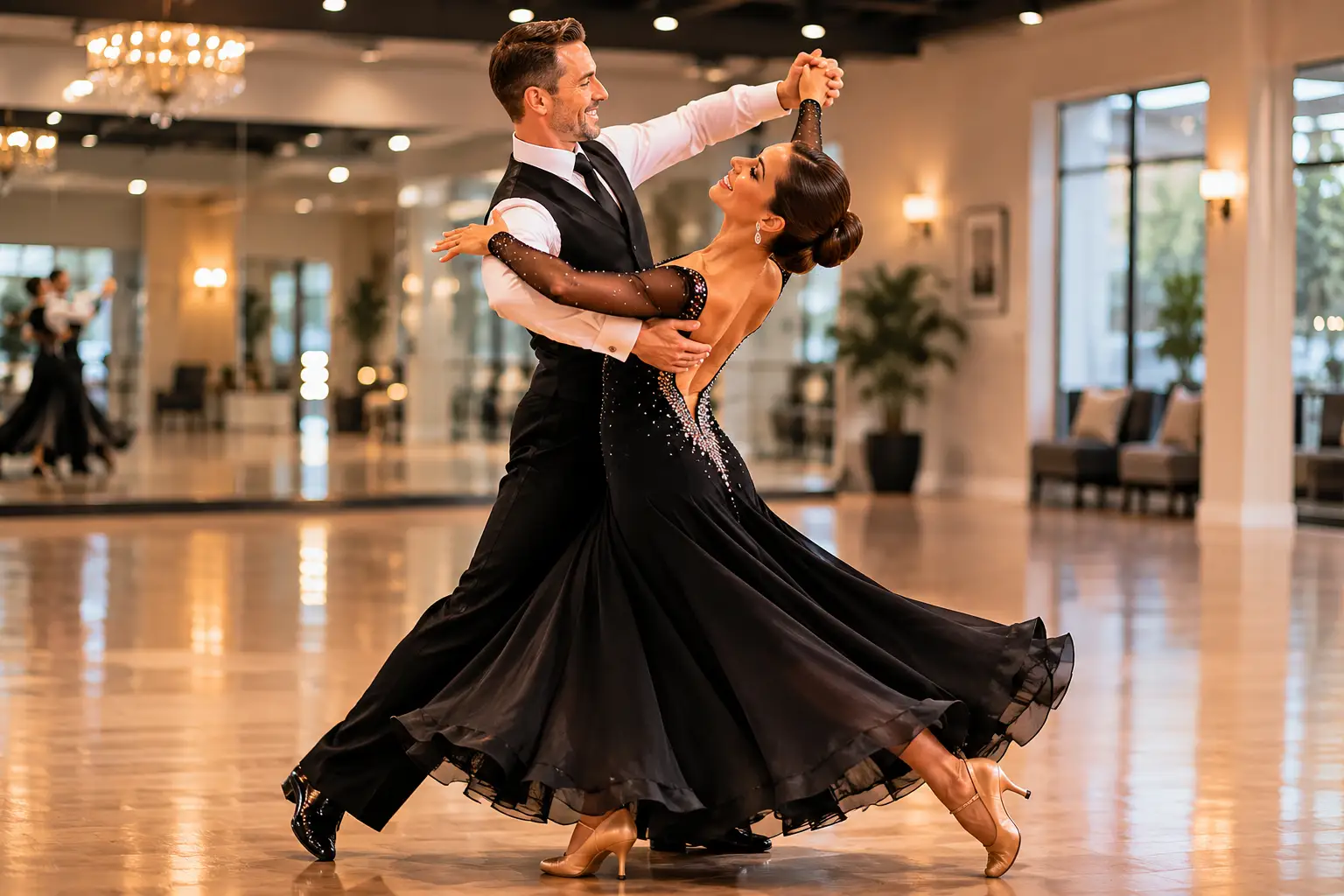
The Foxtrot is the dance we recommend most often to adult beginners, and the reason is practical: it’s the most versatile partner dance you can learn.
The rhythm follows a simple slow-slow-quick-quick pattern that most people internalize within a few lessons. The footwork travels forward and to the side, which feels natural to the body far sooner than rotational or syncopated styles do.
Because the movement is smooth and continuous rather than sharp or staccato, beginners tend to pick it up quickly. It also works with jazz, big band, pop, country, and a huge range of contemporary music, which means once you have a foundation in place, you can use it at weddings, events, or other occasions.
Rumba
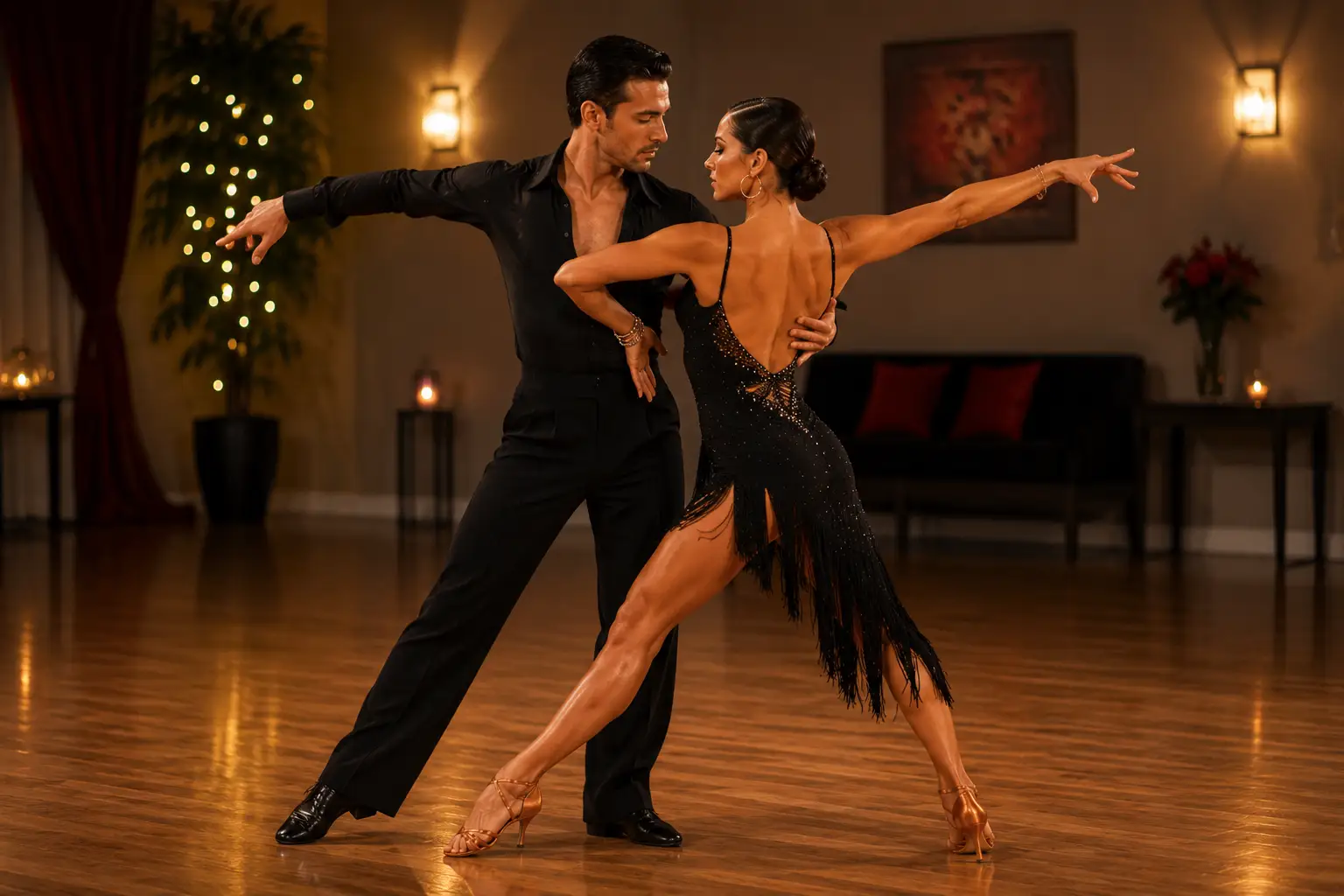
The Rumba is the slowest of the Latin dances, which means the music gives you time to think, feel, and connect with your partner rather than just trying to survive through the song.
The basic footwork follows a box pattern that can be picked up within the first few lessons. Since the focus is more on rhythm, movement, and connection than speed, many beginners find the Rumba much less intimidating than they expected.
It’s also one of the most emotional and romantic styles we teach at our dance studio in Paradise Valley. It’s built around the relationship between two people, which makes it a popular choice for couples and for anyone who wants a style that feels meaningful, graceful, and personal.
East Coast Swing
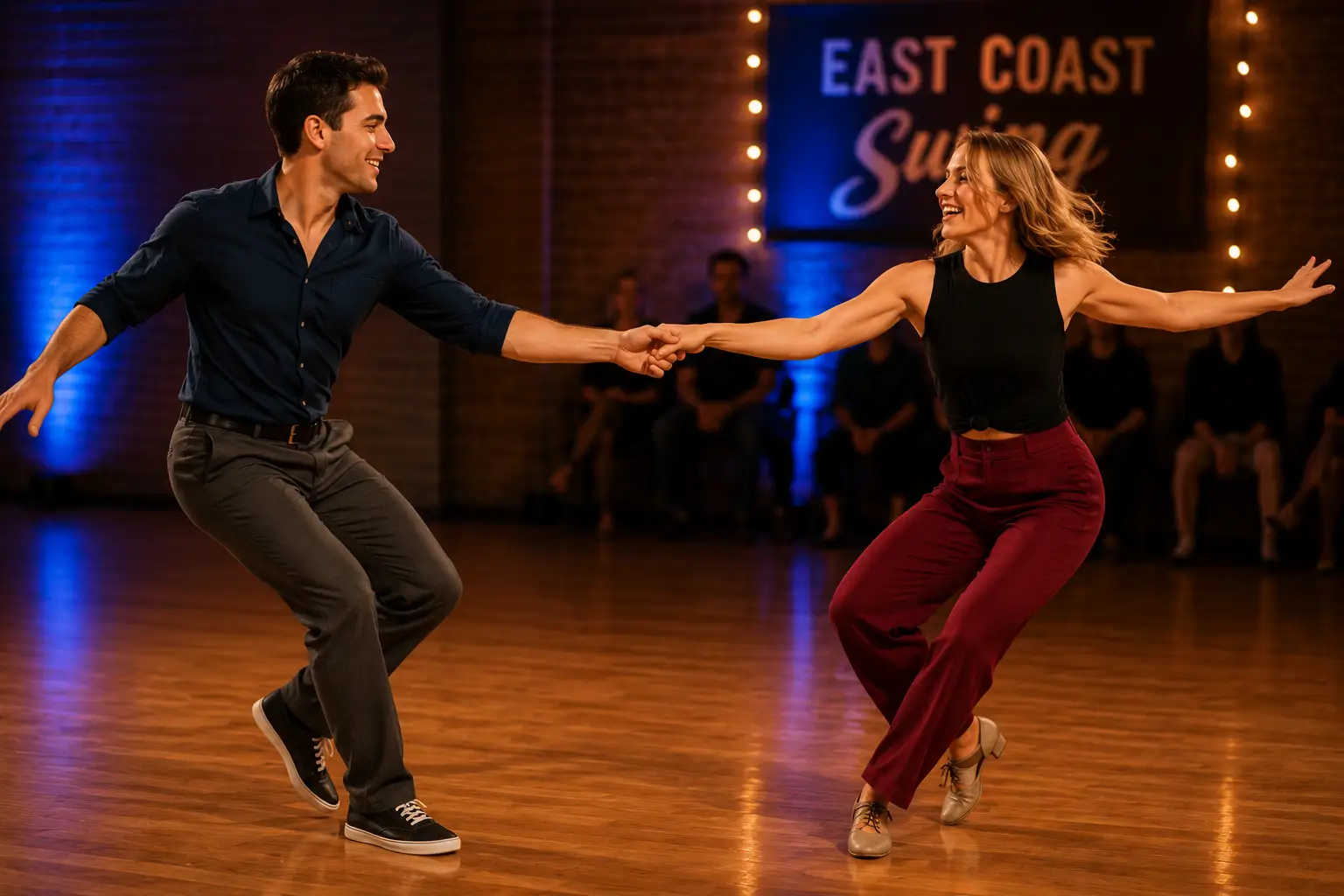
For those who want energy and fun without too much formality, East Coast Swing is one of the most fun styles to learn. The footwork is built on a simple triple-step pattern that clicks quickly for most beginners, and the upbeat rhythm makes it hard not to enjoy yourself while learning it.
It’s also one of the most socially adaptable styles, and it works with an enormous range of music, which makes it one of the most socially useful dances you can learn.
East Coast Swing vs. West Coast Swing: What Is the Difference?
Both styles share the same roots, but they feel and function very differently.
East Coast Swing is bouncier, more circular, and works best with faster, upbeat music. The energy is outward and playful. In West Coast Swing, partners travel in a straight line rather than rotating around each other.
For beginners, East Coast Swing is almost always the better starting point. The footwork is more satisfying, the rhythm is easier to feel, and the social situations where you can use it come up more often.
Many of our students learn both over time, and the two complement each other well.
What Determines How Quickly You Can Learn Dancing
The speed of your progress has almost nothing to do with natural talent.
In more than 17 years of teaching, we haven’t found a reliable pattern between how quickly someone picks up dancing and any pre-existing quality they walked in with.
What we have noticed is that the following factors consistently predict progress:
- Private lessons. Group classes have advantages, but the fastest way to build a foundation is through private instruction where the teaching is adapted entirely to you. Our students in private dance lessons in Scottsdale progress faster.
- Consistent attendance. Dancing is a physical skill. A student who comes once or twice a week for 3 months will be in a completely different place than one who comes sporadically.
- A structured curriculum. If every lesson feels disconnected from the last, progress stalls. That’s why our teaching system at Fred Astaire Dance Studios in Paradise Valley is designed so that each lesson builds deliberately on the one before it.
- Willingness to be a beginner. The students who progress fastest are the ones who stay curious, ask questions, and don’t let a difficult lesson stop them from coming back.
If you are still comparing studios and want to know what separates a good one from a great one, our guide on how to find the right dance classes in Scottsdale, AZ is worth reading.
How Long Does It Take to Feel Comfortable With Ballroom Dancing?
Here is an honest timeline based on what we see in our students:
- After 1 to 3 sessions, you can understand the basic footwork of the style you’re learning and can move with a partner.
- After 8 to 12 sessions, you can feel comfortable with one style and can dance without feeling lost.
- After 18 to 25 sessions, you’ll have a solid foundation in two or three styles and feel comfortable using them in real social situations without anxiety.
These are the averages, not guarantees. Some students move faster. Some take longer, and that is completely fine.
What we can guarantee is this: if something is not clicking, we slow it down, explain it differently, and work with you until it starts to feel natural.
Start Ballroom Dance Lessons in Scottsdale, AZ With Fred Astaire Dance Studios
Fred Astaire Dance Studios Paradise Valley instructors go through extensive training and certification through one of the longest-standing and most respected dance education systems in the United States.
Every new student can start with a private introduction dance lesson designed around their goals, experience level, and the pace that works best for them.
What we know after years of working with adult beginners is this: the question is never really whether ballroom dancing is hard to learn. The question is whether you have the right environment to learn it in. That is what we focus on.