

Good ballroom dance etiquette helps the evening run smoothly, keeps the dance floor safer, and makes the experience better for you, your partner, and the other dancers around you. It also helps newer students feel less unsure about what to do when someone asks you to dance, how much space to leave, or what is expected during group classes and social dances.
At Fred Astaire Dance Studio of Durham, many students who participate in our group dance classes want an evening filled with fun, socializing, and movement. Learning how to move through a shared dance environment with confidence is an important part of the ballroom class experience.
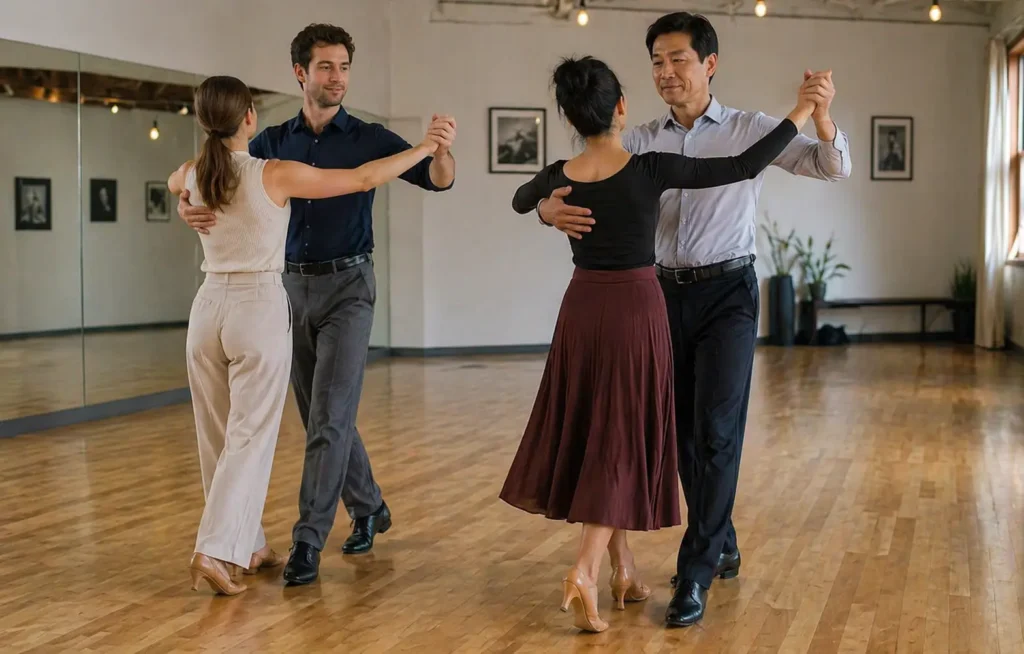
Table of Contents
The Basics of Ballroom Dance Etiquette
Ballroom dance etiquette is usually less formal than people expect. At its core, it comes down to a few simple habits that make the room more comfortable for everyone.
- Show respect to your partner and the people around you.
- Stay aware of the dance floor, especially when other couples are moving nearby.
- Enter the floor carefully instead of cutting off another couple.
- Pay attention to your partner’s comfort level throughout the dance.
- Avoid trying advanced moves when the floor is crowded.
- Be mindful of personal space in a shared setting.
- Keep a patient, friendly attitude, especially during social dances.
- Hold back on unsolicited advice unless someone asks for help.
How to Step Onto the Floor Without Disrupting the Room
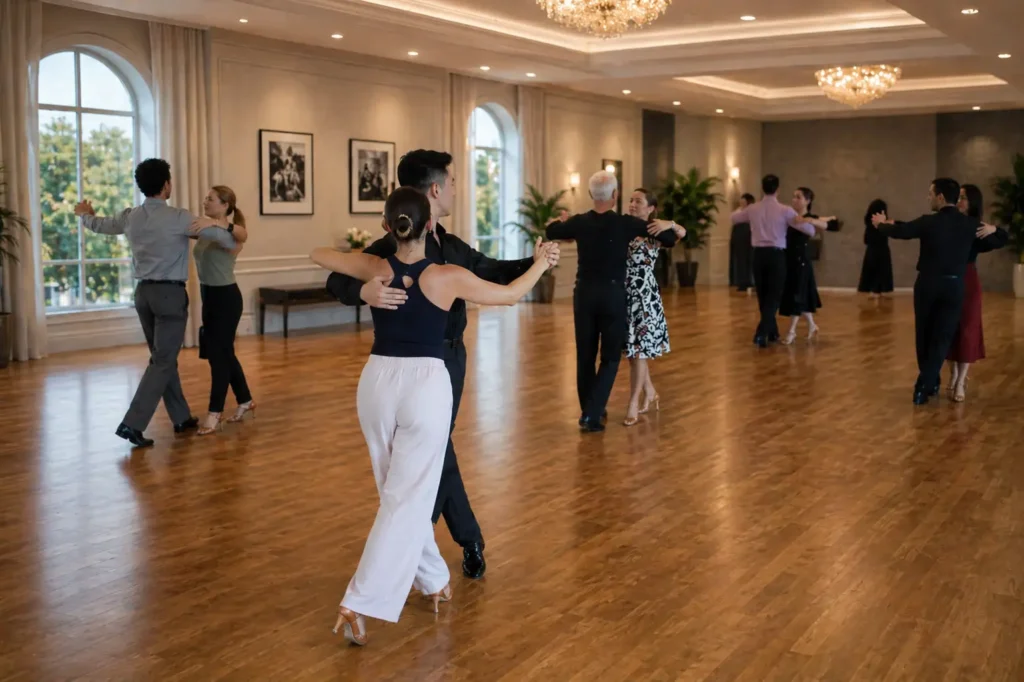
Before you walk out onto the dance floor, take a quick look at what is happening around you. Is the room moving in a clear line of dance? Are couples doing progressive dances and traveling around the floor? Is the center already full of ballroom dancers working on spot patterns?
A little awareness goes a long way.
Positioning Yourself on the Floor
Choose the right spot on the dance floor to avoid getting in the way of other dancers:
- Use the outside for traveling dances like Waltz, Foxtrot, and Tango, which usually move around the room in a counter-clockwise direction.
- Use the middle for dances that usually stay more contained, like Rumba, Cha-Cha, Bolero, Samba, and other Latin dances.
- Check the center before stepping in. If it already looks crowded, keep your movements smaller.
- Watch the other couples first. Their movement will usually show you where your dance fits best.
- Adjust if the floor changes. If the room gets busier, make your steps smaller and stay aware of the space around you.
The Line of Dance
In ballroom dance settings, traveling dances move in a counter-clockwise direction around the outer edge of the room. This is known as the line of dance. Dances such as Waltz, Foxtrot, Tango, and Viennese Waltz usually follow this pattern. If you step into that lane without looking, you can interrupt the flow very quickly.
Respect the Shared Space
A social dance is never just about one couple. Even when you are focused on your own partner, you are still moving through a shared space with other couples and various people at different skill levels.
That is why one of the best habits any dancer can develop is learning to stay aware without looking tense. You want to know what is happening around you without losing connection to the person you are dancing with.
Give More Room Than You Think You Need
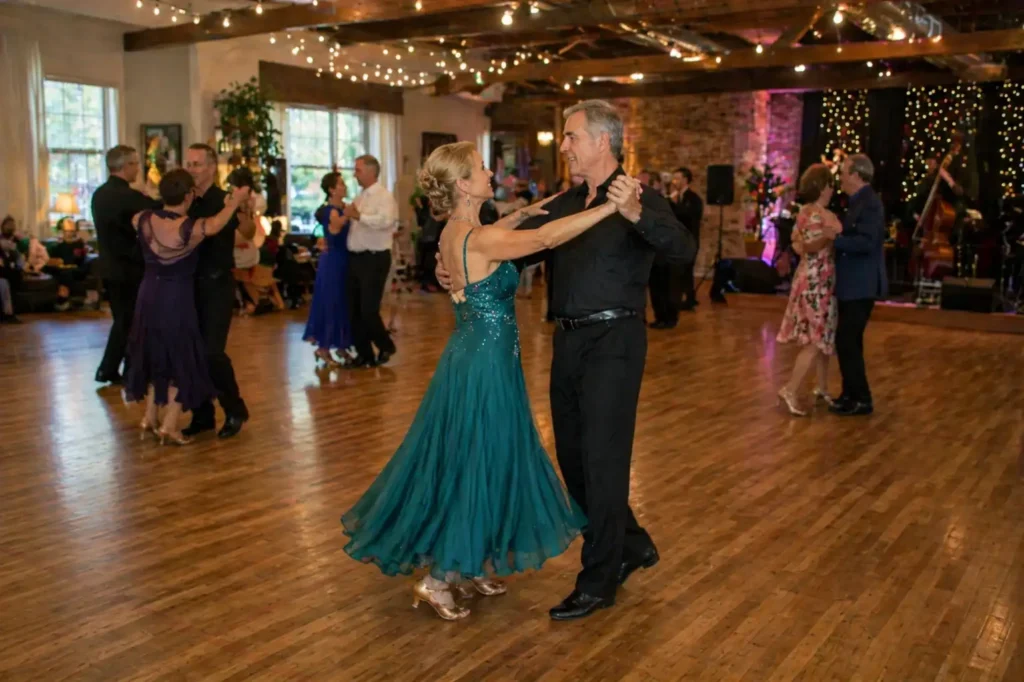
On a packed dance floor, big movements can create problems for the other dancers around you. When you are in a limited shared space, scale your movements down. This means shorter steps, cleaner turns, and better control, which almost always looks better than forcing patterns that do not fit the room.
Watch Your Feet and Frame
No one enjoys having someone’s foot clipped during a turn or backed into during a progressive pattern. Keep an appropriate distance from nearby couples so everyone can become relaxed and comfortable dancing in their own space. If a collision does happen, a quick acknowledgment, apology, and reset is usually the best way to handle it.
Etiquette Between Dance Partners
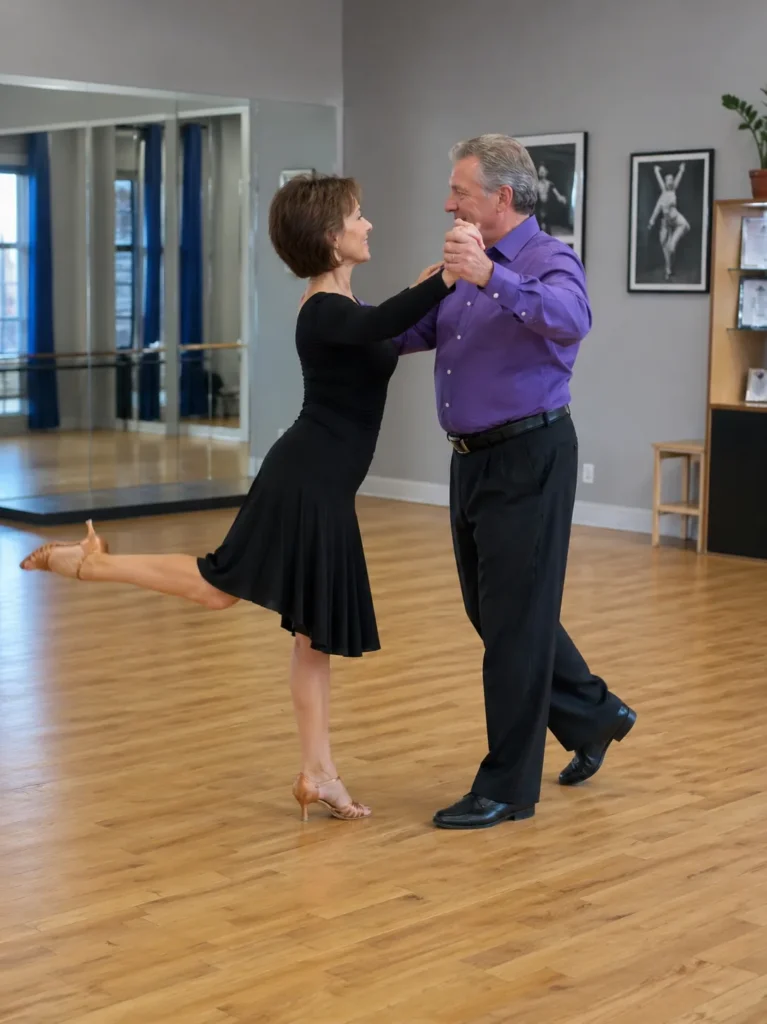
A good social dance partner pays attention. They notice if the hold feels too tight, if the timing feels rushed, or if the other person seems hesitant.
A social dance usually goes better when you focus on your partner instead of trying to make the dance look impressive. Some people prefer simple basics and a steady lead. Others are comfortable with a little more variety. Good ballroom dance etiquette means adjusting to the person you are dancing with instead of using the exact same style every time.
Invitations and Declining Gracefully
Asking someone to dance does not have to feel like a big moment. Simply make eye contact, smile, and ask in a clear, polite way. If they say yes, great; if they decline, be respectful and move on without making it awkward.
Just as important, if someone asks you to dance and you need to say no, do it kindly. You do not owe a long explanation. A simple, polite response is enough. Most people in the community understand that sometimes you need a break, want to sit out a song, or simply do not feel ready.
Come Prepared to Share the Floor with Others
Whether you are taking part in a social dance event or in an individual dance lesson with just you, your instructor, and/or dance partner, you’ll be moving in close contact with others, so personal presentation matters.
Personal Hygiene
Clean clothes, fresh breath, and good hygiene go a long way. If you know you tend to sweat a lot while dancing, bringing a small towel is a good habit that helps both you and your partner feel more at ease.
Dress Code
For social dancing, wear something you can move in comfortably and shoes that work well on the floor. When considering what to wear to dance lessons, the goal is to look neat and appropriate for the studio or event without choosing anything that makes dancing harder.
Schedule a Durham Ballroom Dance Lesson
If you are interested in learning ballroom dance etiquette along with strong technique, Fred Astaire Dance Studio of Durham offers a welcoming place to start. Whether you are brand new to ballroom, returning after time away, or hoping to feel more confident at social dances, learning in the right environment can make the process feel much more natural.
Our studio works with students at different comfort levels and helps them build lifelong dance skills. For students new to our studio, our introductory rate makes your first 2 classes only $59.
Schedule your first lesson today by calling us at 919-489-4313 or filling the form below to get started.