

If you want to learn how to practice dancing at home, start by reviewing the steps you learned in your most recent class for 10 to 15 focused minutes each day. At Fred Astaire Dance Studio of Durham, we encourage students to practice between dance classes to reinforce what they’ve learned, build confidence, and make steady progress.
Our Durham studio teaches ballroom dance, Latin dance, and Swing dance, including Waltz, Foxtrot, Tango, Salsa, Cha-Cha, Rumba, and more. Each dance style has its own timing, footwork, and movement patterns, so home practice should support what you’re learning in class.
Table of Contents
Set Up a Safe Space for Dance Practice at Home
You don’t need a large room to practice dance moves at home. You need enough clear space to work through your steps without catching a foot on furniture, loose rugs, cords, or anything else in your path.
Clear Enough Room to Move
For basic footwork and smaller moves, aim for about 6 by 6 feet of open space. If you’re practicing a traveling dance such as Waltz or Foxtrot, shorten the pattern to fit the space you have. Practice a few steps, reset, and repeat.
Choose a Floor Space
Hardwood and laminate flooring allow you to move more easily than when you practice movement on thick carpet. If carpet is your only option, use that practice space for timing, posture, frame, or stationary dance steps instead.
Accessories That Can Help
A portable dance floor is a good option for someone who practices regularly, while a yoga mat is better for stretching or conditioning because its grip can interfere with turns. Also, having a full length mirror you can practice in front of is a great way to check your frame and posture. Use it briefly, then turn your attention back to your movement and the music.
Structure a Productive Solo Dance Practice Session
Start With a Short Warm-Up
Spend five to 10 minutes getting your body ready to move. You can walk around, loosen your body by doing shoulder and ankle rolls, and do some light stretching to gently move through the range of motion you expect to use. The goal is to feel ready to practice controlled movements without tiring yourself out.
Practice the Mechanics First
If a step is still new, slow it down. Work through the movement without music so you can pay attention to which foot starts, when your weight changes, and where you finish a step. For example, if you are practicing a box step used for Waltz, get the footwork and weight transfer right before worrying about how graceful it looks or matching the rhythm of the music.
Add Music Later
When you can complete the pattern without repeatedly stopping it, it’s time to add music at a manageable tempo. Count aloud if you need help staying with the rhythm, and if you find yourself making the same mistake, stop the music and isolate that part through repetition again.
Use Online Dance Tutorials as a Supplement
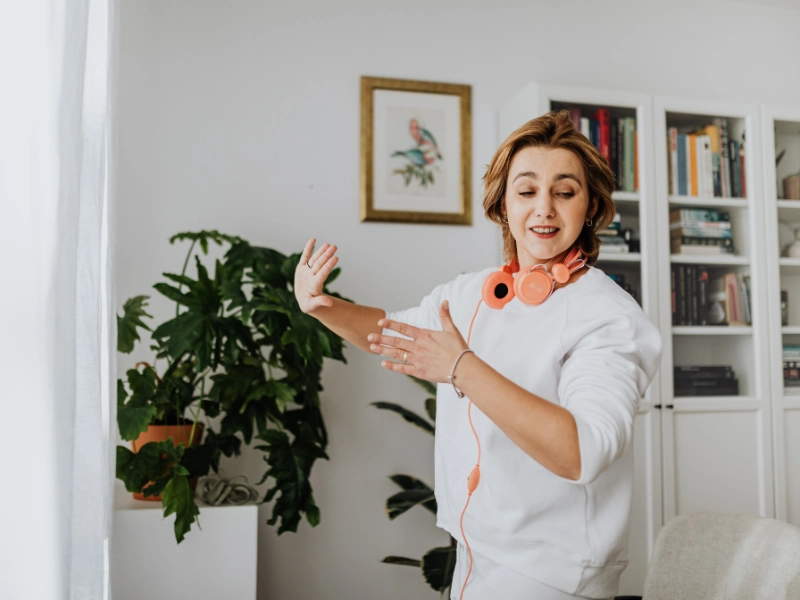
To learn how to practice dancing at home, utilize video tutorials in between your lessons. Online tutorials, whether through dance apps or YouTube videos, can provide a useful reminder of material you learned during your private dance lesson or group dance class. For example, a short video tutorial reviewing timing for introductory Salsa steps might help you remember the count before your next in-studio session. You can pause and rewind as many times as needed until you feel it’s time to move to the next portion of the move.
The Limits of Online Dance Instruction
The challenge is that instructors may teach different styles, variations, terminology, or technique. What you see online may not match what you’re learning in class. Because of this, treat dance videos and virtual dance classes as supplemental resources rather than a substitute for in-person instruction.
Also remember that not all of the YouTubers making dance videos are professional dancers like at your local studio. If something conflicts with what your instructor taught, ask during your next dance lesson instead of taking the time to practice it repeatedly. That can prevent bad habits that later need to be corrected.
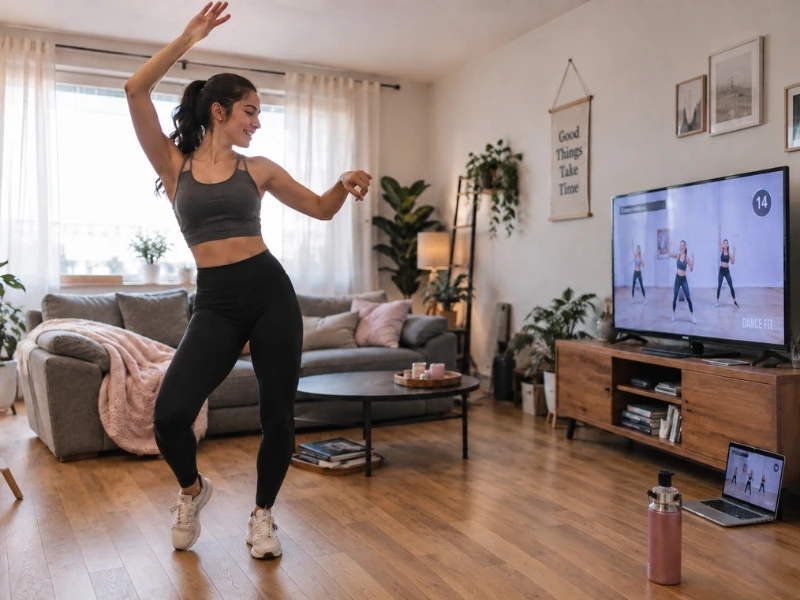
Record Yourself to Check Your Progress
A short recording can show you things you may not notice while you’re dancing. You only need 20 or 30 seconds of footage to know what needs to be worked on more and what moves you’ve mastered.
Watch the video to check that:
You stay on the beat
Your posture does not change during a turn
Your feet finish where you expected
Saving an occasional video also makes progress easier to recognize. Changes that seem small from one lesson to the next may be much more obvious a month or two later.
Build Your Own Style Through Music and Movement
Don’t spend the entire recording session analyzing yourself. Dance is an art form, not simply a series of technical corrections. Put on a favorite song and spend a little time moving with the rhythm. As the mechanics become more comfortable, you can begin adding more of your own personal style, and before you know it you’ll find that your movements begin to naturally improve over time.
Add Strength Training and Balance Work Between Lessons
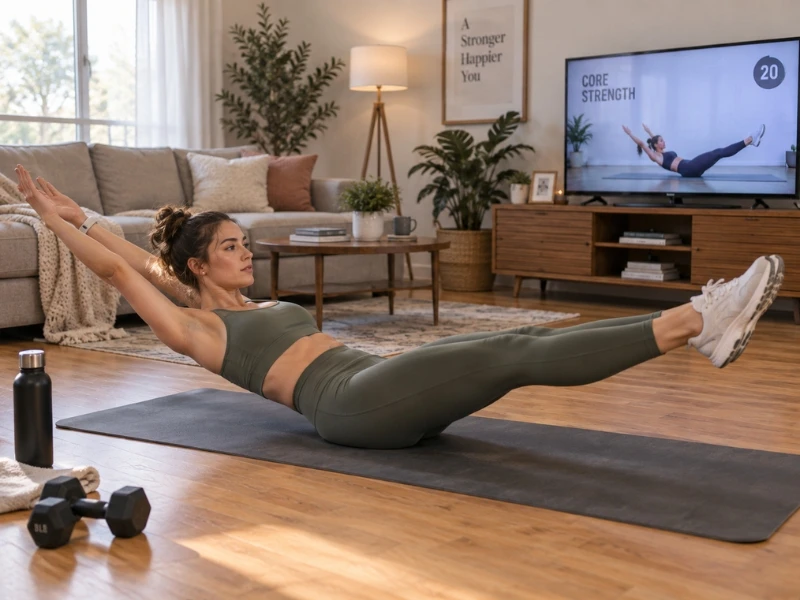
To grasp how to practice dancing at home, add complementary strength exercises to your day. Light strength and balance work can make it easier to learn choreography because your body has more control when moving from one step to the next. Exercises like calf raises, balance drills, and basic core work can support posture, weight changes, and other dance skills you use in ballroom, Latin, and Swing dancing.
As you spend time repeating choreography, that physical control can also help movements feel more consistent, which supports muscle memory. You do not need an intense workout. The goal is to build enough strength and stability to move with more control and gradually become a better dancer.
Bring Your Home Dance Practice Back to the Studio
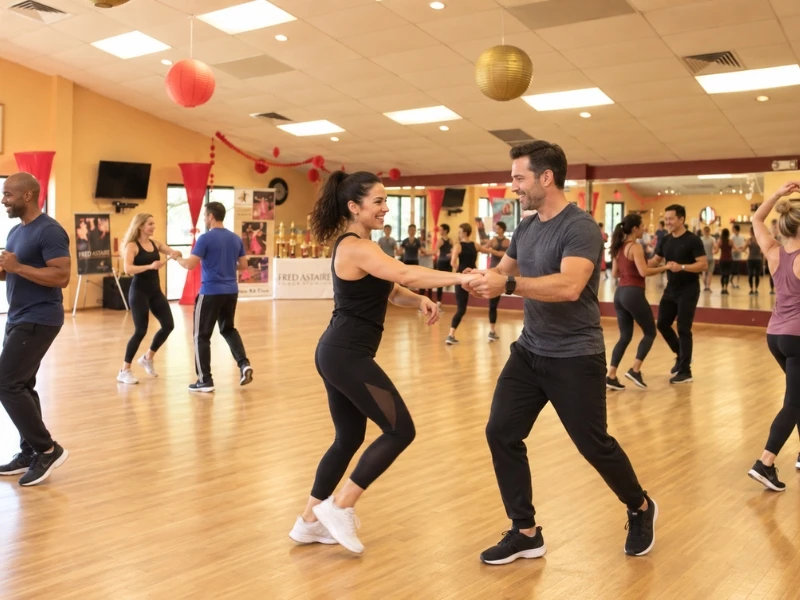
After you’re learned how to practice dancing at home, go back to the studio. You can work on timing, footwork, balance, and different movements and patterns at home. Other parts of learning dances that include a partner are much easier to refine with an instructor, especially lead and follow, connection, frame, rotation, and more detailed technique.
Home practice can also make your questions more useful as you continue improving your skill level. Instead of coming back to class saying, “I can’t do the Tango,” you may realize that you specifically lose your balance on a backward step. This will help your instructor provide you with the best advice to improve week to week.
Frequently Asked Questions
Can dancing lower blood pressure?
Yes, dancing supports heart health because it gets your body moving and can count as moderate physical activity. Staying active helps reduce blood pressure and provide long-term cardiovascular benefits.
If you have high blood pressure or another health condition, talk with your healthcare provider about the level of activity that is appropriate for you before starting any new routines.
Is dancing beneficial for Parkinson’s?
Dance may help some people with Parkinson’s disease improve balance and movement control. Research has found that dance-based programs can improve balance, with studies including styles such as Tango, ballroom, and Waltz-Foxtrot.
Because Parkinson’s affects everyone differently, speak with your healthcare provider before beginning dance lessons or another exercise program.
Can people with scoliosis dance?
Yes, many people with scoliosis participate in dance. Since dancing involves posture, balance, controlled movement, and core engagement, certain movements may need to be modified for comfort and ability.
How can I practice dancing at home without a partner?
You can practice ballroom dancing without a partner by concentrating on your own footwork, balance, timing, and frame. Hold a relaxed “shadow frame” as you move through familiar patterns, or use the back of a sturdy chair as a visual reference for where your partner would be.
At Fred Astaire Dance Studio of Durham, we can then help you apply that solo practice to lead-and-follow and partner connection in class.
Should I practice dancing in my dance shoes at home?
Whether you should wear dance shoes at home depends on both the shoes and your flooring. Suede-soled ballroom shoes can pick up moisture and dirt or become damaged on rough surfaces. Clean indoor shoes or socks may be better for some home practice areas.
Your instructor at Fred Astaire Dance Studio of Durham can recommend footwear based on what you’re practicing and the surface you have at home.
How often should I practice dancing at home to see results?
Aim for 10 to 15 minutes of focused dance practice each day, or several short sessions throughout the week. Practicing through repetition gives you more chances to review recent steps and build muscle memory than saving everything for one long session. At home, focus on a few familiar movements at a time so you can practice them with good timing and control.
Start Your Dance Journey with Lessons In Durham
At Fred Astaire Dance Studio of Durham, we help students of different skill levels keep progressing through individual dance lessons, partner dance lessons, and group dance classes.
Students new to our studio can get started with their first two dance classes for just $59. To schedule your first lesson, call us at [phone] or fill out our online contact form to get started.