

A slow song comes on, your partner reaches for your hand, and suddenly you’re wishing you’d learned this years ago. The good news is that slow dancing is one of the easiest partner dances to pick up. A few basic moves, a little rhythm, and some practice are all it takes.
At Fred Astaire Dance Studio of Durham, we’ve been helping beginners feel at home on the dance floor as part of a studio network that has taught couples to dance since 1947. Our Durham studio sits about 20 minutes from downtown Chapel Hill, and every lesson is tailored to your skill level, so you can learn how to slow dance whether you’re preparing for a wedding, a date night, or just for fun.
Learn how to slow dance as a beginner with our guide on learning basic steps, rhythm, and how to practice at home.
Table of Contents
What Makes Slow Dancing Different
Slow dancing focuses on connection rather than complex choreography. Unlike structured ballroom dance styles, a slow dance can be as simple as swaying side to side with your partner. There’s no required footwork to memorize before you step onto the floor, which is exactly why it shows up everywhere: weddings, proms, anniversary parties, and casual nights out.
That said, knowing a few basics makes the whole experience more comfortable for both of you.
Where to Put Your Hands When Slow Dancing
Hand placement is the first thing most beginners worry about, and it depends on the setting.
The Classic Position
This is the standard frame for social dancing and most wedding dances:
The lead places their right hand on their partner’s left shoulder blade, with the right elbow lifted slightly so the frame feels supportive, not heavy.
The follow rests their left hand on their partner’s right shoulder, with their left arm relaxed along the lead’s arm.
The remaining hands clasp together, held at about the eye level of the shorter partner.
The Casual Position
Common at a school dance or an informal party: the lead’s hands rest lightly on their partner’s waist, and the follow’s arms rest on their partner’s shoulders. Keep a comfortable 1 to 2 feet of distance unless you know each other well.
Either way, keep your frame soft. A relaxed posture makes it easier to communicate movement and keeps the dance feeling natural.
Basic Slow Dance Steps
You can get through almost any slow song with two moves:
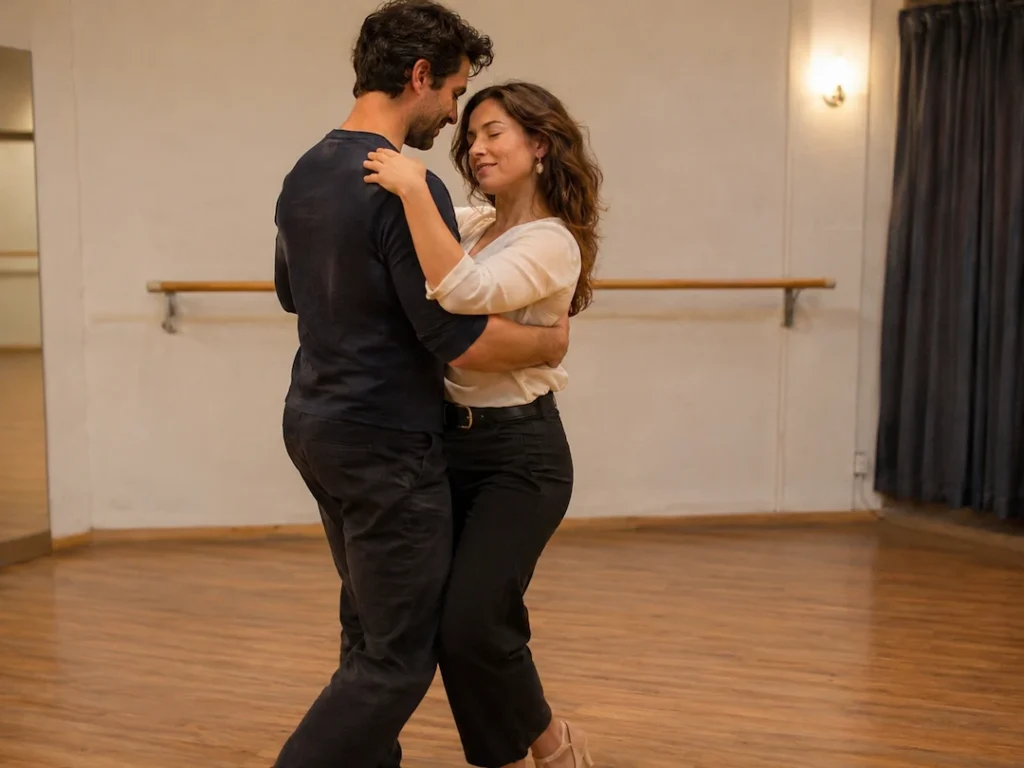
The Side-to-Side Sway
The simplest version of slow dancing is a gentle weight shift. Step your left foot slightly to the left, bring your right foot to meet it, then reverse. Shift your body weight fully with each step and let your shoulders stay loose. That’s it. This is the move you’ll see most couples slow dancing with at any wedding reception.
The Box Step
Ready for a touch more structure? The box step traces a square on the floor:
The lead steps forward with their left foot (the follow mirrors, stepping back with their right foot).
Step the right foot to the side.
Close the left foot to the right.
Step back with the right foot, side with the left, then close again.
Keep your steps small. Small steps prevent tangled feet and keep you off your partner’s toes. The box step is the foundation of the waltz, so if you enjoy it, waltz classes are a natural next step.
Finding the Rhythm
Before you move, listen. Take a few seconds to hear the underlying beat of the slow song, then start your sway on that beat. Most slow songs have a steady, easy-to-find pulse, and matching your steps to it matters more than any fancy footwork.
If you lose the rhythm mid-dance, don’t panic. Pause your feet, keep a gentle sway in your upper body, find the beat again, and step back in.
Slow Dance Etiquette
Good slow dancing is as much about courtesy as technique:
Keep 1 to 2 feet between you unless you’re dancing with a significant other.
Make soft eye contact. You don’t need to stare, but scanning the room reads as disinterest.
Keep light conversation going. A compliment or a bit of small talk eases any awkwardness.
Say thank you afterward, no matter how short the dance.
These small habits make you the kind of dance partner people want a second dance with.
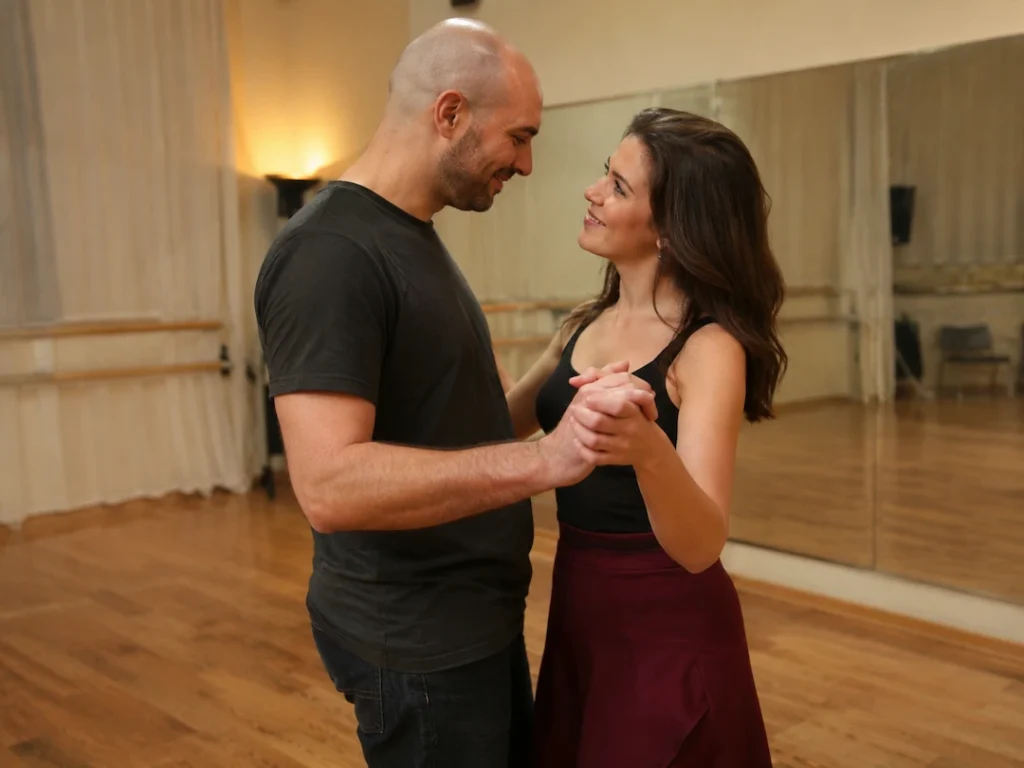
Ready to Add Turns and Dips?
Once the basics feel comfortable, you can add turns and dips to polish the dance.
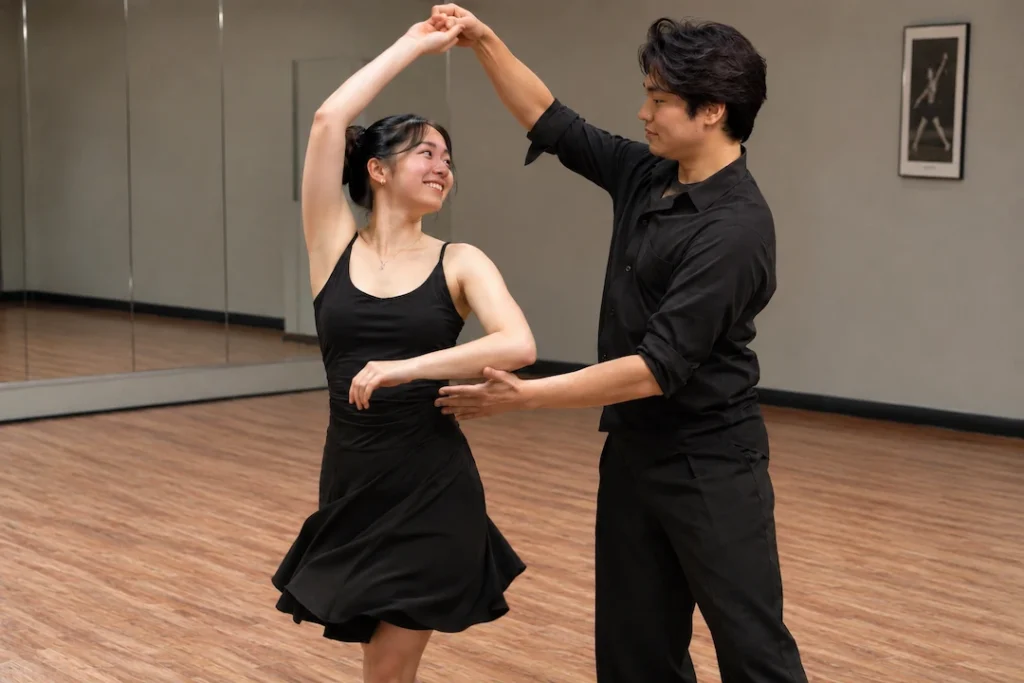
For a turn, the lead raises their left hand and applies slight pressure on their partner’s waist. The follow turns under the partner’s lifted arm, then both return to the starting frame. For a simple dip, the lead steps slightly forward, supports their partner’s back, and the follow leans back a few inches. Keep dips small until you’ve practiced them; a controlled little dip looks far better than a dramatic one that wobbles.
Practice your basic steps until they’re automatic before layering in turns and dips. Our private lessons in Durham are a low-pressure way to learn, with an instructor guiding the timing.
Slow Dancing for Weddings, Proms, and Date Nights
The same basics carry you through almost any social event, but a few situations deserve extra prep:
Your wedding first dance. All eyes are on you, so a little coaching goes a long way. Our wedding dance lessons build a first dance around your song, from a simple sway to full choreography.
Prom or a formal. Stick with the classic position, keep respectful spacing, and let the sway do the work.
Date night. Learning to dance together is a date in itself. Many Durham and Chapel Hill couples make couples dance lessons a standing night out.
Put on any slow song and run your basic steps in the kitchen or living room. Practice with a partner when you can, trading lead and follow roles so you both understand the frame. Even ten minutes a few times a week builds the muscle memory that makes slow dancing feel effortless.
When you’re ready for feedback, that’s where lessons help. Instructors catch the small posture and timing habits you can’t see yourself, and if you don’t have a partner, you’ll be paired with an instructor.
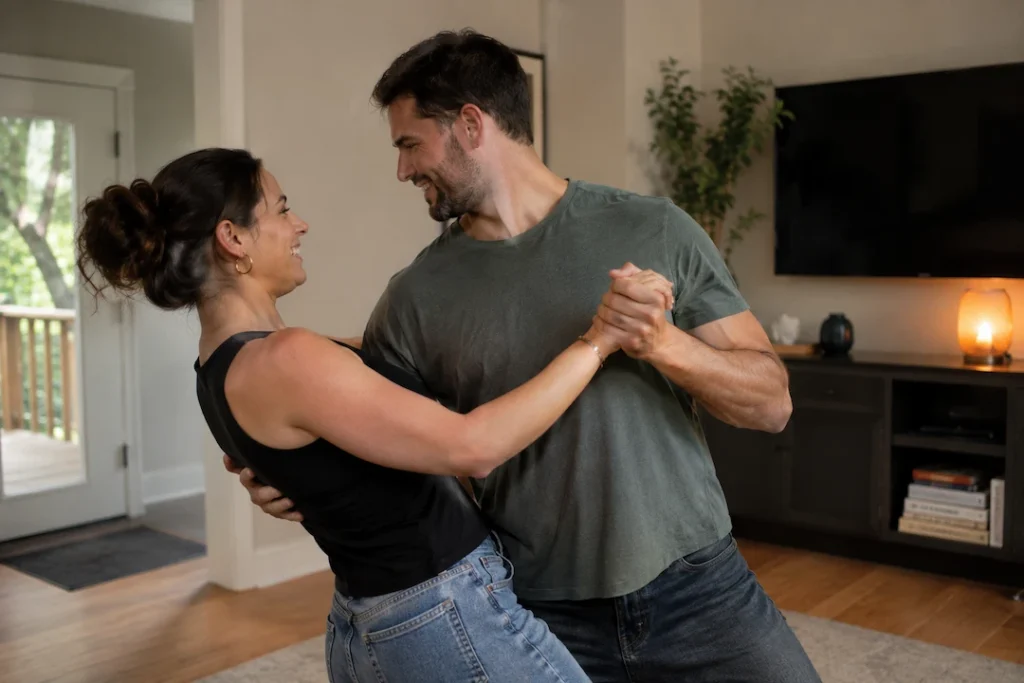
Frequently Asked Questions About Slow Dancing
Where do you put your hands for a slow dance?
In the classic position, the lead’s right hand rests on their partner’s left shoulder blade and the follow’s left hand rests on the lead’s right shoulder, with the free hands clasped at about eye level of the shorter partner. In casual settings, hands on the waist and arms on the shoulders work fine.
What is the etiquette of slow dancing?
Ask politely, keep 1 to 2 feet of distance with anyone who isn’t your significant other, maintain soft eye contact, keep your frame relaxed, and thank your partner when the song ends.
What are some examples of slow dances?
The side-to-side sway is the most common slow dance at weddings and parties. The box step, waltz, rumba, and nightclub two-step are all popular slow dance styles that build on the same basics.
What is the best song to slow dance to?
Any song with a slow, steady beat works. Classics like “At Last” by Etta James, “Can’t Help Falling in Love” by Elvis Presley, and “Perfect” by Ed Sheeran are beginner-friendly because the rhythm is easy to follow.
Learn How to Slow Dance in Durham
You can learn the basics from a blog post, but confidence comes from time on the dance floor with someone guiding you. Fred Astaire Dance Studio of Durham offers private and group dance classes tailored to complete beginners, and new students get their first two lessons for just $59.
Call us at 919-489-4313, use the form below, or stop by our Garrett Road studio, a quick drive from both Durham and Chapel Hill, to schedule your first lesson.