

Stepping onto a polished dance floor for the first time can feel both exciting and intimidating. Will you remember the steps? What should you wear? Are you supposed to lead or follow? Don’t worry — every elegant dancer you’ve ever admired started exactly where you are right now. This irresistible beginner’s guide breaks down 7 essential tips that will help you fall in love with ballroom dance and feel confident from your very first lesson.
1. Understanding What Ballroom Dance Really Is
At its heart, ballroom is a partner-based social dance set to elegant music. It’s also called “partnership dancing” because it requires two people moving together in harmony. The art form originated in 16th-century European royal courts and has evolved into a global tradition enjoyed both socially and competitively.
Modern ballroom dance is divided into two main categories: American Style (Rhythm and Smooth) and International Style (Standard and Latin). American Style is more relaxed and social, while International Style tends to be more disciplined and competitive — though both can be enjoyed by anyone, anywhere.
2. The Irresistible Variety of Styles to Explore
One of the most exciting parts of starting ballroom is discovering which styles speak to you. At our studio, the curriculum is organized into three main categories — here’s a quick breakdown:
- Smooth (Foxtrot, Waltz, Tango, Viennese Waltz, Quickstep, Argentine Tango): Elegant, flowing, and romantic — perfect for weddings and graceful social dancing.
- Rhythm (Rumba, Cha Cha, Bolero, Mambo, Samba, Jive, Paso Doble): Lively, rhythmic, and playful — great for high-energy fun and physical fitness.
- Latin Social Favorites (Salsa, Bachata, Merengue, Hustle): Vibrant, social, and beginner-friendly — fantastic for nightclub and party settings.
- Swing (East Coast Swing, West Coast Swing): Upbeat, retro-cool, and incredibly social — a crowd favorite at parties and weddings.
- Country Western (Two-Step): Casual, relaxed, and ideal if you love country music or local social events.
Trying multiple styles in your first month helps you find your favorite — and our instructors encourage this exploration so you can discover what feels most natural and fun.
3. Posture and Frame: The Foundation of Ballroom Dance
If there’s one thing every beginner should master early, it’s posture. Standing tall with your shoulders back, core engaged, and chin lifted instantly transforms how you move and feel.
Your “frame” — the connection point between you and your partner — is equally important. A strong, gentle frame allows you to communicate non-verbally with your partner, sending and receiving cues through subtle pressure and movement. Frame is what separates beginners from confident dancers, and the good news is, it improves quickly with practice.
4. The Surprising Importance of Footwork Basics
Many beginners assume ballroom is all about fancy footwork. In reality, the foundations are surprisingly simple. Most ballroom styles share common movement principles:
- Lead with the heel for forward steps; lead with the toe for backward steps.
- Maintain a soft knee to absorb movement gracefully.
- Stay on your own feet rather than leaning on your partner.
- Practice rise and fall in styles like the Waltz to add elegance.
Mastering these basics in your first few weeks creates a foundation that supports every advanced move you’ll ever learn.
5. Leading and Following: A Conversation Without Words
Ballroom dance is often described as “having a conversation through movement.” One partner leads (traditionally the gentleman, though this is increasingly flexible), and the other follows. Both roles are equally skilled and equally important.
- Leaders focus on clarity, gentle guidance, and confident decision-making.
- Followers focus on responsiveness, balance, and trusting their partner.
The most magical moments in ballroom happen when both partners are fully engaged in this silent conversation, creating movement that feels effortless and almost telepathic.
6. Etiquette Every Beginner Should Know
The ballroom world is famously welcoming, but there are some unwritten rules that every newcomer should know:
- Always say thank you to your partner after a dance.
- Maintain personal hygiene — fresh breath, clean clothes, and minimal cologne go a long way.
- Ask politely when inviting someone to dance, and graciously accept refusals.
- Stay in your lane on a crowded floor to avoid collisions.
- Be patient with new dancers — everyone was a beginner once.
Following these simple courtesies will instantly make you feel like part of the ballroom community.
7. What to Wear to Your First Class
Comfort and movement are key in your early days. Here’s what to consider:
- Clothing: Form-fitting but flexible. Avoid oversized sweatshirts that hide your frame.
- Shoes: Smooth-soled shoes work best — avoid rubber soles that grip the floor and cause injuries. Beginner-friendly ballroom shoes are an affordable investment after a few classes.
- Hair: Pulled back from your face if it’s long, so it doesn’t fly around during turns.
- Accessories: Keep them minimal. Bracelets and dangling necklaces can interfere with your frame.
The goal is to look polished but feel completely free to move.
How Long Until You Feel Confident?
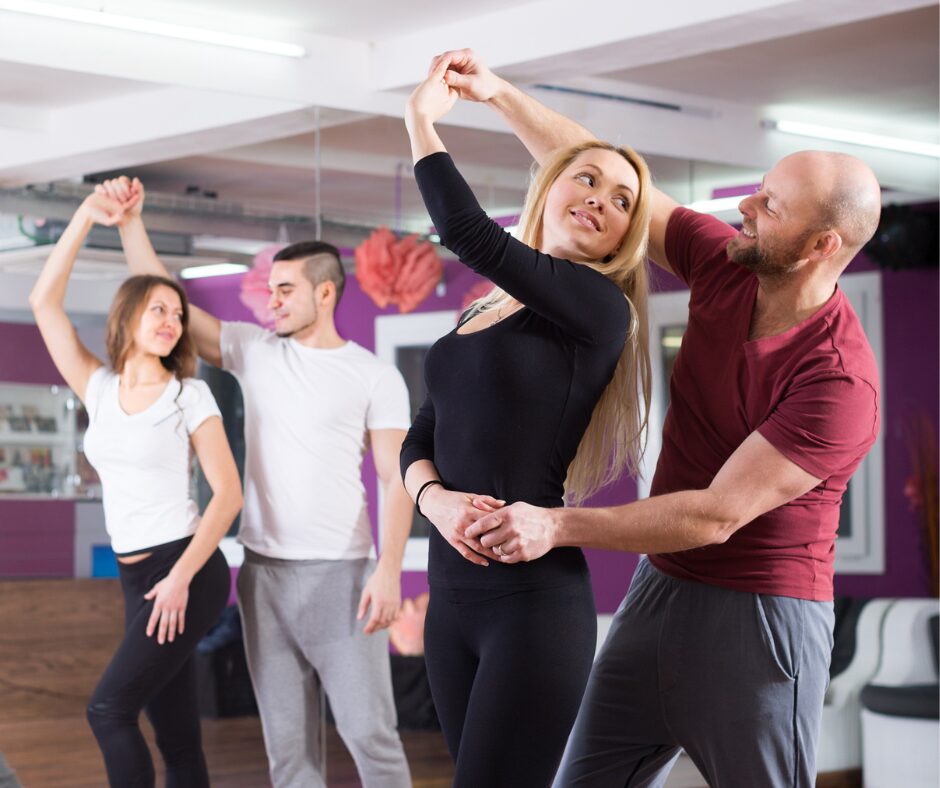
Most beginners feel meaningfully more comfortable after just 4 to 6 weeks of consistent classes (1–2 sessions per week). By the three-month mark, you’ll likely have a handful of styles you can dance socially. Within six months, you may even feel ready to attend dance parties, showcases, or weddings as a confident participant rather than a wallflower.
The secret? Consistency, not natural talent.
Tips to Accelerate Your Dance Journey
Want to grow faster? Keep these in mind:
- Practice at home for just 10 minutes daily — muscle memory builds fast.
- Listen to ballroom music during your commute or workouts to internalize rhythm.
- Watch videos of professional dancers to expand your visual vocabulary.
- Take both group and private lessons for the most well-rounded growth.
- Attend social events — real-floor practice is where confidence truly forms.
Why Ballroom Will Change Your Life
There’s a reason this art form has thrived for centuries. It builds posture, confidence, fitness, social connection, and elegance — all while being genuinely fun. It’s an activity that grows with you, adapts to your goals, and gives back tenfold what you put into it.
Whether you want to wow at weddings, master a first dance, or simply find a hobby that lights you up, this could be the most rewarding decision you make this year.
Ready to Step Onto the Floor?
Get started today with Fred Astaire Dance Studio of Oro Valley. Our expert instructors will guide you through every step — whether your goal is fitness, social fun, wedding prep, or learning a brand-new skill.
Call (520) 849-6800 to book your introductory lessons and take your first irresistible step into a world of elegance, music, and movement!