

Types of Dance
Ballroom Dance: Social and Competitive Fun
Ballroom dance is enjoyed both socially and in dance competitions, and is sometimes called partnership dancing because it requires a dance partner. Ballroom dancing originated in the 16th century from royal court dances and was influenced by folk traditions—for example, the Waltz began as an 18th-century Austrian folk dance and later became a staple of competitive and social ballroom dance.
Types of Dance Lessons
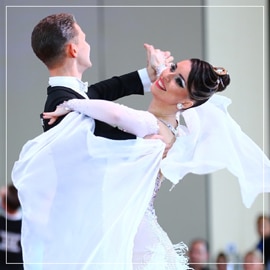
The International Style of ballroom dance was introduced in England in the early 1800s and became globally popular through the music of Josef and Johann Strauss. This style is divided into Standard (also called “Ballroom”) and Latin dances, commonly used in competitive dancing. Dancers in the International Style focus on precision, technique, and partnership, making it a cornerstone of competition.
The International Style is considered the classic “old school” approach to ballroom dancing, with dance partners remaining in a closed position throughout each performance. In contrast, American Smooth allows dancers to separate into an open position, offering more flexibility in movement. While International Style is often more disciplined at the beginner level, American Style typically begins as a social hobby before advancing into competitive ballroom dancing, making each style uniquely suited to different learning goals and experiences.
Differences Between International and American Styles of Ballroom Dance
The International Style represents the traditional, “old school” form of dancing, emphasizing structured technique and precise movements. In International Standard, dance partners maintain a closed dance position for the duration of the dance, in contrast to American Smooth, which permits open positions and more freedom of movement. At the beginner level, International Style typically demands greater discipline, while American Style often starts as a social hobby before advancing into competitive ballroom.

In the United States, ballroom dance evolved into the American Style between 1910 and 1930, influenced by the rise of American jazz music, a more social approach to dancing, and the legendary choreography of Fred Astaire. Over time, American-style ballroom dance expanded to include popular dances such as Mambo, Salsa, and West Coast Swing, continually adapting to the global evolution of music. This style is divided into two distinct sub-styles—Rhythm and Smooth—and is widely practiced in both social dancing settings and competitive dance competitions.
Get Your Dance On at Fred Astaire Dance Studios
At Fred Astaire Dance Studios, we offer expert instruction in both International Style and American Style ballroom dance, along with a variety of other dance options! As a Fred Astaire student, you can choose the dance style that best aligns with your goals and interests. For instance, individuals seeking high-energy dance lessons for fitness may select a different style than couples preparing an elegant First Dance for their wedding.
No matter your age, experience level, or whether you plan to take lessons with a dance partner or on your own, Fred Astaire Dance Studios provides the perfect environment to start your journey in social dancing or competitive ballroom.
To learn more about each dance style and view demonstration videos, click the links provided. Then call Fred Astaire Dance Studios in Oro Valley and ask about our money-saving introductory offer for new students. Plus, we encourage you to check out our Google reviews to see what our students have to say about our studio. Together, we’ll help you begin your personalized ballroom dance journey!