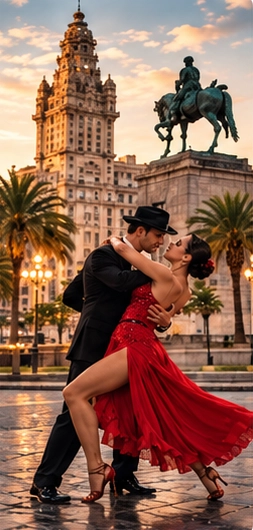
Few dances have such a rich history as Tango. From its roots in South America, it has spread across the world, taking on new styles and traditions along the way.
But how much do you really know about it?
These 10 interesting facts about Tango explore its music, history and traditions. Along the way, you’ll discover how Argentine Tango differs from the ballroom one danced in International Standard and American Smooth.
1. Tango Has Roots in Two Countries, Not Just Argentina
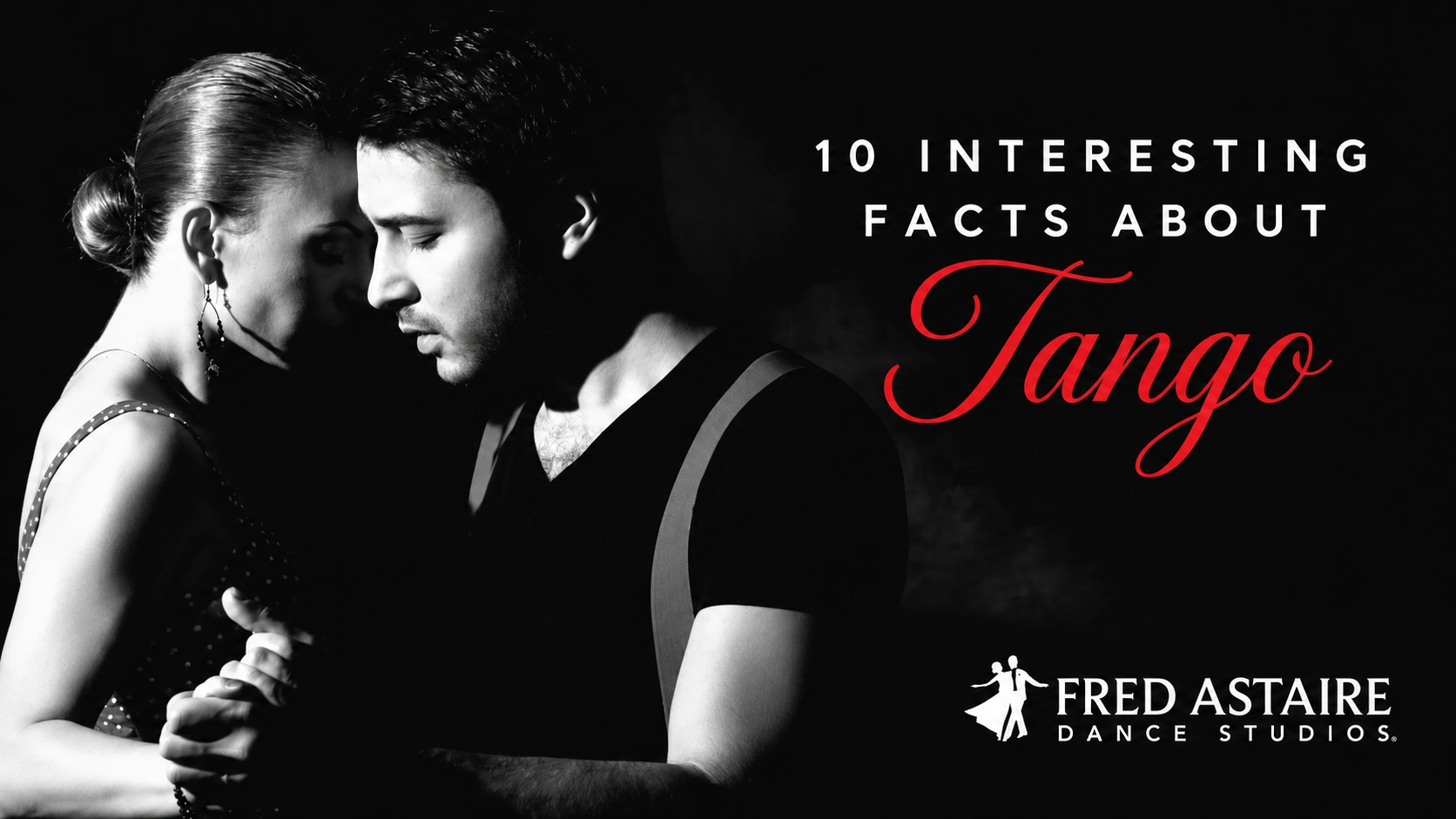
Tango history begins on both sides of the Río de la Plata, in Buenos Aires, Argentina, and Montevideo, Uruguay.
The origin of the Tango dates back to the 19th century. At that time, these growing port cities brought together people from many cultures. As UNESCO explains, European immigrants, communities of African descent, and local Creole populations contributed to the traditions that shaped this dance.
Unlike dances with a clearly documented creator, the tradition gradually developed through cultural exchange. Its journey from the port neighborhoods of South America to dance floors around the world would take it far beyond its original setting.
2. Once Scandalous, Later Fashionable
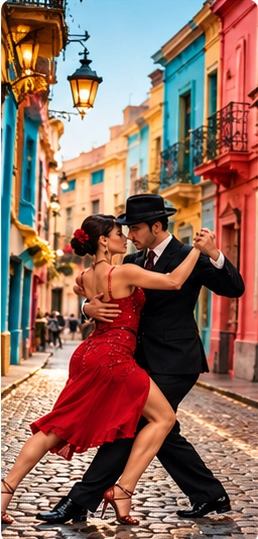
Today, the dance is admired for its elegance, but it wasn’t always welcomed in polite society. In its early years, the dance was associated with working-class neighborhoods and nightlife in Buenos Aires. Its close embrace and expressive movements challenged social expectations of the time.
When it reached Paris in the early 20th century, it caused both excitement and controversy. By 1913, the city was experiencing a genuine tango craze, despite criticism from conservative circles.
In January 1914, the Archbishop of Paris even condemned this dance as immoral. Yet the controversy couldn’t erase its growing popularity. What some considered scandalous was becoming one of the most fashionable dances of the era.
3. The Bandoneon Came From Germany
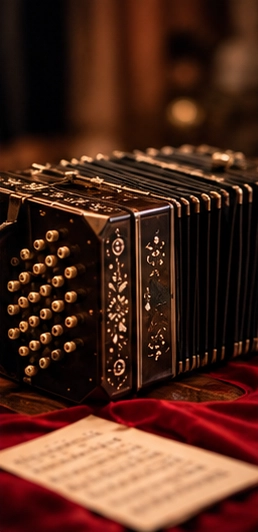
One of the most surprising facts about Tango is that its signature instrument originated in Germany. The bandoneon, known for its rich, expressive sound, was developed there during the mid-19th century.
The instrument was named after German musician and music dealer Heinrich Band. It evolved from the concertina and was first played in European music. It likely reached Argentina and Uruguay through immigrants and sailors around 1870.
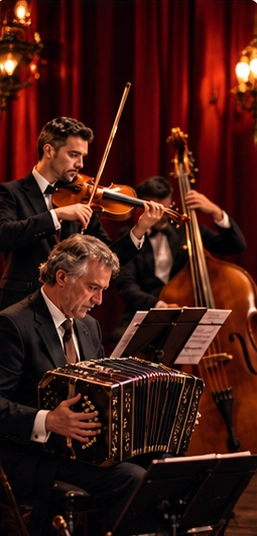
As the German Musical Instrument Museum explains, the bandoneon became an important part of this musical tradition. Its unique sound helped shape Tango orchestras. It also brought more emotion to the melodies and rhythms we still hear today.
4. Tango Music Has More Than One Rhythm
One of the lesser-known facts about Tango is that dancers enjoy three closely related musical styles, each with its own rhythm and character.
Tango often has a strong, marked beat, with changes in phrasing and expressive pauses that allow dancers to play with the music.
Milonga is generally faster and more playful. Its lively, syncopated rhythm encourages quicker steps and a more energetic interpretation.
Tango vals takes its rhythm from the Waltz. Its three-beat pattern creates a smooth, flowing feel. This makes it ideal for turns and steady movement.
These differences influence much more than the music. They change how dancers interpret each phrase, shift their weight, and communicate with their partners.
Want to hear the difference? Explore real musical examples. Listen to each rhythm, try counting along, and see if you can feel how the music changes.
5. One Dance, Several Distinct Styles
Tango was born in the Río de la Plata region, and it’s still danced there today as Argentine Tango. As it spread to Europe and the United States in the early 20th century, it also developed into ballroom versions. All of these styles share the same roots, but they differ in movement, partner connection and choreography.
Argentine Tango is known for its improvisation, close partner connection, and musical interpretation. Its traditions developed in Argentina and Uruguay, where it remains an important part of social dance culture.
International Standard Tango uses precise steps and sharp movements. Partners stay in a closed dance hold throughout the performance.
American Smooth Tango combines structured ballroom technique with greater freedom of movement. Unlike International Standard Tango, it allows open positions, so partners can separate and come back together.
At Fred Astaire Dance Studios – Paradise Valley, students can explore both American and Argentine Tango. If you want to try something new, we also offer a wide range of ballroom and Latin dance styles.
6. Ballroom Tango Has a Distinctive Movement Style
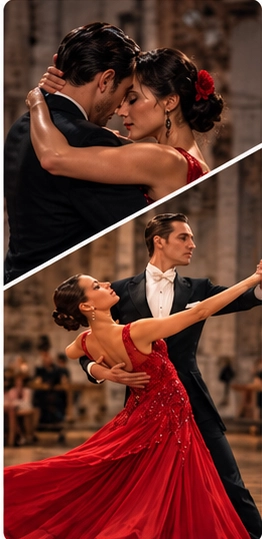
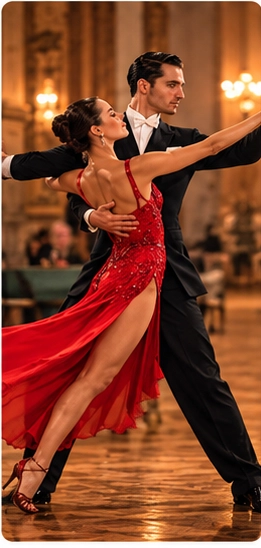
Unlike the flowing movements of Waltz or Foxtrot, ballroom Tango has a sharp, grounded character. Its distinctive style comes from precise footwork and sudden changes of direction. Sharp staccato movements match the strong accents in the music.
One of its most recognizable features is the dramatic head movement, often combined with quick turns and carefully controlled pauses. The dancers maintain a strong frame, creating the impression of two people moving as one.
But this style isn’t simply about dramatic poses. Its character comes from the contrast between movement and stillness, tension and release.
Even a simple sequence of steps can look powerful when both partners respond to the music with precision and confidence.
7. Argentine Tango Is Often Created in the Moment
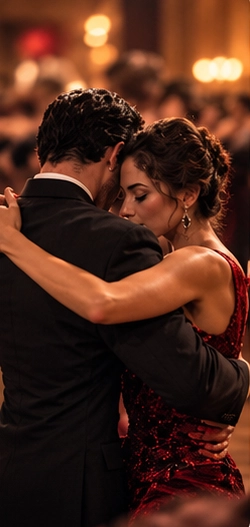
Unlike dances built around a fixed sequence of steps, Argentine Tango is largely improvised. Partners communicate through subtle changes in movement, balance, and weight. One offers an invitation, and the other responds, creating a conversation without words.
But improvisation is only part of the experience. The real magic happens in the response to that invitation: in a shared pause, an unexpected movement, or an embrace that feels completely natural.
Over time, you may dance many tandas – sets of songs shared with the same partner. But every so often, one feels different. Everything seems to fall into place. The music, the movement, and the connection become inseparable.
For a few minutes, the outside world seems to disappear. Some dancers describe this extraordinary feeling as entering a parallel universe, where nothing matters except the music and the person in their arms.
8. It Tells Stories Through Music and Poetry
Its musical and poetic traditions are shaped by emotion, memory, and storytelling.
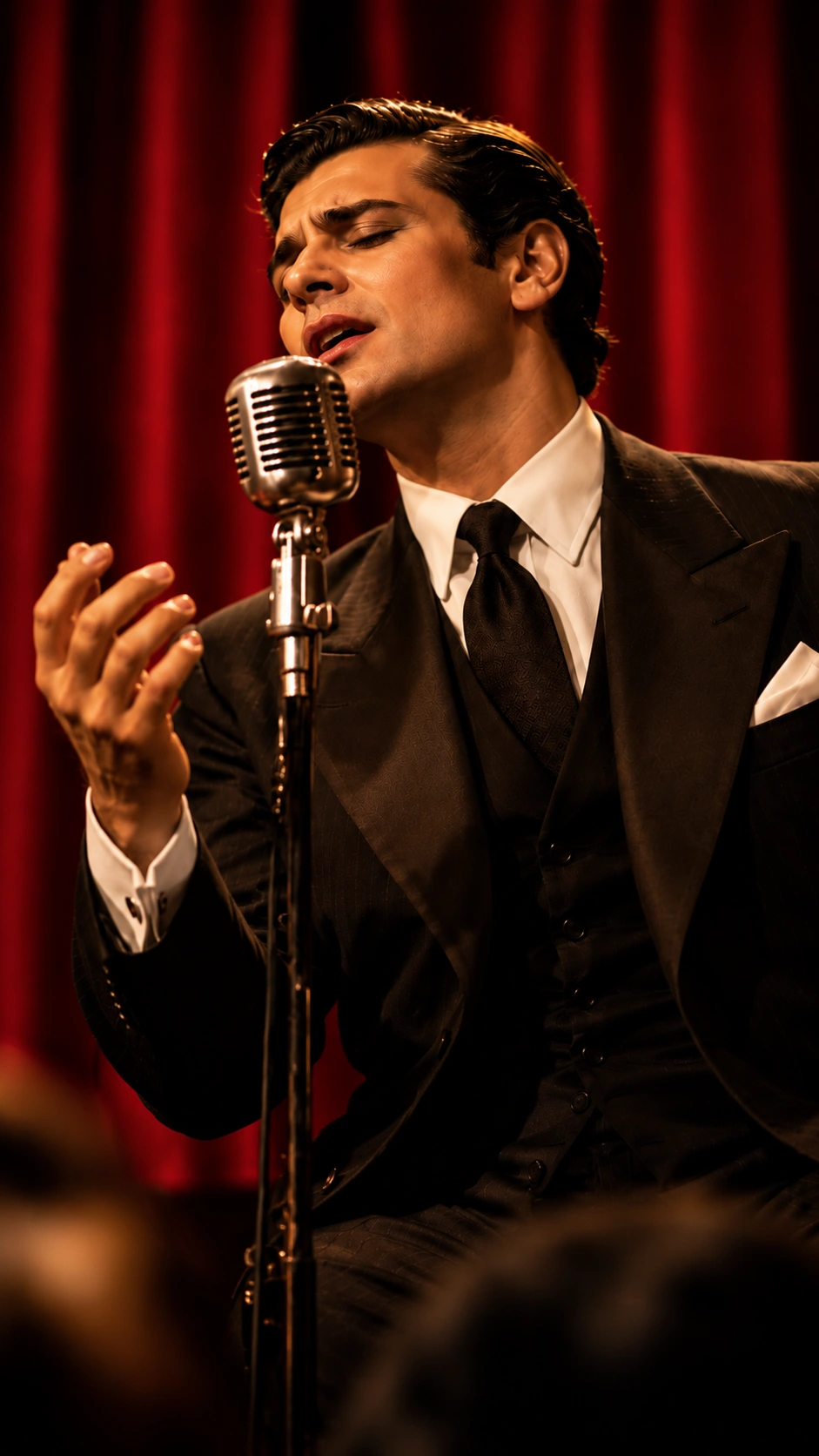
Many songs explore themes such as love, longing, heartbreak, nostalgia, and life in the city. Even when dancers don’t know every lyric, they can feel the mood in the music itself. The phrasing, pauses, and intensity give the music its emotional depth.
Singers like Carlos Gardel helped bring Tango songs to a wider audience. People enjoyed them at live shows and through recordings. The melodies and lyrics reached far beyond the dance floor, while dancers brought those feelings to life through movement.
9. A Milonga Is More Than a Musical Style
The word milonga has two meanings:
1. A lively musical style, as described in Fact #4.
2. A social dance event dedicated to Argentine Tango. You can find these gatherings in cities around the world, where people of different ages and backgrounds come together to dance.
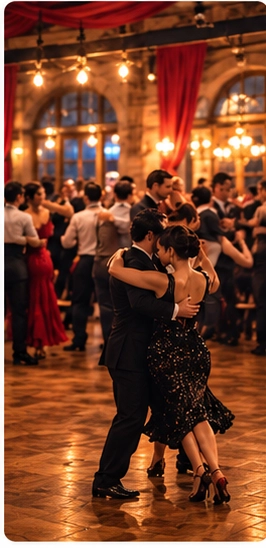
A traditional milonga has its own rules and customs. Couples move counterclockwise around the floor, giving others enough space. Dancers often invite each other through cabeceo, a simple exchange of eye contact and a nod.
The music follows a special pattern, too. Tango, milonga and vals songs are played in tandas, separated by short musical breaks called cortinas, which give dancers time to change partners.
For a few hours, dancers of different generations share the same floor, music and traditions.
10. It’s Recognized as UNESCO Cultural Heritage
The year 2009 marked a major milestone in Tango history. Following a joint nomination by Argentina and Uruguay, UNESCO added it to its Representative List of the Intangible Cultural Heritage of Humanity.
Today, this tradition reaches far beyond Buenos Aires and Montevideo. It brings people together on dance floors around the world.
Try Tango Lessons Near Scottsdale, AZ
These 10 interesting facts about Tango are just the beginning. Its history, music, and traditions offer endless reasons to explore this remarkable art form. But some things can only be understood once you step onto the dance floor.
At Fred Astaire Dance Studios – Paradise Valley, you can experience that connection firsthand. Every time someone dances, they help keep its stories and traditions alive.
Our studio is located in Scottsdale, AZ, conveniently accessible from Paradise Valley, North Phoenix, and nearby communities.
Book your first dance lesson or visit us at 4855 E. Greenway Road, Scottsdale, AZ 85254.