

Learning how to count music can make dancing feel less intimidating, especially if you are new to ballroom dancing or have always thought you “do not have rhythm.” Most beginners are not missing talent. They simply have not been taught what to listen for.
At Fred Astaire Dance Studio of Durham, our dance teachers work with beginners who want to feel more confident moving to music, whether they are preparing for a wedding dance, trying social dancing, or taking private dance lessons for fun. Counting music gives your body a clearer place to begin. Once the beat starts to make sense, steps often feel easier to remember and repeat.
Table of Contents
1. Listen for the Steady Beat Before You Move
A musical beat is the steady pulse you feel from underneath a song. It’s the part of a song that makes you want to tap your fingers on the table, clap along, or move your foot without even realizing you’re doing it.
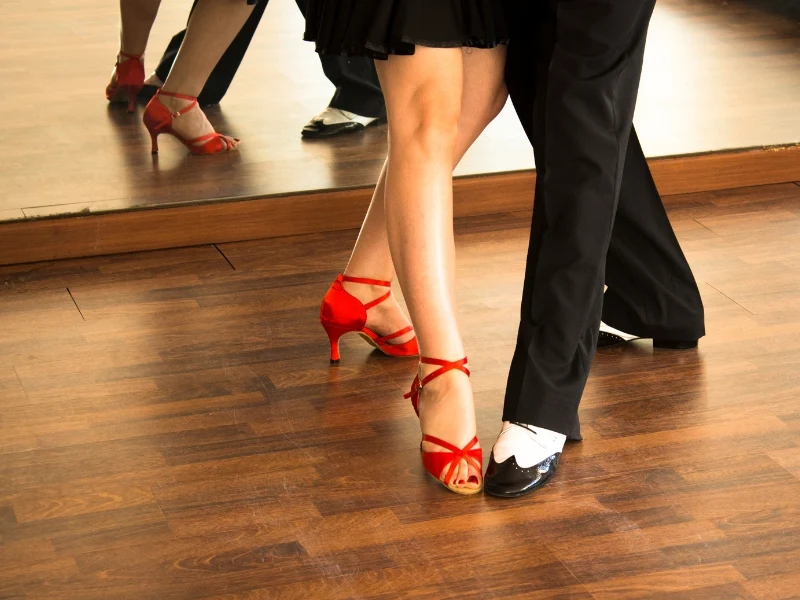
Before adding choreography, footwork, or partner connection, start by simply listening to the song and identifying that beat. It helps to choose a familiar song with a clear drum, bass, or piano line. Good examples are “Stayin’ Alive,” “Uptown Funk,” “I Wanna Dance with Somebody,” or “Can’t Stop the Feeling!” Stay still for your first listen. Then tap your hand or foot each time you hear the pulse repeat.
Beginners can sometimes get frustrated because they try to follow the teacher, remember the step pattern, watch their feet, and count rhythms all at the same time. It’s important to start smaller. Once you can hear the beat on its own, the steps have a clearer place to land.
2. Count 1, 2, 3, 4 Out Loud
Once you can tap the beat, say the numbers out loud: 1, 2, 3, 4. Then repeat the same count again.
This works well with most popular music because many songs are felt in groups of four beats. In music terms, this often connects to a 4/4 time signature. The top number tells musicians there are four beats in each measure. The bottom number tells them the quarter note gets the beat.
For dancers, the takeaway is simple: 1, 2, 3, 4 gives you a clean structure for hearing where your movements take place.
3. Understand Measures Without Overthinking Them
A measure, also called a bar, is a small section of music that groups beats together. In 4/4 music, the first measure counts 1, 2, 3, 4. The second measure does the same thing again.
Dance teachers often count in sets of eight because two measures create a useful phrase:
1, 2, 3, 4, 5, 6, 7, 8.
That eight-count is common in group dance classes because it gives dancers enough room to organize a combination, turn, or short piece of choreography.
4. Find the First Beat in the Group
The first beat often feels stronger than the beats around it. Musicians call this the downbeat, and dancers use it as a starting point.
In a lot of music designed for dancing the tango, the first beat may feel sharp and grounded. When dancing the waltz, the first count carries extra weight because the music is usually grouped in 3 beats: 1, 2, 3.
Try saying “ONE, two, three” while listening to waltz music. That stronger first count can make the dance feel less floaty and give the movement a clearer place to begin.
5. Connect Note Values to Slow and Quick Steps
In 4/4 time:
A whole note lasts four beats
A half note lasts two beats
A quarter note usually gets one beat
Eighth notes divide the beat in half
Sixteenth notes divide the beat even further
For dancers, this often becomes the difference between slow and quick movement. A slow step may take two beats. A quick step may take one beat. Faster footwork may land between the main beats.
That is why a teacher may count with words instead of only numbers. In foxtrot, for example, you may hear “slow, slow, quick, quick.” The words tell your body how long each step should last without needing to study a page of sheet music.
6. Add “And” Counts for Faster Music
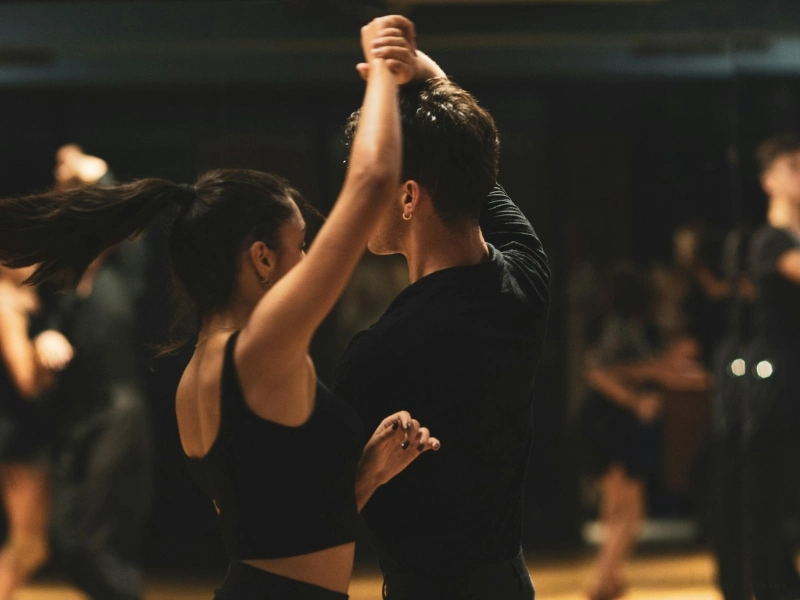
After 1, 2, 3, 4 feels familiar, listen for sounds that happen between the main beats. These are often counted as:
1 and 2 and 3 and 4 and.
Swing dancing, Latin dances, jazz, and blues-influenced dance music often have a lot happening between the main beats. As a beginner, you may not step on every sound, but hearing those spaces can make your timing feel more natural over time.
7. Match the Count to a Simple Step Pattern
Once the count starts to feel familiar, add basic movement by starting to shift your weight from one foot to the other on each beat while you count aloud.
Then try the same idea with a beginner step pattern like a box step, side step, rock step, or walking pattern that fits into the music. The goal is not to rush into a full routine. It is to feel how your feet line up with the music count.
A small timing change can make a big difference. If your step lands just before or just after the beat, the movement may feel harder than it needs to.
8. Notice How Different Dance Styles Use the Count
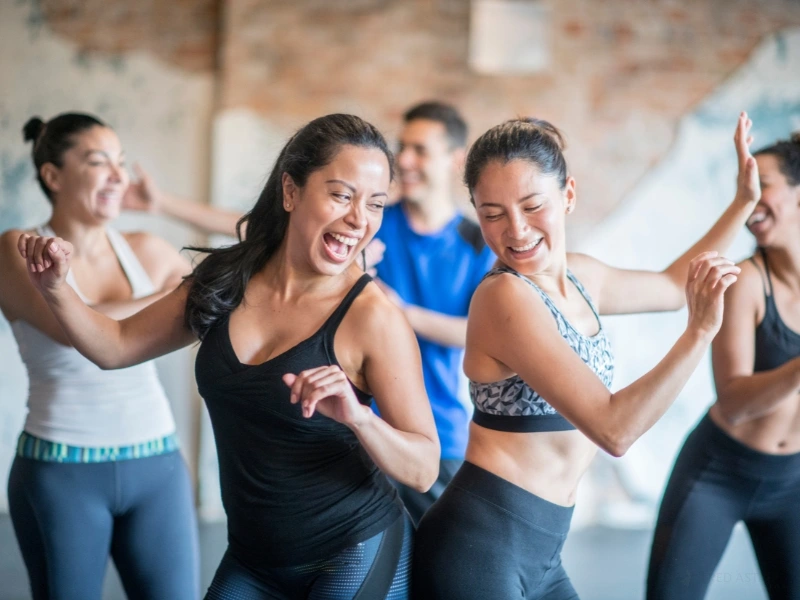
Once you understand the basic music count in dance, you can start hearing how different types of dance music use rhythm.
For example, foxtrot often uses slow and quick timing, swing may have a lively bounce, waltz moves in 3 beats, ballroom tango often uses clear accents, strong lines, and controlled pauses, and Argentine tango can feel more conversational, with dancers listening closely to phrasing, silence, and musical changes.
9. Practice With One Song at a Time
A simple at-home dance routine can make counting music less frustrating. Choose one song and listen to it several times in a row, then try this order:
Tap the steady beat.
Count 1, 2, 3, 4.
Count 1 through 8.
Stand up and shift your weight on each beat.
Try the same exercise with a different style, such as waltz, tango, swing, or blues.
Keep the practice short. Five focused minutes can train your ear more than replaying a song while trying to do too many things at once.
10. Let the Count Guide You, Not Distract You
At first, counting music can feel like you’re faced with a complicated math equation you just cannot solve. That is normal for beginner dancers. However, with practice, the numbers become less distracting because your body starts to recognize the rhythm naturally.
Counting music is not meant to make dancing stiff; instead, it gives beginner dancers a way to enter the song, stay with the beat, and understand how body movement fits the sound. Once the count starts to click, dancing often feels less like memorizing steps and more like moving with the music in an organic way.
11. Get Personalized Instruction When the Count Still Feels Unclear
Even with at-home practice, rhythm can be hard to self-correct. You may not know whether you are ahead of the beat, behind it, or listening to the wrong part of the song. At Fred Astaire Dance Studio of Durham, beginner dancers can build rhythm skills through private one-on-one lessons and group classes in a supportive studio setting.
Real-Time Feedback Helps You Hear and Feel the Beat
Our dance teachers can watch how your steps line up with the music and make small corrections while as you move. That personalized and immediate feedback can help you hear the count, repeat the step pattern, and feel where your weight should land in the rhythm.
Private Lessons and Group Classes Reinforce Timing in Different Ways
A private dance lesson gives you room to slow down, ask questions, repeat a rhythm, and learn in a way that fits your pace. Group dance classes add another layer of practice by letting you hear the same count with other dance students and build confidence staying on beat in a friendly social setting.
Book Your First Durham Dance Lesson Today
If you want counting music to feel clearer, in-person dance instruction can help you connect what you hear to what your body does. Fred Astaire Dance Studio of Durham offers beginner-friendly dance lessons for individuals and couples, including ballroom, Latin, social, and wedding dance instruction.
New students can get started with our introductory dance lesson special, where your first two dance classes are priced at just $59. Schedule your introductory lessons with Fred Astaire Dance Studio of Durham and take the first step toward feeling more confident on the dance floor.
Schedule your first lesson today by calling us at 919-489-4313 or filling the form below to get started.