

Bachata Dance for Beginners: Steps, Styles and Roots
Bachata dance is a romantic partner dance from the Dominican Republic. Its basic step moves side to side, with a light touch of the foot at the end of every four counts.
The pattern repeats through the whole song, so it’s a beginner-friendly dance.
Bachata Dance and the Music Behind It
The name Bachata refers to both a music genre and the partner style danced to it, and both come from the Dominican Republic. The music often tells stories of love and heartbreak, and the dance reflects that romantic, emotional feel.
The Official Description
UNESCO’s entry on Dominican Bachata describes it as a couple’s dance with a sensual hip movement and a simple eight-step structure. UNESCO added it to its heritage list in 2019.
Where You’ll Dance It
You’ll see Bachata at Latin parties, social nights and family celebrations. In the US, you’ll also find classes, parties and festivals built around it.
Bachata History in the Dominican Republic
Where the Music Began
Bachata started as guitar music from the Dominican countryside. As historian Deborah Pacini Hernandez explains in Harvard’s ReVista, Dominican Bachata grew up on the edges of Santo Domingo, where rural families moved in search of work after 1961. For years, the city’s upper classes dismissed it as lower-class music, and radio largely ignored it.
How the Dance Developed
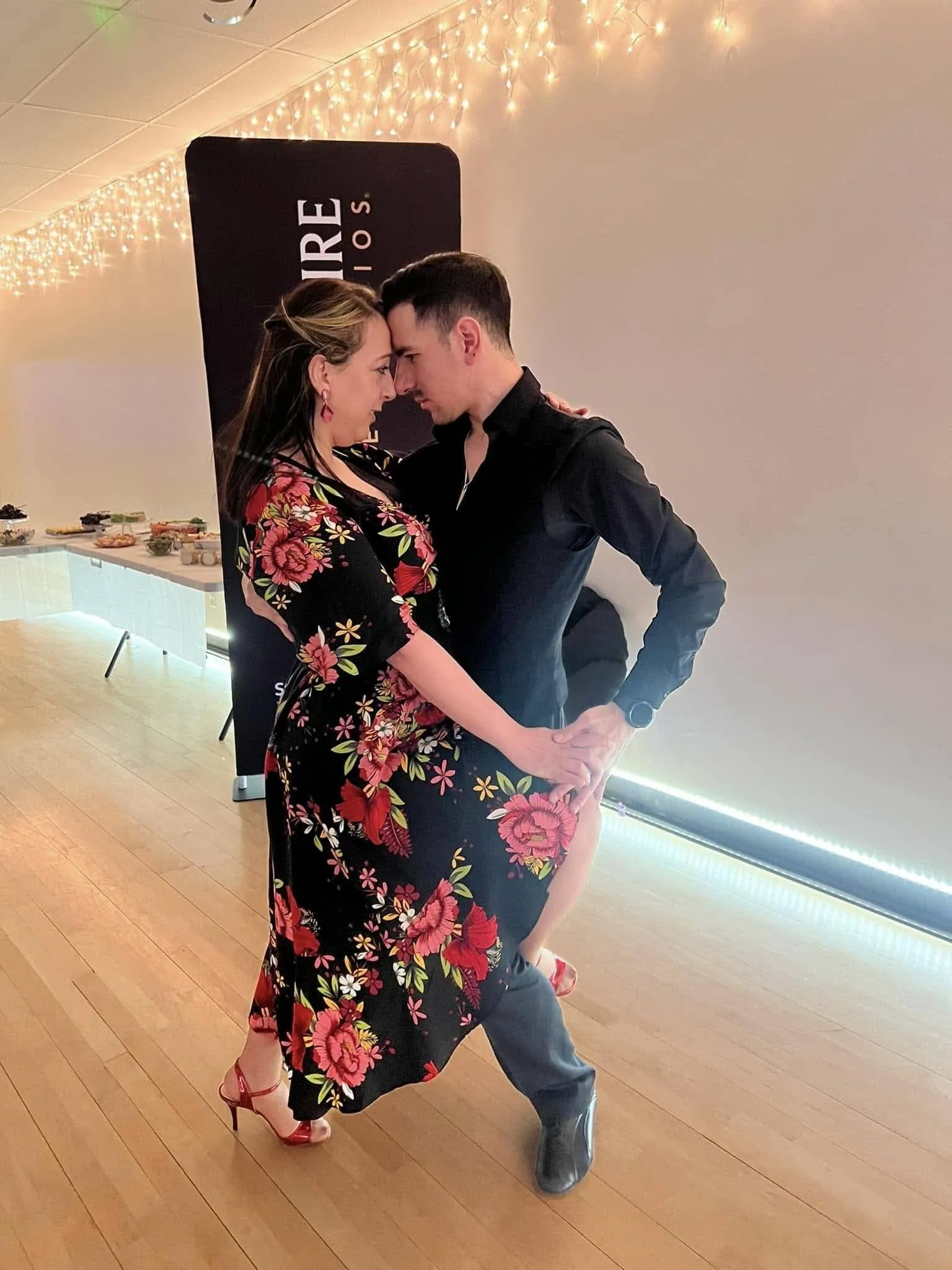
In those neighborhoods, people danced Bachata in small bars and at local gatherings. The original style was simple and close: partners held each other in a tight embrace and moved side to side or in small steps, with a tap on the fourth beat. Over time, Dominican dancers added quick footwork, syncopations and playful variations, creating what’s now known as Dominican Bachata.
From the Dominican Republic to Dance Floors Worldwide
When Bachata music reached international audiences in the 1990s, the dance traveled with it. In the US and Europe, dancers began adding turns and patterns borrowed from Salsa, which shaped the smoother modern style many people learn today. In the mid-2000s, dancers in Spain developed sensual Bachata, with body waves, dips and an even closer connection.
Today, it’s danced at socials and festivals around the world, but every style still starts with the same basic step, and that’s where your first lesson begins.
How to Dance Bachata
Steps, Taps and Counts
Over counts 1 to 3, you take three steps to the side. On count 4, you touch the floor with your toes but keep your weight off that foot, a move called a tap. The full pattern goes: 1, 2, 3, tap, then 5, 6, 7, tap.
Then you repeat it in the other direction. The leader, the partner who guides the moves, travels left first. The follower mirrors the basic footstep to the right.
The Knees Behind the Hip Movement
The sway on the 4th and 8th beat shouldn’t come from pushing your hips to the side. It should come from your knees and from shifting your weight from foot to foot. When one knee softens, the hip follows.
A common habit we see in new students is pushing the hips or rushing the tap. We slow the step down and practice it at a lower tempo until the knees take over.
Bachata Styles You May Hear About
Bachata has evolved into several styles, and as it spread around the world, dancers made it their own. The most common are Dominican (traditional), with its quick footwork and playful feel; Modern, which adds turns and patterns borrowed from Salsa; and sensual Bachata, known for body waves, dips and a close connection.
Bachata vs. Salsa
People mix them up, but the difference shows within a few steps. We teach both at our studio, and our Salsa classes are a great next step once you’ve learned the Bachata basic.
Where Your Feet Travel
Bachata’s basic travels sideways, while the Salsa basic usually moves forward and back. Salsa also has no tap, since the feet simply pause on counts 4 and 8.
Slower Music, Closer Hold
The songs usually run slower than Salsa tracks, which leaves more time for hip action and connection. The hold is often closer too, especially in the newer styles.
| Bachata | Salsa | |
|---|---|---|
| Basic step | Side to side | Forward and back |
| Counts 4 and 8 | A tap | A pause |
| Music | Calmer | Faster |
How Bachata for Beginners Works at Our Dance Studio in South Windsor, CT
The steps are easier to learn when someone corrects you on the spot before you practice with others. That’s why our three-part teaching method starts with one-on-one lessons to build your foundation, then adds group classes and relaxed studio parties where you can practice with different partners.
Getting the Basics Right With Your Instructor
Bachata looks simple, but a few small details make the difference between stepping to the music and really dancing it. In a one-on-one lesson, your instructor works with you, so they can feel the moment your tap comes early or your steps start to speed up, and correct it.
At our dance studio in South Windsor, CT, you’ll focus on:
- The basic step and tap: three steps followed by a tap on counts 4 and 8, kept small and in time with the music.
- Hip movement: letting your knees drive the Cuban hip motion, as described above.
- Hearing the rhythm: learning to pick out the beat in Bachata music, so you always know when to tap.
- Partner connection: how to lead or follow through a relaxed, responsive hold.
For your first lessons, any comfortable shoes with a smooth sole that stay securely on your feet will do. As you keep dancing, many students switch to professional shoes. Their flexible build and slightly raised heel help keep your weight forward over the balls of your feet, which makes the tap and hip movement feel more natural. To find the right pair, see our guide to choosing dance shoes.
Practicing With Other Students
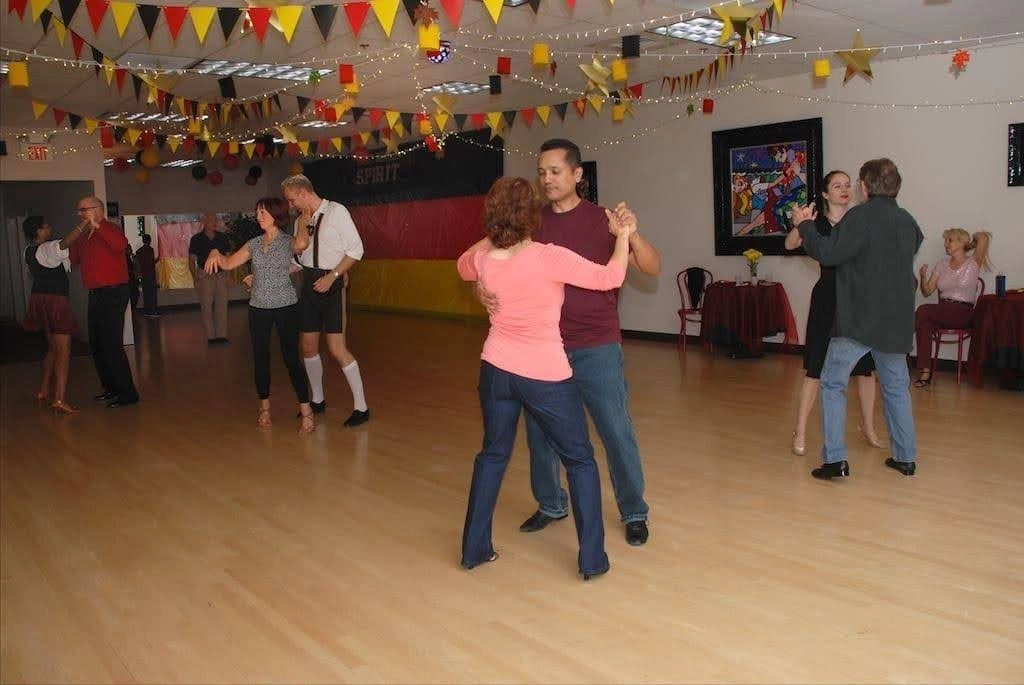
Once you know the basic step, the next challenge is dancing it with different people. Every partner leads, follows and moves a little differently, and Bachata’s close hold makes that especially noticeable. Group classes let you learn new patterns while rotating partners.
Practice parties take it a step further. They’re relaxed social evenings where you try what you’ve learned, so a night at a club or party feels familiar instead of intimidating. Since Bachata is often danced in a close embrace, it also helps to know the unwritten rules of the social floor, like how to ask someone to dance and how to respect personal space. Our post on the elements of dance etiquette covers them.
And if you enjoy dancing in front of others, practice parties can be your first step toward studio showcases and competitions, where students perform with their instructors. To see what that experience is like, our guide explains what a ballroom competition day looks like.
Start Bachata Dance Classes in South Windsor, CT
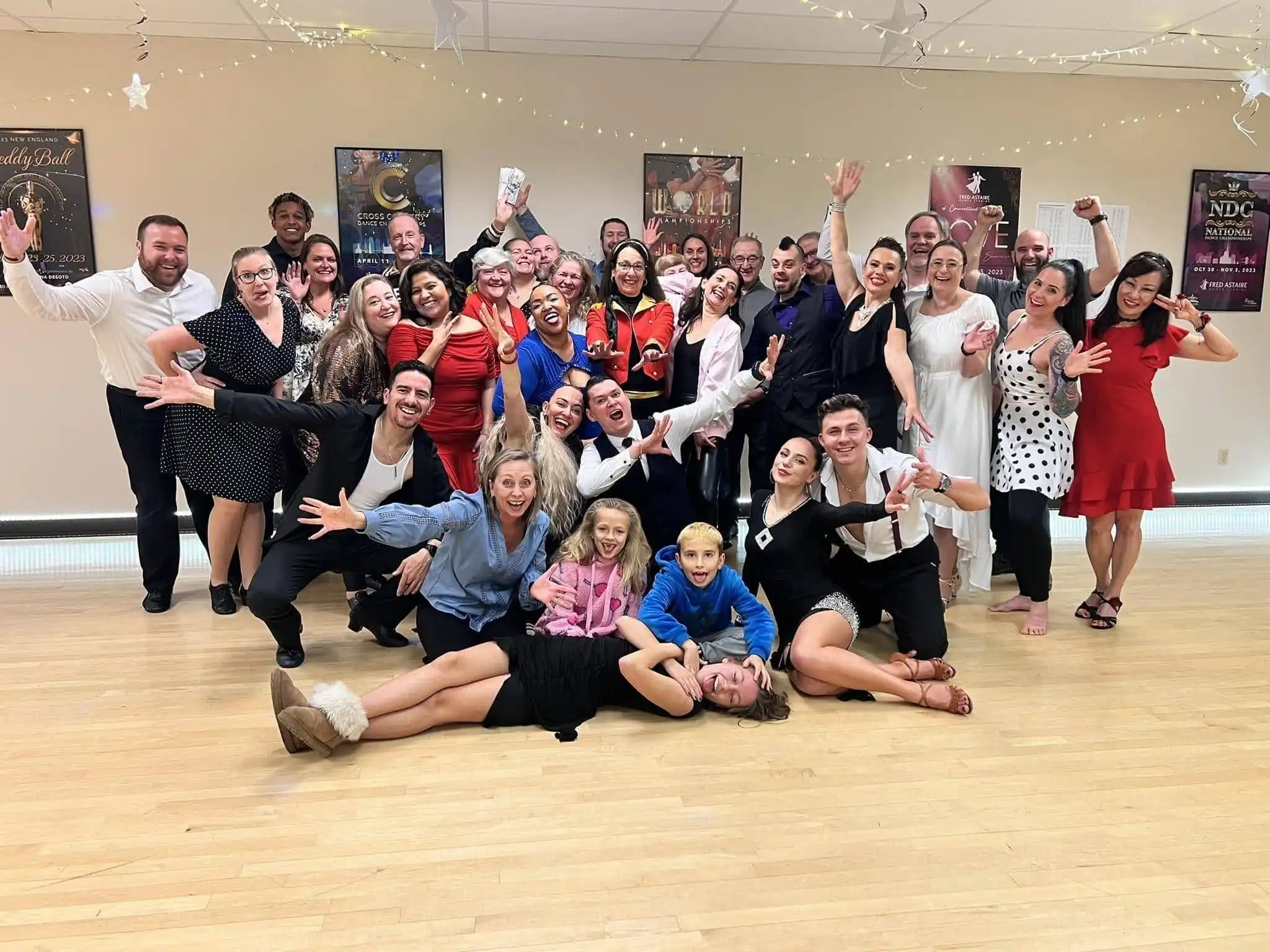
At Fred Astaire Dance Studios – South Windsor, our Bachata classes are designed for beginners, with a focus on rhythm, connection and confidence. You’ll start with one-on-one lessons, then practice with other dancers in group classes and studio parties.
Schedule your first lesson or call us at 860-648-4482.
Frequently Asked Questions
Why Is There a Tap in the Bachata Basic Step?
The tap gives you a beat to switch sides, since your weight stays on the standing foot. It’s also where many dancers add a small hip accent. Timing it with the music is something to work on with your instructor.
Bachata vs. Merengue: What’s the Difference?
Both are Dominican dances, but Merengue is faster, with a step on every beat that feels almost like marching. Bachata keeps a calmer, swaying pace. Merengue is part of our Rhythm program too, so you can learn both and hear the difference in class.
Which Bachata Moves Add Turns to the Basic?
First turns are usually simple, with the follower turning while the leader holds a hand up. Turns for both partners and changes of direction come next. Going through them with your instructor lets you feel each turn before trying it with other students.