

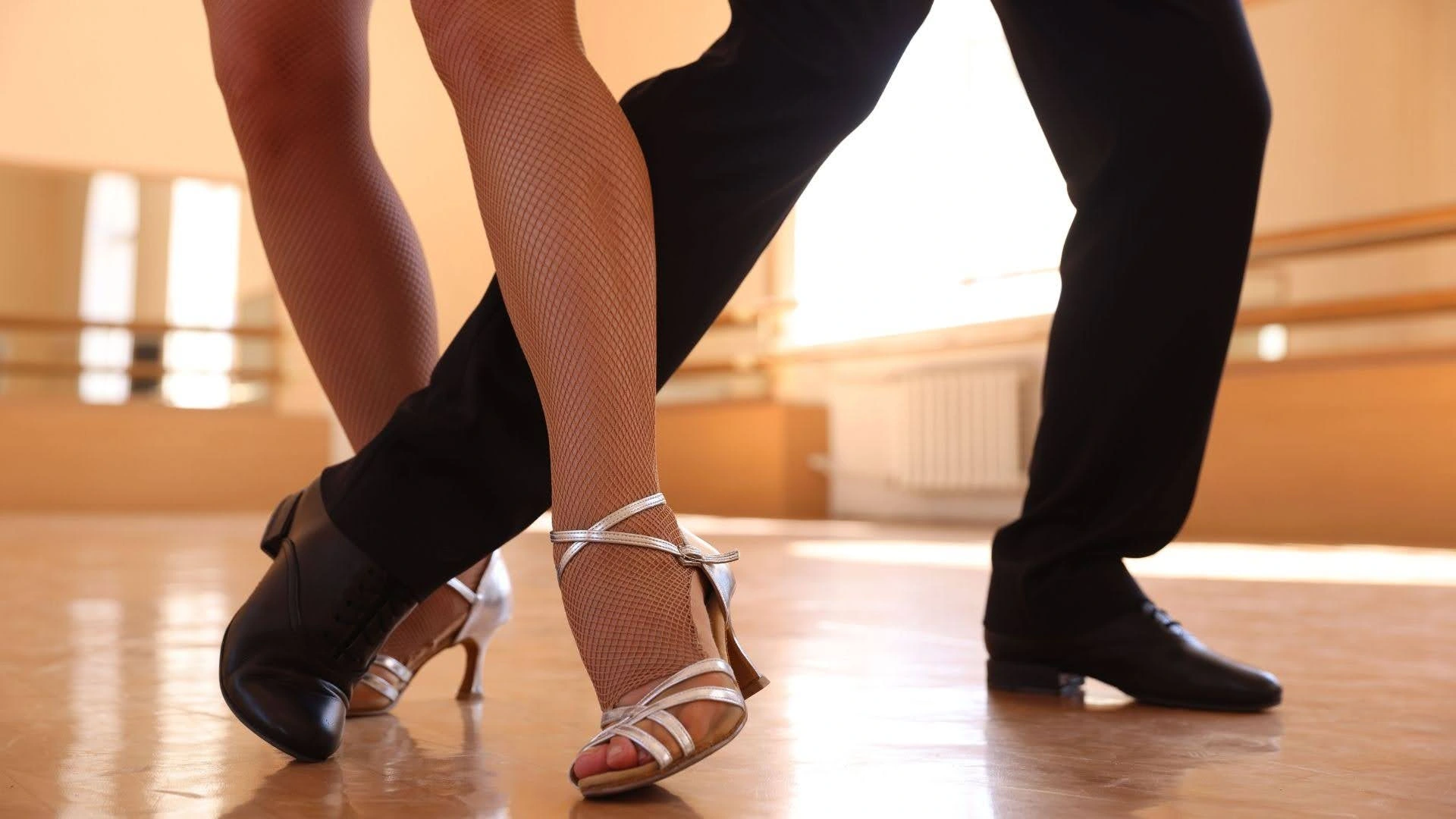
Dance shoes have a smooth sole, a softer build and a heel made for the style you dance. That’s why turning, gliding, and feeling the floor all get easier.
Many people come to their first lessons in sneakers and only then notice how much footwear affects every step. We teach ballroom and Latin styles at Fred Astaire Dance Studios – South Windsor, and each calls for its own kind of shoe.
What Makes Dance Shoes Different From Everyday Footwear?
Everyday footwear is made for walking outside, while studio shoes are built for turning smoothly.
Suede Soles That Let You Turn
Suede sole dance shoes slide just enough for a clean turn without letting your foot slip out. Nearly every ballroom and Latin model uses this kind of sole.
The key is balance between grip and glide. You need a little friction to push off into a turn or a step, but not so much that your foot sticks to the floor. Suede gives you both. Floors make a difference too: a smoother, “faster” floor has less grip than a “slower” one, and suede soles help you adjust to either.
Over time, suede can get shiny and slippery. A quick pass with a sole brush lifts the fibers and brings the grip back.
Flexible, Snug and Light
Good dance shoes follow the shape of your foot, with no slipping at the heel. In closed-toe shoes, your toes should rest comfortably without empty space in front of them. In open-toe Latin sandals, your toes should reach the front edge of the sole.
Both types have a flexible sole that bends under the arch, so you can rise onto the ball of your foot and feel the floor. Latin shoes are even more flexible, since Latin dances rely more on footwork through the ball of the foot.
When a shoe fits well, balance gets easier because your foot isn’t doing extra work. Our post on six things to focus on for perfect balance explains why the feet matter so much.
Ballroom Dance Shoes for the Traveling Styles
Ballroom dance shoes are made for the dances that travel around the floor. In International style, these are the Standard dances: the Waltz, Tango, Viennese Waltz, Foxtrot and Quickstep. In American style, the Smooth dances include the Waltz, Tango, Foxtrot and Viennese Waltz.
All of these dances rely on long, gliding steps and heel leads, where you step forward onto your heel before rolling through to the ball of your foot. That’s why ballroom shoes have a closed toe, a supportive structure and a lower heel designed to help you transfer your weight smoothly.
The same type of shoe takes you from your first lesson all the way to the competition floor, so if you ever want to see where your dancing could lead, find out how a ballroom dance competition works.
Closed-Toe Heels for Women
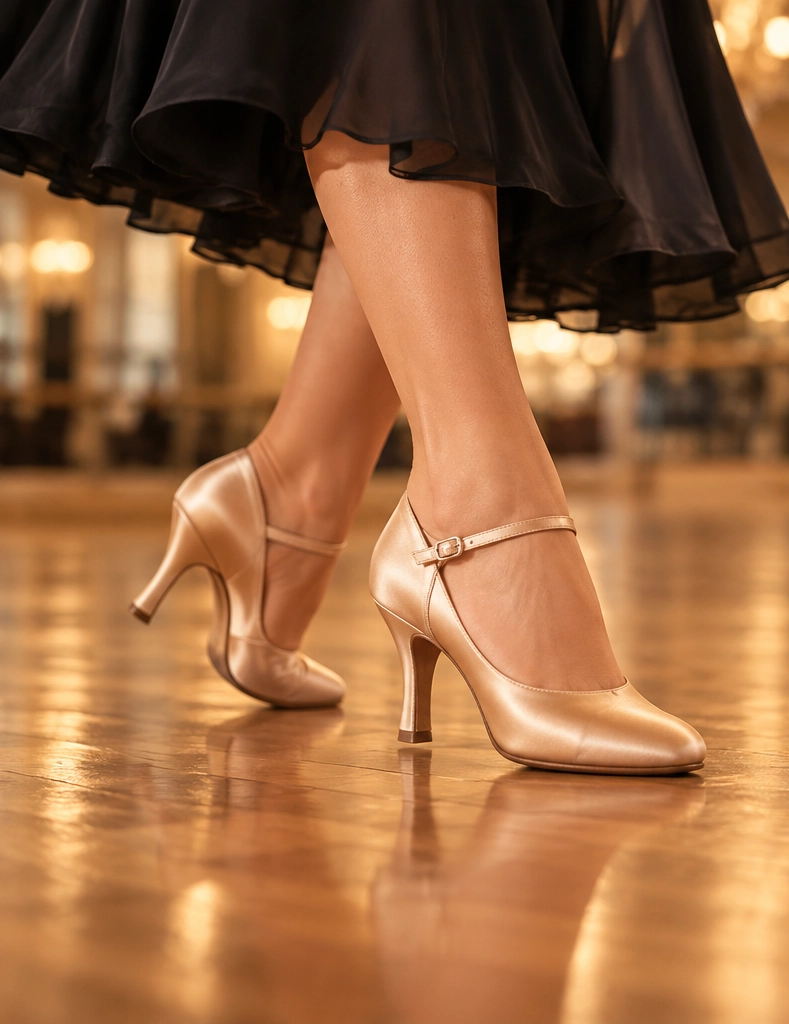
Women’s ballroom shoes are classic closed-toe pumps, often in satin or leather. The heel is usually 2 to 2.5 inches high and slightly flared for stability. If you’re a beginner, you can start with a lower heel, around 1.25 inches, and move to a higher one as your balance improves.
The Men’s Lace-Up
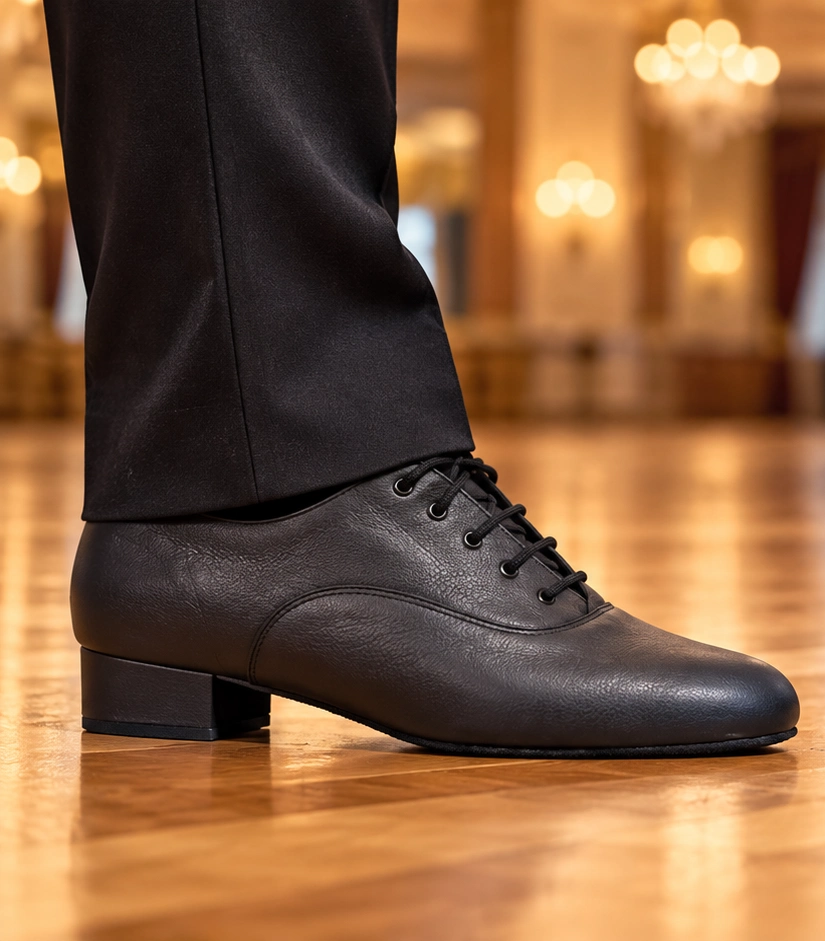
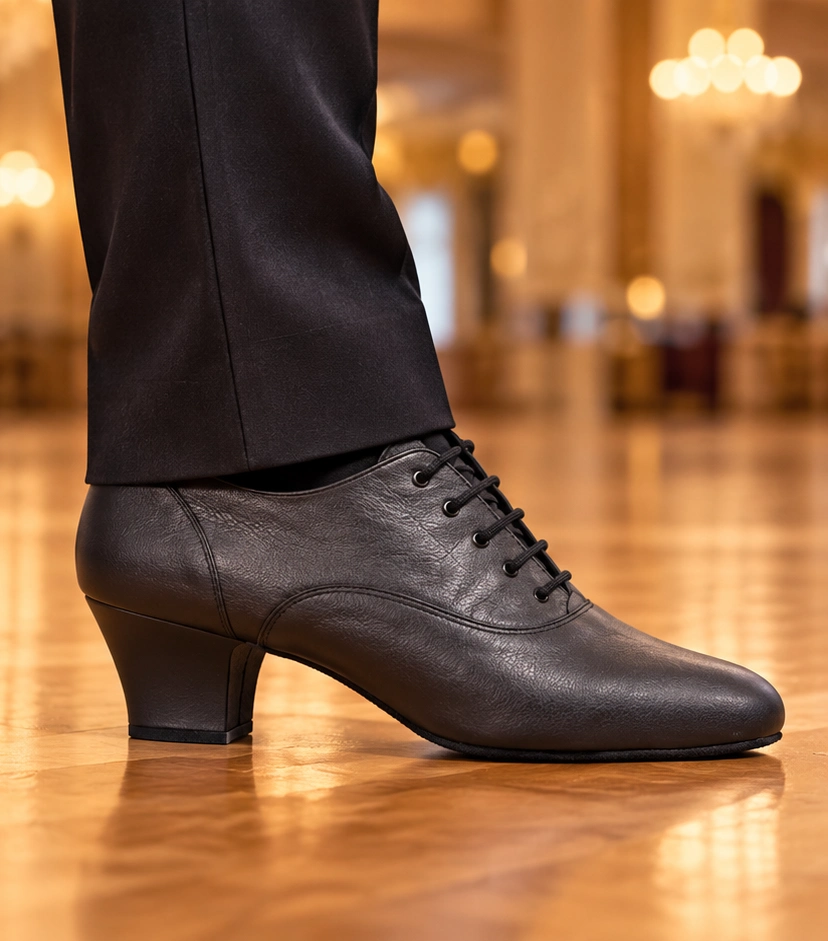
For men, the usual choice is a leather or patent leather lace-up that looks like a classic dress shoe. The difference is underneath: a suede sole that lets you glide and turn, and a flexible build that lets you roll through your feet.
The heel is low, usually about 1 inch. That height is no accident. Ballroom dances like the Waltz and Foxtrot rely on heel leads, where you step forward onto your heel and then roll through to the ball of your foot. A low, broad heel keeps that movement smooth and stable.
What Sets Latin Dance Shoes Apart
Latin dance shoes are made for the Latin and Rhythm styles. In International style, Latin includes the Cha-Cha, Samba, Rumba, Paso Doble and Jive. In American style, Rhythm includes the Cha-Cha, Rumba, East Coast Swing, Bolero and Mambo.
In all of these dances, you move mostly on the front of your foot, with quick weight changes and plenty of hip action. That’s why Latin shoes are lighter and more flexible than ballroom ones, with a higher heel that keeps your weight forward.
You’ll also wear Latin-style shoes for popular social dances like Salsa and Bachata. They aren’t part of the competitive Latin and Rhythm categories, but they’re danced at parties and clubs around the world and share the same forward, rhythmic footwork.
Open-Toe Sandals and Higher Heels
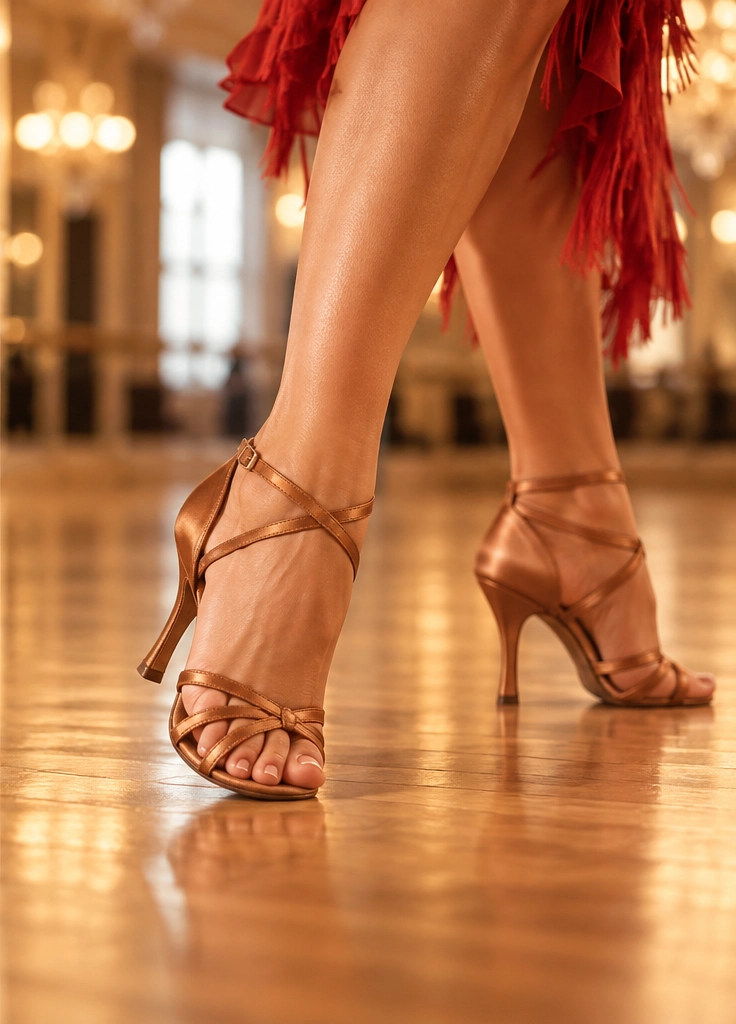
Women’s Latin shoes are open-toe sandals with straps across the foot, usually fastened around the ankle so the shoe stays secure during quick turns. The most common heel height is 2.5 to 3 inches, but many brands also offer lower heels for beginners.
What Men Wear for Latin
Men’s Latin shoes look similar to ballroom shoes, with a closed toe and laces, but they’re built differently. They have a taller Cuban heel, usually about 1.5 inches, which shifts the weight forward onto the balls of the feet. They’re also lighter and much more flexible.
Do Beginners Need Dance Shoes?
Not right away. For your first lessons, the most important thing is to wear something comfortable that lets you move freely. As we mention in our dance lesson FAQs, men can wear shoes with leather soles, and women should choose a closed-back style that stays securely on the foot. Once you know you’ll keep dancing, your instructor can help you choose your first pair of dance shoes.
Footwear for Your First Few Classes
A pair with a smooth leather sole works fine, as long as it stays on and keeps you steady. Turns are where newcomers usually get stuck, so we take them one piece at a time in the first lessons.
Regular Sneakers vs. Dance Sneakers
Regular sneakers aren’t a good choice for dancing, since a rubber sole sticks to the floor and slows your footwork. Dance sneakers are fine for practice, but they don’t replace a proper ballroom or Latin pair, so check with your instructor first.
What to Wear to Your First Dance Class
Picking clothes is much simpler than picking footwear. What matters is that you can stretch and turn easily, and your instructor can see the line of your body.
Clothes That Move With You
Pick clothes that don’t restrict your arms and knees, like pants with a bit of stretch or a knee-length skirt. Skip wide sleeves and jewelry that can catch on your partner. Layers help, since you’ll warm up fast once class starts.
Smooth vs. Latin Lesson Outfits
For Smooth and Standard styles, a skirt that moves as you travel or straight-leg pants work well. For Latin classes, many women choose a shorter skirt or fitted pants, so their knee and hip action stays visible. Men only need a shirt that stays tucked in when they raise their arms.
Start Dancing in South Windsor, CT, and Find the Right Shoes Along the Way
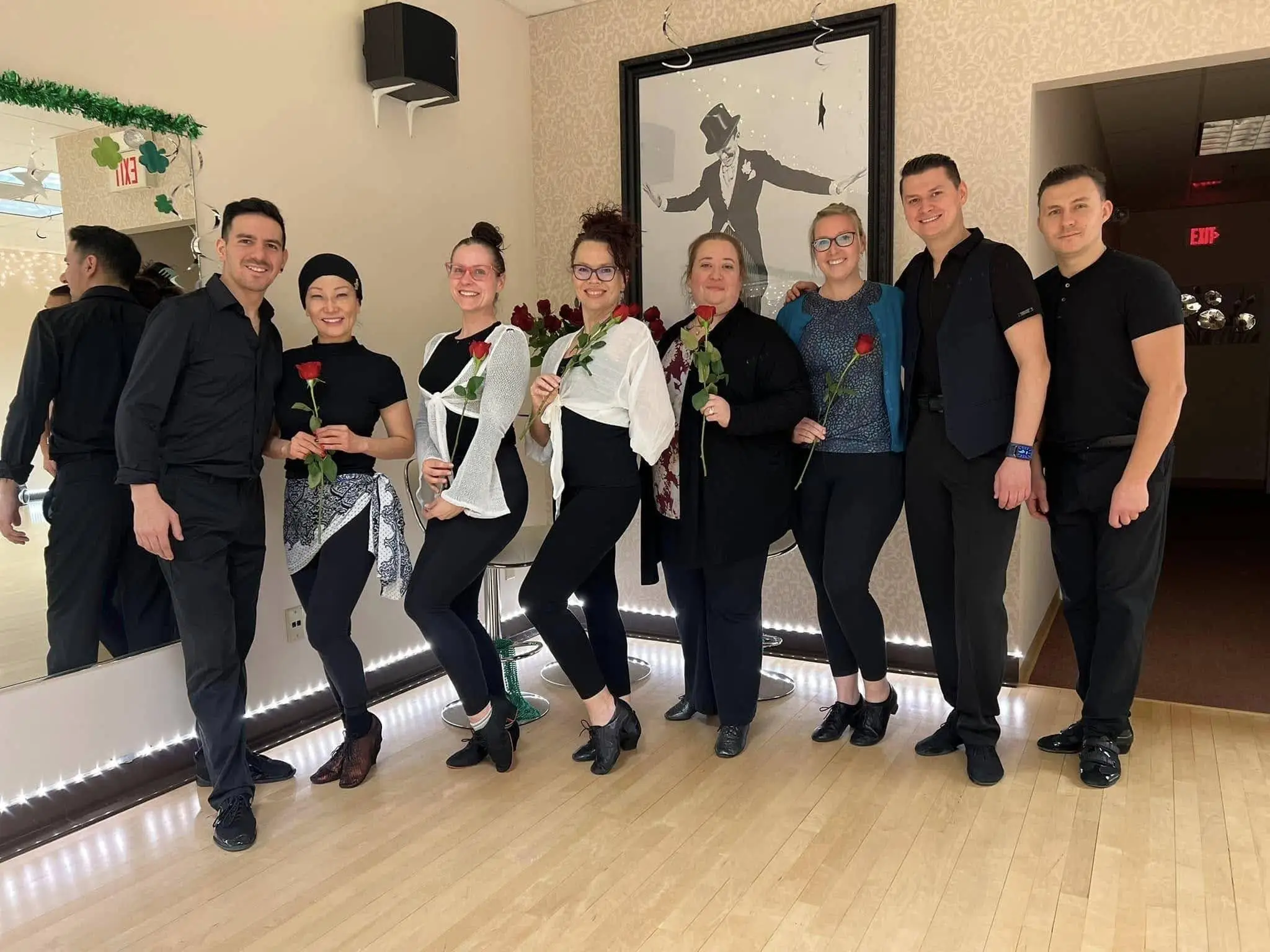
Your dance journey begins with an intro lesson at Fred Astaire Dance Studios – South Windsor. You’ll start with a friendly consultation and a tour of the studio, talk about what you’d like to learn, see the floor you’ll be dancing on, and take your first steps in a comfortable pair of shoes you already own.
As you discover which styles you love, your instructor will help you find dance shoes that fit both your feet and your dancing.