

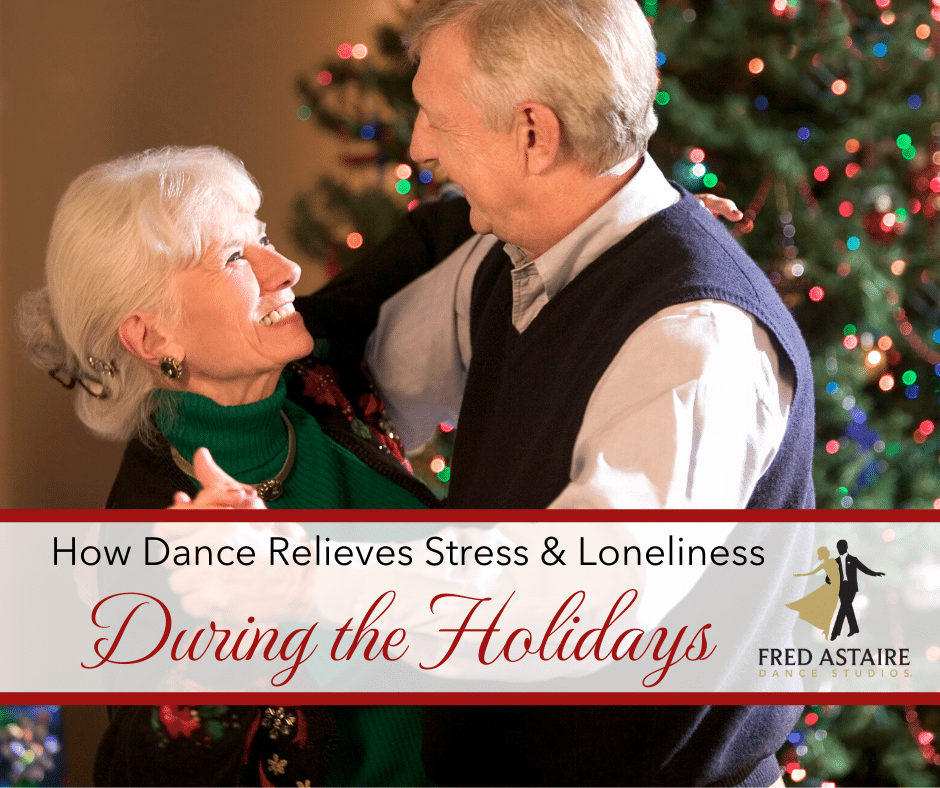
How Dance Relieves Stress and Loneliness During the Holidays
(The FADS Family Way)
The holidays are supposed to be merry and bright… but sometimes they feel more like “busy and emotionally overloaded.”
Maybe your family lives far away this year. Maybe you’ve lost someone special. Maybe you’re just tired of doing all the cooking, wrapping, smiling and small talk on your own.
Whatever your situation, you’re not the only one feeling a little lonely or off-balance when everyone else seems over-the-top festive. Holiday stress and social isolation are common across many age groups.
That’s where dance – and your Fred Astaire Dance Studios family – come in.
Many of our students tell us their local studio feels like a home-away-from-home: a place where people know your name, cheer for your progress and save you a spot on the dance floor. During the holidays, that sense of community matters more than ever, and the social support found in dance communities can play a big role in improving mental health, psychological health and overall emotional wellbeing. For many students this “FADS family” truly feels like a found family.
Dance offers a broad range of dance styles and dance genres—from theatrical and aerobic dance to traditional and social forms—making it a fun and affordable way to support mental well being that’s already built into how humans connect. Exploring different styles allows individuals to find unique forms of self expression and experience therapeutic benefits.
In addition to the emotional and psychological benefits, dance provides significant health benefits, including improvements in both physical and mental health. These health benefits extend beyond the studio and support your daily life. The artistic side of dance also enhances psychological wellbeing, making dance uniquely motivating and emotionally fulfilling compared with many other forms of physical activity.
This article is all about how dance relieves stress and loneliness during the holidays, dialing down overwhelm and softening the sting of loneliness while giving you a warm and welcoming community to belong to.
Why the Holidays Can Feel So Stressful – and Impact Your Mental Health
We talk a lot about stress around the holidays: money, schedules, travel, family dynamics… and that’s before we even get to tangled lights and overcooked turkeys.
But there’s another layer that doesn’t always make it into the greeting cards: holiday loneliness.
- Your kids are grown and living in another state.
- You’re going through a separation or divorce.
- You may have lost a loved one and the season doesn’t feel the same.
- Or you’re surrounded by people but somehow still feel alone in the crowd.
Health and wellness experts say the extra pressure of November and December can even make normally content people feel isolated or emotionally drained. Add social media “perfect holiday” photos to the mix and it’s easy to feel like you’re the only one struggling.
You’re not. And you don’t have to do it alone.
Dance interventions offer significant mental health benefits, especially for those with mental health conditions such as depression or anxiety, by providing a positive outlet for emotional expression and social connection.
The first step is simply to notice your triggers:
- Certain dates or traditions that feel painful now
- Big gatherings where you feel invisible
- Quiet nights where you suddenly miss “the old days”
- Extra bills or travel costs adding financial stress
Once you see those patterns you can start building a healthier plan for the season—one that includes connection, movement and joy, not just more to-do lists. Dance helps by managing stress and reducing stress, and can also help alleviate depressive symptoms and support emotional resilience during stressful times. Research on dance-based therapies shows they can significantly improve psychological wellbeing and benefit social connectedness, making them a more motivating and effective way to support mental wellness than many traditional exercise routines. A recent systematic review of dance interventions in adults found preliminary evidence that dance can produce psychological and cognitive health outcomes equivalent to other physical activity interventions—and in some areas, may even be superior.
The Science Behind Dance Therapy
The Role of Music in Dance: Lifting Spirits and Creating Connection
Music is the heartbeat of dance—it sets the mood, gets your emotions flowing and brings people together in ways words just can’t. Whether you’re swaying to a spicy Latin beat, gliding through an elegant waltz or letting loose with some infectious hip hop, music makes every dance class feel like magic you’ll actually look forward to.
Here’s what the research nerds have figured out (and we’ve been seeing for years): music does amazing things for your mental health. We’re talking real stress relief, less anxiety and a genuine mood boost that’ll have you walking a little taller. When you’re moving to music—especially in dance movement therapy or other structured dance interventions—you’re giving yourself permission to express what words can’t say. You’ll process emotions, sharpen your mind and honestly? Just feel better about yourself.
That simple act of moving to the beat can melt away muscle tension, wake up your brain and give you that “I actually did something awesome today” feeling. Dance also triggers the release of endorphins, which promote feelings of happiness. Beyond mood, dance has been shown to improve cognitive function, including memory and attention, across different age groups.
The Benefits of Dancing to Music
Dancing to music? It’s pretty awesome if we do say so ourselves. You’re not just improving your heart health, flexibility and strength (though that’s happening too). You’re giving your brain many of the same cognitive health outcomes you’d get from other physical activities, but in a much more enjoyable form.
For our active agers and seniors, dancing to music has been shown to boost memory, challenge cognition, keep chronic disease at bay and even help manage conditions like heart failure and cerebral palsy. And younger folks? You’ll see better confidence, less stress and that self-assurance that makes everything else in life feel more manageable.
But here’s where the real magic happens—music in dance creates connection like nothing else can. Whether you’re at a social dance, a structured ballroom class or just cutting loose at a community event, music brings people together. It creates belonging, sparks conversations and builds friendships.
Partner dancing and group styles—from classical ballet to modern theatrical dance and hip hop—give you chances to connect, support each other and share pure joy. That kind of shared experience benefits social wellbeing, strengthens social interaction and offers powerful psychological outcomes.
The science backs this up too. Clinical trials from places like Macquarie and Queensland universities have found that dance interventions with music can seriously improve your mental health, reduce depression and boost your overall quality of life—especially if you’re dealing with mental health challenges. The artistic aspect of dance, powered by music, lets your creativity run wild and helps you express yourself in ways that build real self-esteem and emotional strength. There is preliminary evidence that structured dance programs can produce cognitive health outcomes equivalent to other forms of physical activity, with positive cognitive outcomes such as improved memory, attention and social cognition.
No matter your age or whether you’ve got two left feet, music and dance together can help you manage stress, feel better about yourself and find real joy in your everyday life. Whether you’re learning choreography, mastering new dance moves or just letting the rhythm take over, music turns every single step into a celebration of connection, community and pure well-being.
So next time you step onto that dance floor, let the music lift your spirits and remind you of something important: you’re never, ever dancing alone.
Cognitive Benefits: Sharpening Minds and Boosting Memory Through Dance
When you think of dance, you’re probably picturing swirling skirts, infectious music, and pure joy—but here’s something that might surprise you: every step you take on that dance floor is actually giving your brain the workout of its life! Beyond all those amazing physical benefits we love to talk about, dance classes and movement therapy are secretly some of the most powerful tools for keeping your mind razor-sharp, your memory strong, and your whole mental game on point.
Here’s what the research nerds have discovered (and trust us, they’re just as excited as we are): dance interventions—whether you’re grooving to modern dance, getting theatrical, or sticking with traditional forms—can boost your brain power just as much as, or even better than, other types of exercise. Clinical trials have shown that when you’re learning those sequences and mastering new moves, you’re not just having fun—you’re challenging your brain in ways that improve memory, sharpen attention, and boost problem-solving skills. And this mental magic isn’t just for the young crowd; older dancers see incredible improvements in cognitive function, self-esteem, and even notice their mood lifting in ways that’ll make you want to dance about it.
So what makes dance such a brain-boosting superstar? It’s the perfect cocktail of movement, music, and human connection. When you’re picking up choreography or learning a new routine in class, you’re not just moving your body—you’re firing up your mind, practicing laser focus, and literally building new pathways in your brain. The artistic side of dance, from expressing emotions through movement to feeling the music in your soul, adds another delicious layer of mental stimulation and stress relief that’ll leave you feeling like a whole new person.
Different dance styles bring their own special brand of brain benefits, and honestly, they’re all pretty fantastic. Hip hop and aerobic dance are incredible for boosting processing speed and memory, while martial arts-inspired forms can supercharge your concentration and coordination. Theatrical dance and partner or group settings? They’re absolute gold for social connections, helping boost your psychological wellbeing and confidence as you connect with others and celebrate those shared “we totally nailed it!” moments.
Here’s the beautiful part: these mental health benefits don’t play favorites. Dance interventions can be tailored for every single person, regardless of age or ability, including folks managing conditions like cerebral palsy or heart issues. For so many people, dance becomes this joyful thread woven through daily life—a way to stay active, challenge that brilliant brain of yours, and boost your overall quality of life in ways you never saw coming.
So whether you’re learning your very first box step, tackling a complex salsa routine that makes your head spin (in the best way), or simply letting loose to the beat in a community class, remember this: every single dance move is keeping your mind sharp, your memory strong, and your spirits soaring. Dance isn’t just about the steps—it’s about building a healthier, happier, more vibrant you from the tips of your toes to the top of your beautifully buzzing brain.
Tip 1: Swap Isolation for Connection – Find Your FADS “Family”
One of the most powerful antidotes to holiday loneliness is belonging—having a place where people are genuinely happy to see you walk through the door.
At Fred Astaire Dance Studios, that’s not an accident. Our studios are owned and staffed by accomplished, positive and caring people who are truly dedicated to helping students feel welcome, supported and successful.
Walk into a typical evening at a FADS studio and you’ll see:
- Instructors greeting students by name
- Friends catching up before group class
- New dancers being introduced around the room
- Laughter when someone messes up a turn (because we’ve all been there)
Group dance classes and social events at FADS provide social interactions by offering opportunities to meet new people and form strong bonds. Participating in partnered or group dance offers unique social and cognitive benefits, enhancing social connection and supporting mental health for people of all ages and backgrounds. These activities strengthen social connectedness and support social cognition, making dance a valuable activity for mental health and community bonding.
Over time, those little moments add up. What starts as “I’m just here to learn a box step” slowly turns into:
“These are my people. This is my place.”
That FADS family feeling doesn’t replace your family at home—but it does give you another circle of support: people who get your love of music, who miss you when you don’t show up and who will absolutely drag you onto the floor when your energy is low. The shared experience of learning and laughing in a dance class creates a community that provides emotional support and benefits social connections.
Dancing with others also increases oxytocin, which boosts mood and reduces stress, further benefiting social interactions and emotional well being.
Tip 2: Turn Stress into Motion – Use Dance as a Healthy Holiday Coping Mechanism
Holiday stress shows up in your body long before your brain catches up: tight shoulders, clenched jaw, restless energy, difficulty sleeping.
Dance is a healthy, fun way to turn that tension into motion. It can also help with symptoms of depression and anxiety by giving you a way to escape negative thoughts. Dance therapy and dance movement therapy are therapeutic approaches that use movement to process emotions and reduce stress, making them highly effective for stress relief and overall psychological wellbeing.
When you step onto the dance floor:
- Your breathing slows and deepens.
- Your shoulders drop away from your ears.
- Your mind shifts from “everything I need to do” to “what’s the next step?”
- Your body syncs with the music and your partner, pulling you into the present moment.
Aerobic dance is a structured, fun physical activity that gives significant stress relief and is comparable to other exercise forms. Research shows dance reduces depression symptoms more than walking, yoga, strength training and even standard antidepressants. Compared to other physical activity interventions like weight training, martial arts and team sport, dance-based programs often deliver similar or better psychological outcomes while feeling more like play than work—especially for older adults and clinical populations.
Unlike some common coping strategies (hello, late-night snacking or doom-scrolling), dancing gives you:
- Gentle physical activity that boosts circulation and releases stored tension
- A positive outlet for big emotions (yes, you’re allowed to be happy and sad at the same time)
- A chance to recharge mentally instead of numbing out
The bonus? Dancing releases endorphins and increases serotonin—those famous “feel good” hormones—both of which promote feelings of happiness, relaxation and reduced anxiety.
The best part? You can take it with you.
Once you’ve learned a few basics, you can slip those moves into holiday parties, kitchen dance breaks while the cookies bake or a quiet waltz in the living room with someone you love. Dance becomes a little pocket of peace you can carry anywhere and a simple way to protect your mental well being when the calendar gets crowded.
Tip 3: Plan a More Sane Season (with Dance Anchors on the Calendar)
A lot of holiday stress comes from trying to do everything for everyone.
You can’t control airline delays, traffic or your cousin’s last-minute gift requests—but you can control your calendar.
Instead of filling every square inch with errands and obligations, try planning your season around a few dance anchors:
- A weekly private lesson where the focus is only on you
- One group class and practice party each week to keep you socially connected
- A special studio holiday event you circle and look forward to all month
These dance anchors do a few important things:
- Give you something positive and predictable to look forward to.
- Break up long stretches of time you might otherwise spend alone.
- Create a natural boundary—“Sorry, I actually have dance that night”—so you don’t say yes to every invitation.
Regular participation in dance can improve health-related quality of life and positively impact your daily life, especially during stressful seasons. You’re not being selfish; you’re taking care of your psychological wellbeing so you can show up as your best self for the people you love.
Tip 4: Strengthen Relationships Through Shared Dance Time
Loneliness doesn’t only affect people who are physically alone. You can feel lonely in a full house or a long-term relationship if you’re not truly connecting.
Dance participation often requires dancers to touch, make eye contact and synchronize movements, which can enhance social bonding, psychological health and social engagement. Dance also encourages self-expression, builds self efficacy and enhances self confidence in participants, empowering individuals to connect more deeply with themselves and others.
That’s where shared experiences come in—and dance is one of the most fun, romantic options out there. Dancing together can blur boundaries between individuals, increasing trust and empathy.
For Couples
Ballroom lessons give you and your partner:
- A weekly date night where phones stay away and eye contact is non-negotiable
- A playful way to communicate, lead, follow and compromise
- A chance to feel attractive and appreciated again, not just “roommates with a shared calendar”
- Opportunities to improve self-esteem for both partners by mastering new dance skills and receiving positive feedback together
Relearning how to move together on the floor often spills over into how you navigate conversations and conflicts off the floor.
For Family and Friends
You can also:
- Take lessons with a parent who’s feeling lonely or widowed
- Start a “siblings and spouses” group class tradition
- Gift a package to a friend and promise to be their dance buddy
Young adults can also benefit from dance, experiencing improvements in psychological and cognitive health. Different age groups will find that dance meets them right where they are—whether they’re building confidence, staying active or rediscovering joy.
Instead of exchanging another sweater or gadget, you’re giving the gift of time, touch and laughter—things that matter a lot more than wrapping paper once the season is over.
Tip 5: Let Dance Movement Therapy Gently Support You Through Grief and Life Changes

The holidays can reopen old wounds: the first season without a spouse or parent, children splitting their time between households, traditions that don’t look the way they used to.
Dance isn’t a magic cure for grief—and it doesn’t try to be. What it does offer is:
- A place to go where you’re welcomed, not pitied
- A warm, structured environment when life feels uncertain
- A healthy way to move through heavy emotions instead of getting stuck in them
- Moments of joy that coexist alongside sadness without cancelling it out
Structured dance provides a supportive environment with choreographed movements, instruction and social interaction, which can be especially helpful during times of change.
For some, dance can serve as an alternative or complement to talk therapy, offering a non-verbal way to process emotions and support emotional healing.
Dance can be equally effective as other physical activity interventions in improving quality of life for people with various conditions, including Parkinson’s disease and other chronic illness.
Over time, those lessons, friendships and small victories on the dance floor help rebuild a sense of hope and belonging—two things that are vital when you’re healing.
Tip 6: Say Yes (Even If You’re Shy or Brand New)
A lot of people who eventually fall in love with dance almost didn’t walk through the door.
Maybe you’re shy. Maybe you’re introverted. Maybe your inner voice is convinced you have “two left feet.” Learning new dance moves sharpens the brain’s ability to remember details, which can help protect against dementia. Learning dance sequences can also challenge cognition and improve social cognition, providing mental stimulation and enhancing your ability to interact with others.
Different dance genres and age groups may experience unique psychological outcomes from dance, so you can find a style and community that fits your needs and goals. Options like modern dance, traditional dance forms and other artistic dance styles each offer unique psychological and cognitive benefits, making it easier to find the right fit for your interests and wellbeing.
Here’s the truth:
- You do not have to show up knowing anything.
- Almost everyone in the room remembers exactly what it felt like to be new.
- Your instructors are pros at helping nervous beginners relax, laugh and learn.
A typical first lesson at Fred Astaire Dance Studios is:
- Warm, welcoming and low-pressure.
- Tailored to your goals (social dancing? confidence? exercise? all of the above?).
- Full of small, encouraging wins so you walk out thinking, “Wait… that was actually fun.”
Group classes and parties are structured so you’re never left standing awkwardly in a corner; instructors rotate partners and keep the energy light and friendly.
You don’t have to become a social butterfly overnight. You just have to take the next small step—literally.
Tip 7: Give (or Receive) the Gift of Dance Classes
Looking for a meaningful holiday gift—for yourself or someone else? Dance lessons check all the boxes:
- Experiential instead of more “stuff”
- Good for physical, emotional and social health
- Perfect for people who are craving connection more than clutter
Some ideas:
- Gift a New Student program to a parent or friend who’s feeling lonely, and go with them to their first class.
- Surprise your partner with a series of lessons so you can take over the dance floor at the next wedding or office party.
- Treat yourself to lessons as a way of saying, “I deserve joy, too.”
Dancing at home can be just as fun as dancing in a group setting, and community centers often offer accessible dance classes for all experience levels. Older adults can especially benefit from dance, with research showing improvements in mental and cognitive health. Compared to other forms of physical exercise, dance can be as good or even better than other exercise modalities for psychological and cognitive benefits.
You’re not buying classes; you’re opening the door to a brand-new community, new confidence and a lot more smiles on future holidays.
Your Invitation: Find Your Holiday “Home-Away-From-Home”
We can’t fix all of life’s problems. We can’t erase grief or stress.
What we can offer at Fred Astaire Dance Studios is:
- A warm, inspiring, 100% non-judgmental environment
- Instructors who really care about you and your goals
- Friends who clap when you get that new step
- A place where it’s okay to show up exactly as you are—and leave feeling a little lighter
Research shows that dance interventions encompassed structured programs involving a wide range of styles—including theatrical, aerobic, traditional, and social dance forms—and have been shown to improve emotional wellbeing, benefit social wellbeing and support psychological health across different ages and backgrounds. Studies from Macquarie University and Queensland University further support these benefits, highlighting dance as an effective way to enhance mental and emotional health.
Consider this your sign:
- To do something just for you.
- To let dance relieve stress and loneliness this season.
- To step onto the floor and remember what happiness feels like in your own body.
Whether you’re dealing with stress, loneliness or just plain old holiday overload, there’s a lot of happiness to be found—you just have to look in the right places.
Get started today at your local Fred Astaire Dance Studio.
We can’t wait to welcome you into the FADS family… and dance you through this holiday season together.
FAQs: How Dance Relieves Stress and Loneliness During the Holidays
1. How exactly does dance relieve stress and loneliness?
In simple terms, dance relieves stress and loneliness by giving you movement, music and people all in one place. You’re not just exercising—you’re surrounding yourself with social support in a warm group setting where people know your name and want you there. That combination helps with managing stress, easing anxious thoughts and lifting overall well being.
When you join group dance or a social dance night, you’re sharing laughter, eye contact and connection through partnered or group dance. Those moments benefit social interactions and add up to powerful mental health benefits over time. Instead of feeling stuck at home, you’re out in the world building friendships and routines that carry into your daily life.
What’s beautiful is that these mental health benefits are not limited to one age. Different age groups, from young adults to older adults, experience boosts in mental well being, confidence and connection simply by showing up, moving to the music and letting dance do its quiet, healing work.
2. Is dance really as effective as other kinds of exercise?
Yes—research shows that dance is a serious form of physical activity, not just “fun on the side.” Many studies compare dance with other physical activity interventions like weight training, running or team sport, and find that structured dance interventions can offer similar or even better psychological and cognitive outcomes.
Because you’re combining movement, rhythm and learning, dance delivers strong health benefits for your body and mind. There’s preliminary evidence that some programs produce cognitive health outcomes equivalent to traditional workouts, while also improving health related quality of life. That means better stamina, fewer aches, less muscle tension, and clearer thinking in your everyday routines.
For people managing chronic disease or conditions like heart failure, dance can be a more enjoyable way to stay active than traditional gym routines. You’re still getting the important physical activity your doctor wants you to have, but with music, community and smiles built in—making it much easier to stick with in the long run.
3. What is dance movement therapy, and can it help with mental health conditions?
Dance movement therapy (often grouped under dance therapy) is a structured, research-backed way of using movement to support people with mental health conditions. In a safe, structured dance environment, you use motion, rhythm and self expression to process feelings that can be hard to put into words.
Studies from places like Macquarie University have looked at how dance interventions encompassed in therapy programs can significantly improve psychological health. Participants often see reductions in depressive symptoms, anxiety and stress, along with better psychological and cognitive health. Over time, these programs can improve psychological wellbeing while also building self esteem, self confidence and self efficacy.
The best part? These interventions are flexible across different age groups and abilities. Therapists can design sessions for children, adults and older adults, using a mix of dance genres—from modern dance to traditional dance forms—so each person feels safe, supported and creatively engaged while working toward better mental well being.
4. Do I need experience—or a certain style—to benefit from dance?
Not at all. You don’t need any experience to enjoy the benefits of dance classes. At Fred Astaire Dance Studios, we welcome complete beginners and seasoned dancers alike, and we offer a broad range of dance genres in a friendly group setting.
You might fall in love with smooth ballroom, energetic modern dance, or traditional dance forms that remind you of home. You may prefer one-on-one lessons or lively group dance classes. Either way, learning dance sequences—step by step—gives your brain a challenge while your body enjoys the movement. Over time, repeatedly practicing dance sequences helps build coordination, memory and timing.
Because the artistic aspect of dance lets you express your personality, many people notice a huge boost in self esteem, self confidence and self expression. Whether you’re dancing in a studio, at community centers or at a holiday party, these skills follow you everywhere, helping you feel more at ease in your own skin.
5. How will dancing show up in my everyday life outside the studio?
The magic of dance doesn’t stay on the studio floor. The health benefits you build in class spill into your daily life—from better posture and balance to calmer reactions when stress hits. Regular physical activity through dance helps with managing stress, sleep, and energy levels, all of which support long-term well being.
Because dance improves both physical and psychological and cognitive health, you may notice sharper focus at work, more patience with family and a more hopeful outlook during tough seasons. Many dancers say their lessons help them cope with chronic disease, life transitions and even holiday chaos far more gracefully than before.
Most importantly, the people you meet through dance become a source of steady social support—friends who cheer you on, invite you to events and remind you you’re not alone. When you look back, you’ll see that what started as “just a few dance classes” quietly became one of the most powerful ways you protect your mental well being and nurture a happier, healthier life.
YOU MIGHT ALSO LIKE:
The Twelve Days of Ballroom Dancing: Unwrap the Joy of Dance this Holiday Season
Dance into the Holidays with Joy and Celebration at Fred Astaire Dance Studios