

Watch the episode
Watch My Two Cents with Taliat Tarsinov — Technique and Art on Instagram
Created and presented by Taliat Tarsinov. Follow Taliat on Instagram at @taliattarsinov and visit his Fred Astaire Dance Studios International Dance Council profile.
Table of contents
Key takeaways
- A clear weight change tells your partner something useful. They can feel when you’ve arrived and when you’re ready to go again.
- The beat gives you timing. Listening to what happens over the beat gives you choices about how a familiar step feels.
- Your partner can tell you something a mirror can’t. Ask what they felt when you danced the same step a second way.
How do I make my movement clearer?
What does ballroom dance technique look like in one step?
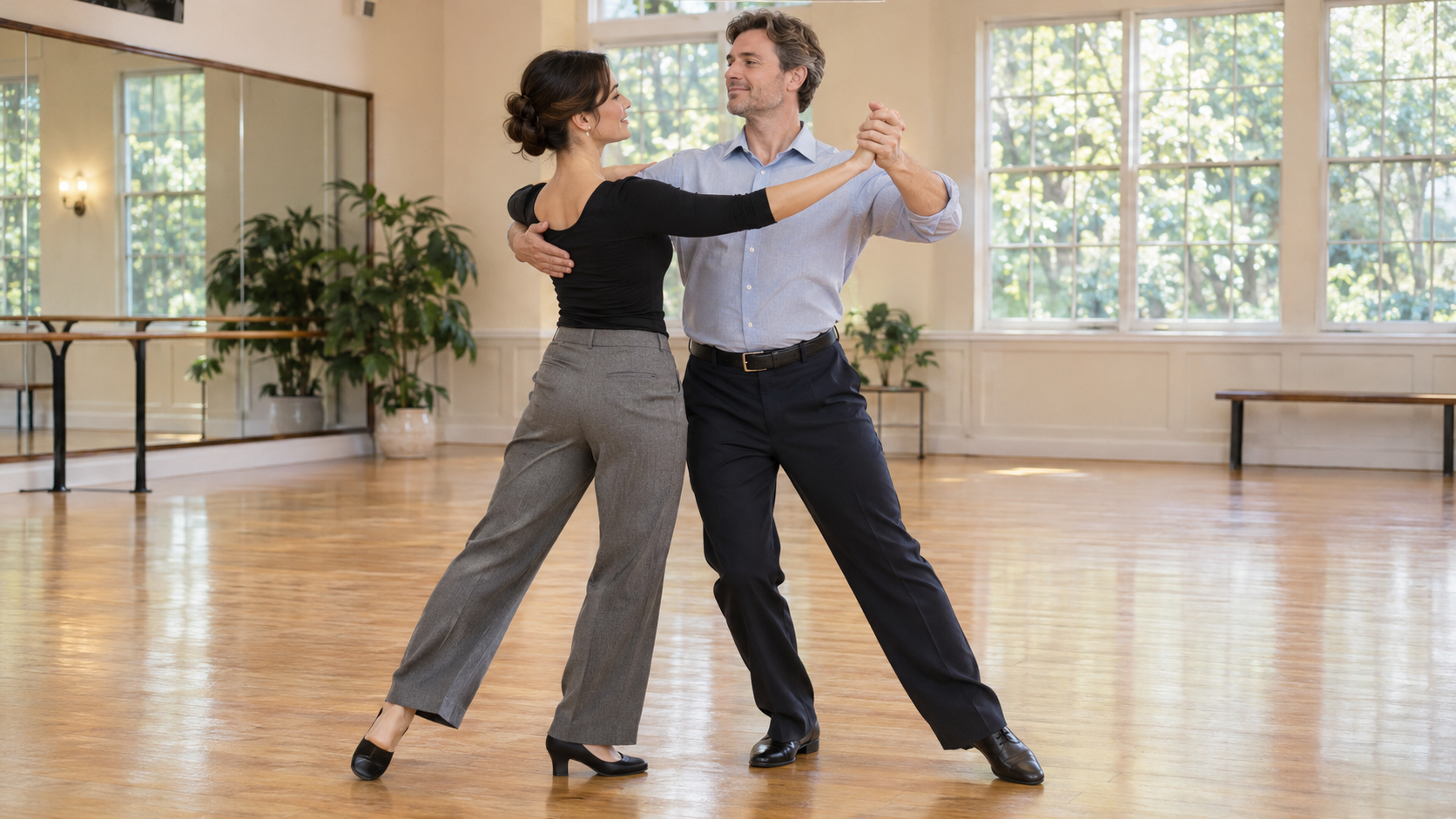
Take the first half of a waltz box. One partner steps forward, to the side, and closes their feet. The other steps back, to the side, and closes. From across the room, you might say both people got it right because their feet went to the right places.
Now imagine being the person taking that first backward step. In one version, your partner sends a foot forward, leaves most of their weight behind, and gives you a little push with their hands. You take a guess at how far to go. In another version, you feel your partner’s body begin to travel with the step. The direction makes sense, and the two of you arrive together. From across the room, the boxes might look much the same. From inside the partnership, they’re two different dances.
That’s a good reason to care about a detail as small as finishing a weight change. It gives the person holding your hand a clearer invitation. And once they can feel where you’re going, you can spend a little less of the song steering.
Why can I know the steps and still feel stiff?
Try saying your home address aloud. Easy enough. Now say it while paying close attention to what your lips, tongue, and jaw do on every syllable. Even your own street name can start to sound peculiar. Something similar can happen when you know a dance pattern but keep checking every moving part.
On your next pass, give yourself one job. If your instructor is helping you with balance, notice which foot carries your weight when your feet close. Let that be enough for one box. Then look up and give your attention back to your partner. Did the next step feel easier to start? That answer is more useful than an inventory of everything your elbows might have done.
What am I trying to say?
What is musicality in ballroom dancing?
Musicality is how a dancer responds to what they hear in a piece of music. Take a recording you know well. You can probably tap a steady beat through the chorus. You may also know exactly where the singer holds a word a little longer or the piano answers with three bright notes. Those details are invitations. Two people can agree completely on the count and fall in love with different moments in the song.
Even on the competition floor, that distinction matters. The World DanceSport Federation describes both keeping time and interpreting the structure of the music when it explains how dancers are evaluated. For a social dancer, there’s a simpler way to explore the idea. On the first listen, tap the beat. On the second, hum the part you remember. Your feet and your voice just picked out two things you could dance to.
How can I make a basic step feel expressive?
Imagine that the person across from you is someone you’ve just met. You hear the first three beats of a waltz and offer a quiet hello. How much space do you take? How gradually do you begin? Where does your attention go when your partner accepts the invitation?
Now picture a friend stepping off a train after a year away. Dance the same three beats as a welcome. Maybe your eyes come up sooner. Maybe you travel a little farther together. Or maybe the reunion makes you linger. The interesting part is finding out which choice feels honest to you and comfortable to the person dancing with you.
Taliat puts it this way:
“Technique gives a dancer the tools to speak, but art gives meaning to what they say.”
— Taliat Tarsinov
There’s room in that thought for a brand-new dancer. You already know what it feels like to greet a stranger or welcome someone home. A lesson gives you a few more ways to let another person in on the feeling.
Why can a dance from another generation still move us?
One of Taliat’s observations is that dancers inherit technique. A generation takes what earlier dancers discovered, studies it, and finds ways to develop it. Art keeps a different kind of time. As he points out in the episode, something made yesterday or a thousand years ago can still mean something to the person who encounters it today.
For a glimpse of what dancers have passed along, open the Library of Congress collection of more than 200 social dance manuals. Among them is The Ball-Room Guide, which includes instructions for the waltz. Think about the person who once opened a book like that before going dancing. You might have a video saved on your phone for much the same reason. Each of you wants to remember what to do when someone holds out a hand.
The next time an old dance clip catches your eye, watch it twice. First, follow the feet. See if you recognize a step. On the second viewing, watch the instant before the couple starts moving. Perhaps one dancer waits, the other looks up, and they set off together. Ask yourself which part made you want to replay it. It might be a bit of footwork you’d love to learn. It might be that look.
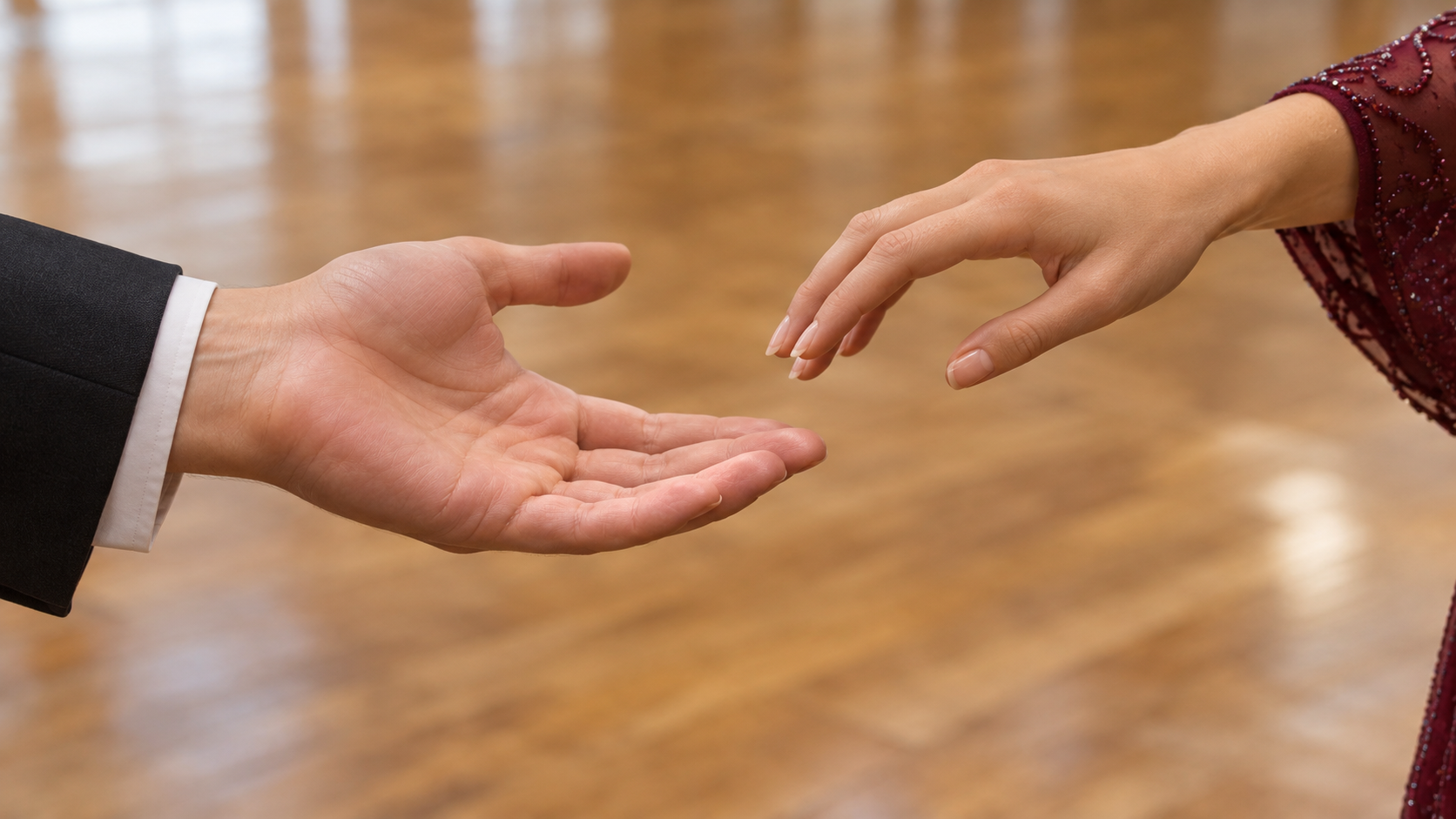
Taliat closes with three images. A painter picks up a brush. A musician takes up a violin. A dancer invites a partner. That third image holds a lovely possibility for anyone learning ballroom. The person you invite gets to answer.
Try the same step twice
Here’s a practice exercise we suggest at Fred Astaire Dance Studios for exploring the idea in Taliat’s episode. Pick a short piece of music and a pattern both partners already know. A waltz box works beautifully. So does a rumba basic. If either of you needs directions halfway through, choose something simpler. You’ll want enough attention left over to listen to each other.
- Dance it once for clarity. Give yourselves a few measures to settle into the beat. Notice one detail, such as whether you both finish transferring your weight before the next step. At the end, each person names one moment that felt easy. Be specific. “I could feel when we were ready to go again” tells you more than “That was good.”
- Replay the same music with an intention. One partner quietly picks a word. Try playful, tender, or curious. Keep the basic pattern and the shared beat. See what your word changes about the way you begin a movement or let it finish. Keep the change small enough that your partner has room to respond.
- Ask what came through. Before revealing the word, ask, “What felt different that time?” Your partner might say, “I felt like you were teasing me a little.” They might say, “I had more time to finish my turn.” Both answers tell you something. Trade roles and let the other person choose the word for the next round.
There’s no prize for guessing tender on the first try. The best discovery might come when your partner describes something you had no idea you were doing. Take that detail to your next lesson. “We liked how the second box felt. Can you help us figure out what changed?” gives your instructor a wonderful place to begin.
Questions dancers ask about technique and expression
How do I stop counting every step without losing the beat?
Let the count come and go. Count aloud for two boxes, then listen for one familiar sound during the third. You might choose the bass on the first beat of each measure. Pick the count back up whenever you need it. Over a few repeats, you may find there’s one passage where the music carries you comfortably and another where counting still helps. Now you know exactly which passage to bring to your instructor.
Can beginners work on expression from their first lesson?
Yes. Even before you know a complete pattern, you can decide how you want to invite someone to move. Try offering your hand as if you’re saying, “Shall we?” Give your partner a moment to take it. You’ve already practiced intention, timing, and attention to another person. Those choices belong in a first lesson just as naturally as learning which foot goes first.
What’s the difference between timing and musical phrasing?
Timing helps you place a step on its beat. Phrasing helps you hear where a musical idea begins, builds, and comes to rest. Think of singing “Happy Birthday.” You can tap an even pulse through the whole song, yet you know exactly which word you’d stretch when everyone gets to the birthday person’s name. Dancers can recognize a moment like that together while keeping track of the beat underneath.
How do I show emotion without feeling theatrical?
Start with a feeling small enough that you’d recognize it in ordinary life. Amusement is a good one. Recall the moment a friend catches your eye across a room because you both heard the same joke. See what remembering that does to your gaze as you dance. You can leave your face alone and simply give your partner your attention. Ask afterward what they noticed.
How do dance partners communicate what they hear in the music?
They can share a direction, a change in the size of a step, or the way they settle at the end of a phrase. Try listening to a few measures together before you dance. Each of you names one sound you like. When you take hold, you have a small piece of shared knowledge. When that piano accent comes around, your partner knows why you’re smiling.
Can partners interpret the same song differently and still dance well together?
Yes. One person may hear a crisp rhythm while the other follows a smooth vocal line. You can share the direction and timing of a figure while giving those details different shades. If a choice catches your partner by surprise, talk about that specific moment and play it again. Half the pleasure of dancing with someone else is getting to hear a favorite song through another pair of ears.
Bring one song to your first lesson
Pick a song you’d recognize from the next room. Find the moment you always turn up. Bring it to your instructor and say, “Right there. That’s the part I want to dance to.” You’ve answered Taliat’s artistic question before you’ve even taken hold. We can help you explore the how, one step at a time.