

Ballroom Dance Competition: What Pro-Am Is and How It Works
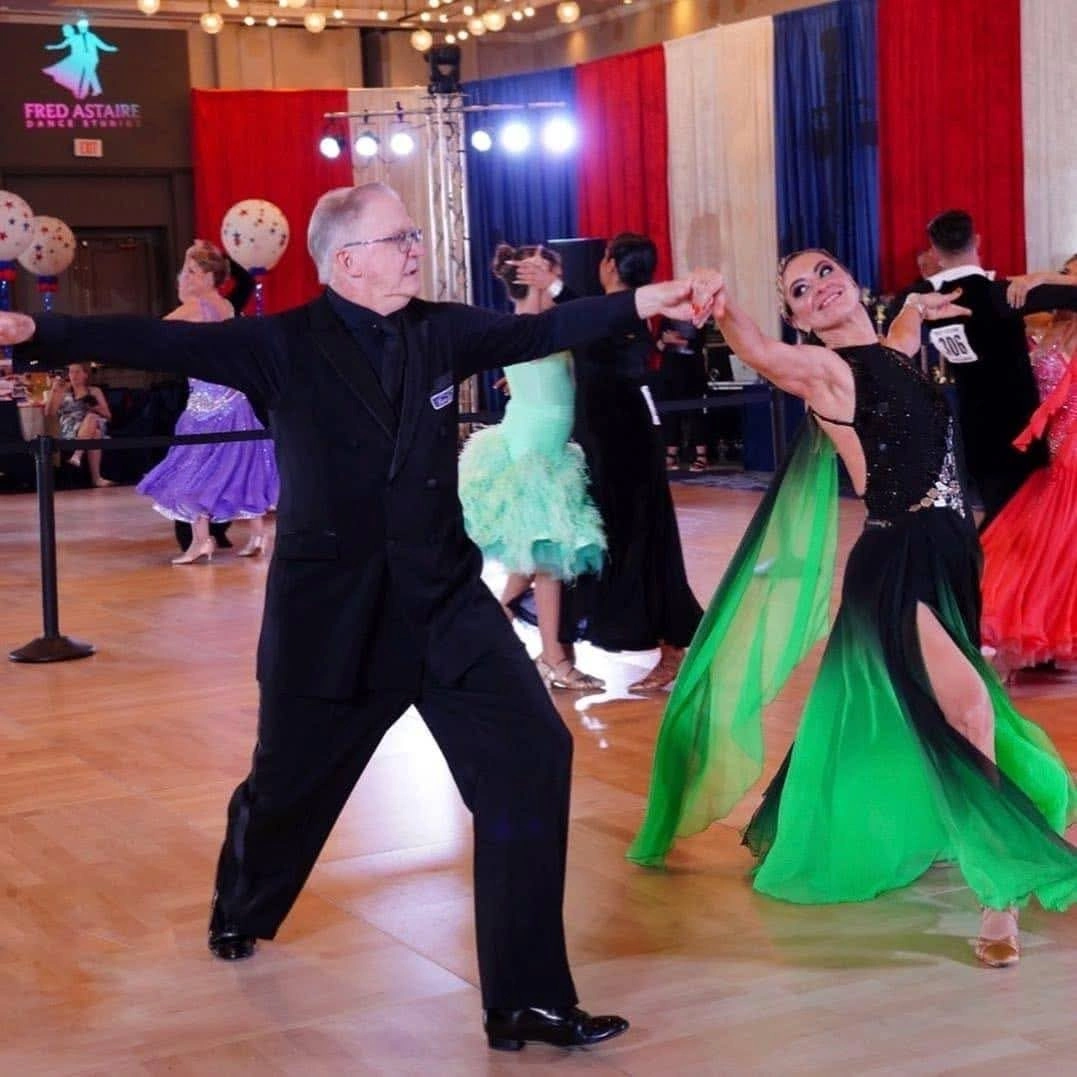
At a ballroom dance competition, couples dance in front of judges and earn a placement in their category and level. At Fred Astaire Dance Studios – South Windsor, we help students compete in Pro-Am, short for Professional-Amateur, where each student dances with their own instructor.
Competing might seem like something only professionals do, but there are divisions for dancers who are just starting out, and you decide if and when to enter.
Inside a Ballroom Dance Competition
A competition day has many short rounds, sorted by style, level and age group. Your job is to show up on time and perform what you’ve practiced.
Heats, Judges and Placements
A heat is where several couples dance the same style on the floor at the same time. A panel of judges watches all of them and ranks each couple, and those rankings decide your placement.
You’ll be placed only against dancers at your own level, so a beginner competes with other beginners, not with experienced competitors. And because several couples share the floor, the spotlight isn’t on you alone.
Smooth, Rhythm, Standard and Latin
At a ballroom competition, events are organized by style. There are two systems, American and International, and each one splits its dances into two categories:
- American Smooth: Waltz, Tango, Foxtrot and Viennese Waltz
- American Rhythm: Cha-Cha, Rumba, East Coast Swing, Bolero and Mambo
- International Standard: Waltz, Tango, Viennese Waltz, Foxtrot and Quickstep
- International Latin: Cha-Cha, Samba, Rumba, Paso Doble and Jive
The main difference is in the technique. In American Smooth, partners can separate and dance open figures, while International Standard is danced entirely in a closed hold. The Latin and Rhythm categories share some dances, but their steps and timing differ. If you’re drawn to a Latin dance competition, you’ll enter either International Latin or American Rhythm events, depending on which style you’ve learned.
As we explain on our types of dance page, International style is used more on the competitive circuit, while American style is danced both socially and in competition. In US Pro-Am events, American style is very common, so many students compete in the same style they learned in their first lessons.
Night Club and Showcase Events
Besides Smooth, Rhythm, Standard and Latin, many competitions offer extra divisions. Our nationals also include a Night Club Division for social dances like Salsa and Bachata, which are judged and placed in their own heats, just like the other styles. If you’d like a social Latin dance to start with, see our introduction to Bachata dance.
Many events also include solo and showcase divisions, where you perform a routine on your own with your instructor.
DanceSport, the Competitive Side of Ballroom
When partner dancing is treated as a sport, with rules, judges and rankings, it’s called DanceSport. It’s organized by federations around the world, with competitions at every level, from local events to world championships.
A Sport With Olympic Recognition
DanceSport received full recognition from the International Olympic Committee on 4 September 1997. As the World DanceSport Federation’s page on the Olympic Movement explains, it had to meet strict criteria to earn that status, including universality, popularity, governance, athlete welfare and development.
Recognition means DanceSport is officially part of the Olympic Movement, but ballroom dancing isn’t currently an event at the Olympic Games themselves.
Amateur, Professional and Pro-Am Divisions
Ballroom competitions are divided by who’s in the couple. In the Amateur division, two amateur dancers compete together. In the Professional division, two professionals do. In Pro-Am, an amateur student dances with a professional, their own instructor, and the judges score the student’s dancing.
For adults learning at a studio, Pro-Am is usually the most natural place to start. You don’t need a partner, and you compete against other students at your own level.
How Pro-Am Dancing Works
Pro-Am is built around the partnership between you and your instructor, and preparing for a competition together is a big part of the experience.
Choosing Your Dances and Level
You and your instructor decide which dances you’ll enter and at which level. Most students start at the beginner levels, with steps they already know from their lessons.
Preparing in Your Lessons
In your private lessons, you’ll practice your routine until it feels natural, polish your timing and posture, and get used to dancing it at full performance energy. Your instructor knows the routine inside out, which takes a lot of pressure off.
Ballroom Dance Championships Worth Knowing
Some championships go back more than a century. Others belong to a single studio network. Both kinds show how far your dancing can go.
Blackpool and Its Long History
According to the Blackpool Dance Festival’s history page, the first festival took place during Easter week in 1920. The venue was the Empress Ballroom at the Winter Gardens. The page notes that the Skating System, which turns all the judges’ rankings into final results, arrived in 1937.
Our National and World Championships
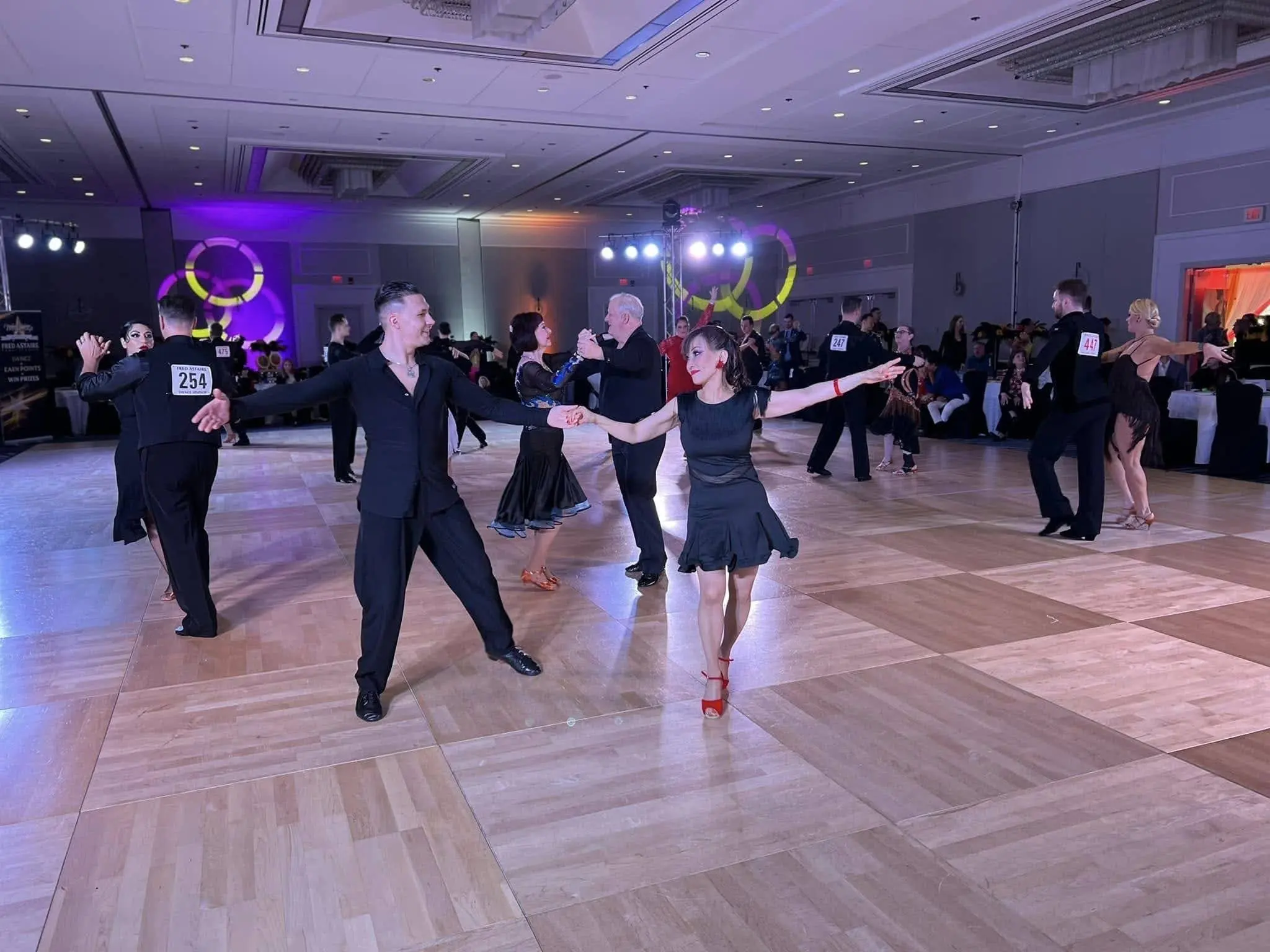
Our Fred Astaire Dance Studios national competitions are where we crown our National (NDC) and World (FAWC) Champions. Each ballroom dance competition in the series is open to all students and pros across our studios.
Students compete against dancers at their level from all over the country. Our post on 13 behaviors of a world dance champion shows how top dancers think off the floor.
Ballroom Competition Dresses and Men’s Attire
A costume is part of the show. Its look depends on the category you enter. What looks great in one style can get in the way in another.
Gowns for Standard and Smooth
Standard and Smooth gowns are long and flowing. In International Standard, they often have floats, light strips of fabric attached at the arms or wrists that move with the dance. Because partners in American Smooth often separate for open figures, Smooth gowns usually have smaller floats or none at all, so they don’t get in the way.
Dresses for Latin and Rhythm
For Latin and Rhythm, women usually wear shorter, fitted dresses, often with fringe that highlights hip and leg action.
Men’s Attire and Shoes
For Standard, men usually wear a tailsuit. In Smooth, a tailsuit, a tuxedo or a fitted vest and pants are all common. For Latin and Rhythm, men wear fitted pants with a shirt. For footwear, see our guide to choosing dance shoes.
First-time competitors don’t need a custom costume. Many students rent or borrow one.
Prepare for Your First Ballroom Dance Competition in South Windsor, CT
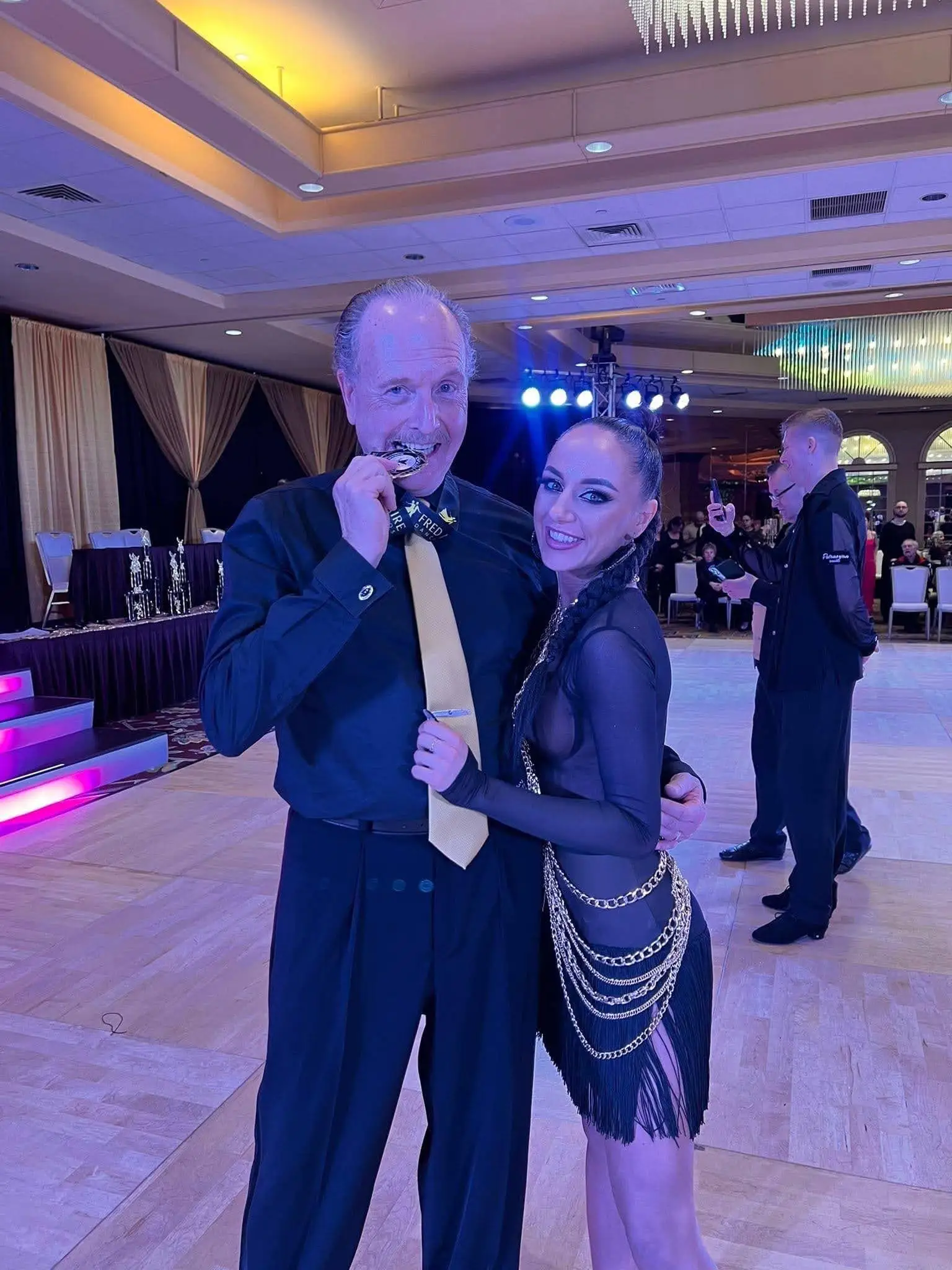
Owners Viktor Tkachenko and Yuliya Lukina, professional dance partners since 2005, lead our studio, Fred Astaire Dance Studios – South Windsor. Together with our team of instructors, they’ll help you prepare at your own pace, from your first basic steps to a polished routine you feel confident performing.
You don’t need any experience or a partner to get started. Whether competing is your goal or just something you’re curious about, it all begins with your first lesson.
Book your intro lesson and start dancing in South Windsor, CT, today!
Frequently Asked Questions
Can You Watch a Ballroom Dance Competition Before Competing?
Yes. Spectators are welcome at most ballroom competitions, including our nationals, where tickets are usually available at the registration desk. Evening sessions often call for semi-formal or formal wear. Watching a few heats is a great way to see the different styles in action and decide which one you’d like to train in with us.
How Do Ballroom Dance Levels Work?
Most Pro-Am competitions group dancers into levels, usually starting with a newcomer or bronze level and moving up through silver and gold. Each level adds more advanced figures, so you always compete against dancers with similar experience. In your lessons, we help you prepare for the next level, and your instructor can tell you which one fits you.
What Does Closed Syllabus Mean?
Every level comes with a syllabus, a list of figures approved for that level. In closed syllabus events, you can only use figures from that list. Couples still choose and arrange different figures from it, so routines aren’t identical, but everyone at that level dances within the same limits.
Are Pro-Am Ballroom Competitions Only National?
No. Fred Astaire Dance Studios runs Pro-Am competitions at regional, inter-regional, national and international levels. Many students start at a regional event and work their way up. We can help you choose which event to enter first.