

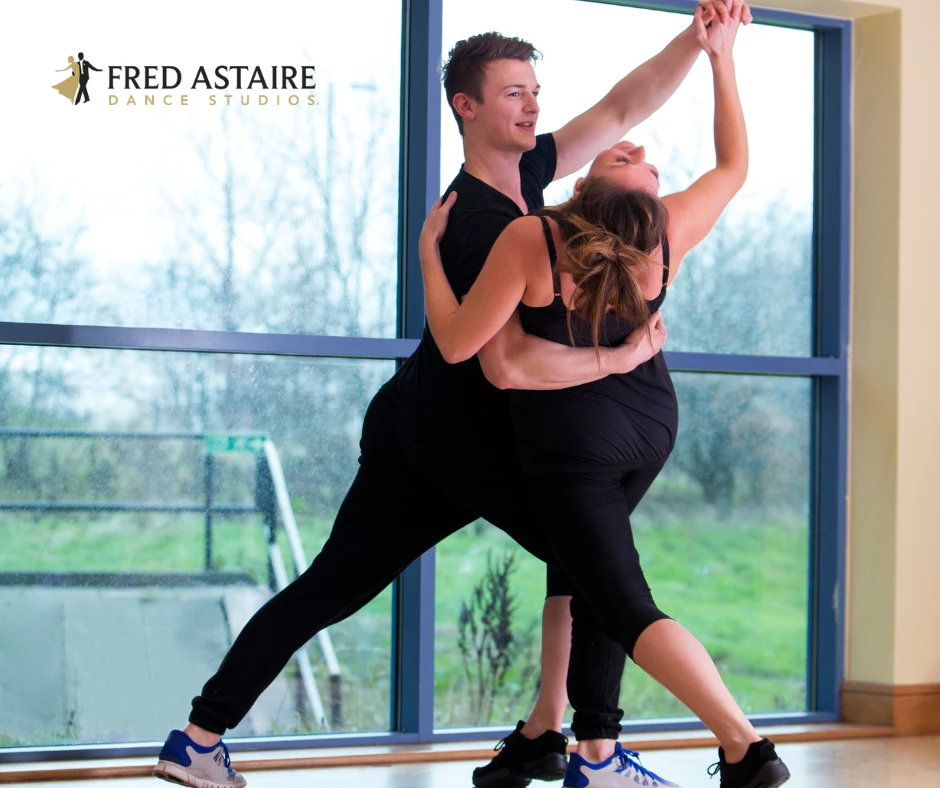
Starting dance lessons is exciting, but it can also feel like standing in front of a giant restaurant menu when you’re hungry and everything sounds good. You may imagine gliding across the dance floor at a formal event in one moment, then the next moment picture yourself in a packed club with fast music and plenty of energy.
The choice of beginning your dance journey through ballroom vs Latin dance is one many people consider: Do I start by taking Latin dance lessons or ballroom dance lessons first?
Both ballroom dance and Latin dance help beginners build confidence, coordination, posture, rhythm, and social ease. There is no wrong first choice. The better question is: which style feels more like the experience you want right now?
Ballroom Basics: Grace, Posture, and Partner Connection
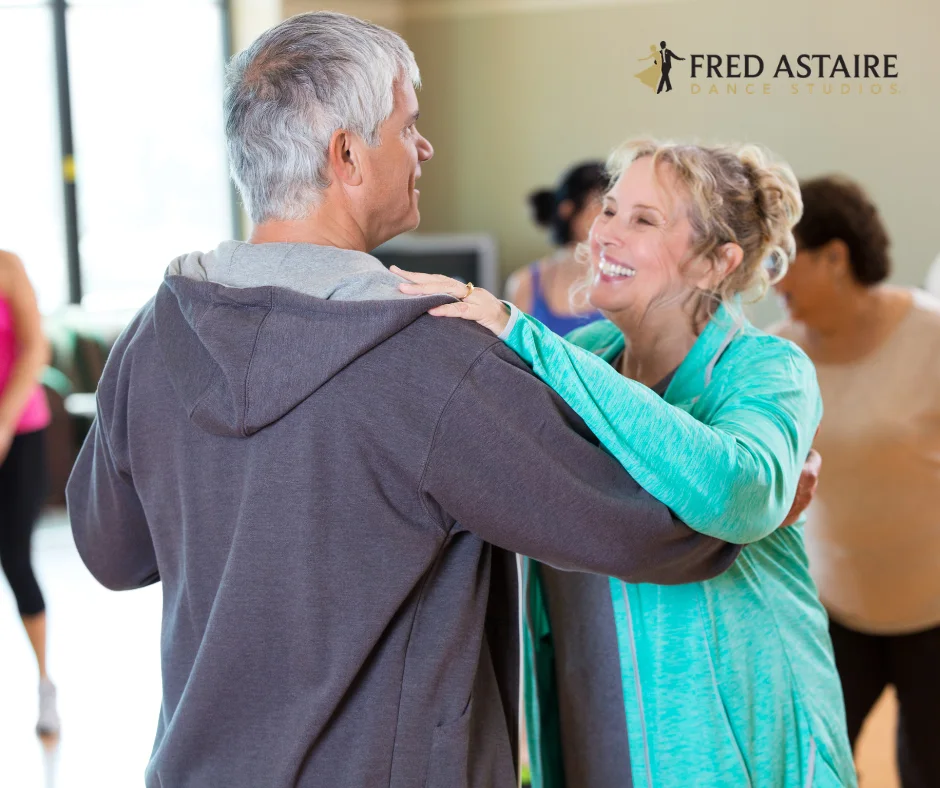
Beginner dancers who choose a ballroom dance class as their first introduction to dance are gives themselves a nice foundation to build on. The first lessons will usually focus on timing, frame, simple partner connection, and how to move across the floor without rushing through the steps.
For couples preparing for wedding dance lessons, or anyone who wants to feel less stiff and more comfortable on the dance floor, ballroom is a clear and approachable place to begin.
Common ballroom dances include:
Graceful and flowing, with soft turns, rise and fall, and a classic formal feel.
Smooth and relaxed, making it useful for many traditional songs and social events.
Sharp, grounded, and dramatic, with strong timing and clean directional changes.
Faster and more rotational, with sweeping turns that move continuously around the floor.
Light, lively, and upbeat, with quick footwork and traveling patterns.
Latin Basics: Timing, Energy, and Body Movement
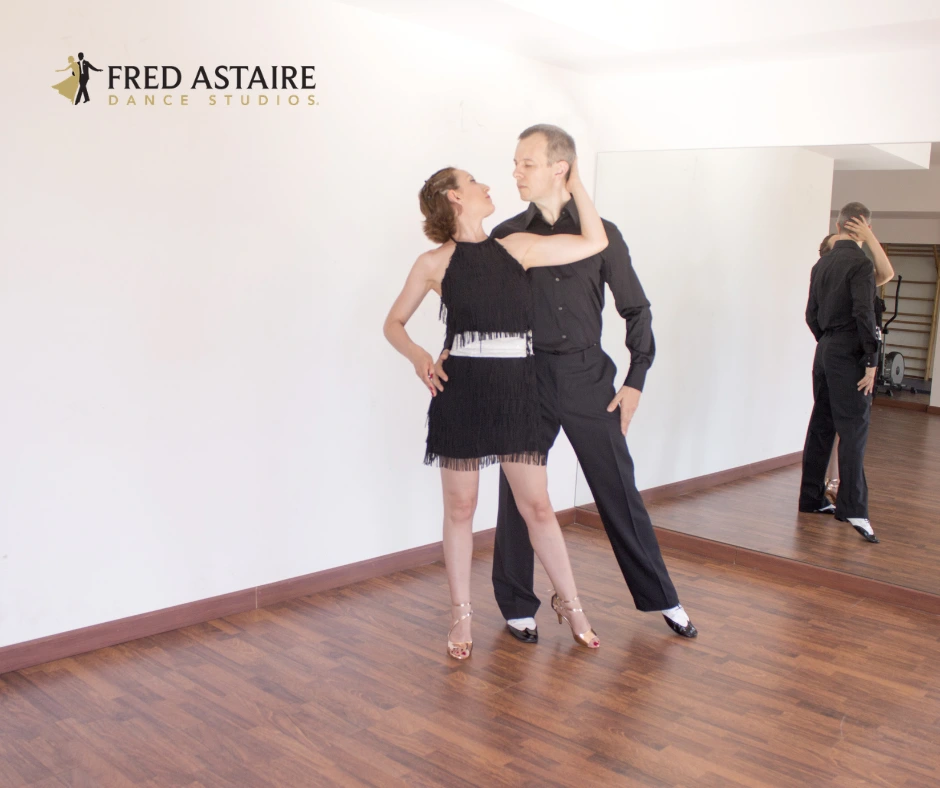
Latin dancing is a great place to start if you want to work on rhythm and timingwith a fast paced beat. The movements involved with many Latin dance styles tend to be more compact than ballroom, so early lessons will focus on weight changes, hip action, turns, and learning how to hear the beat without overthinking every step.
That makes Latin a natural fit for date night, girls’ night out, weddings, parties, and social dance floors where the music feels upbeat and the space may be crowded.
Common Latin dances include:
Playful and upbeat, with crisp footwork, syncopated timing, and a high-energy feel.
Slower and more romantic, helping beginners practice timing, weight changes, and cuban motion.
Lively and rhythmic, with bounce action, quick footwork, and strong musical energy.
Bold and theatrical, inspired by the drama of a spanish bullfight and matador styling.
Smooth, romantic, and expressive, blending Latin rhythm with controlled movement.
Fast, energetic, and rhythm-driven, with sharp timing and quick weight changes.
The Core Difference: Breaking Down Ballroom vs Latin Dance Styles
Ballroom and Latin dance are both partner dances, but they don’t feel the same in the body. The biggest differences come down to how dancers use space, connect with a partner, move through the legs and hips, and respond to the music.
Ballroom Travels Around the Room
Ballroom dances are usually progressive, which means the couple travels around the dance floor in a continuous path. In many traditional ballroom settings, that movement follows a counterclockwise direction around the room. This is why ballroom often feels sweeping and spacious. Dancers need to think about timing, direction, and posture while staying connected to a partner.
Latin Usually Stays More Compact
Latin dance styles are often considered spot dances. That means dancers usually stay in one general area instead of traveling around the room in a long pattern. The movement is still active, but the energy is used differently. Latin focuses more on rhythm, grounded action, hip movement, turns, arm styling, and quick changes of weight.
Ballroom Uses a More Consistent Closed Hold
In ballroom dance, partners stay in a closed hold. This creates a clear frame and teaches beginner dancers how to move as one unit. That structure can be helpful when someone is brand new to dance. This framing gives your body a place to go, and the partnership feels more organized from the start.
Latin Uses More Open Partner Connections
Latin dancers may use closed hold, open hold, side-by-side movement, turns, or separated patterns. Partners will reconnect and separate throughout the dance. This gives Latin style dancing a more social and expressive feeling. It also helps beginners get used to dancing with different partners in group classes or on a busy social dance floor.
Ballroom Focuses on Frame, Flow, and Rise and Fall
Ballroom dance has a polished, classic look because so much attention goes into frame, posture, and traveling smoothly. Dances like American waltz, slow waltz, foxtrot, and Viennese waltz often use rise and fall to create the quality of floating across the room. Rise and fall is the gentle lowering and lifting action through the legs and feet. It is one reason waltz feels so different from tango, even though both belong in the ballroom dance family.
Latin Focuses on Rhythm, Cuban Motion, and Grounded Action
Latin dance has a stronger grounded feeling, with dancers working through the floor and using a bent leg action to create Cuban motion and sharper rhythm through the body. Cuban motion is not about forcing the hips to move. It comes from how the body settles weight from one foot to the other. Once beginners understand that foundation, Latin dancing starts to feel less like “extra hip movement” and more like your body’s natural response to the music.
Ballroom Feels More Formal
Ballroom dances are closely tied to formal events like weddings, galas, and competitions. It allows beginners to gain a polished foundation while helping them feel more comfortable dancing with a partner. This is one reason ballroom dancing is such popular choice for a first dance at a wedding. Even simple steps can look elegant when the couple has a steady frame, clean timing, and a clear plan for moving around the floor.
Latin Feels More Social and Expressive
Latin dancing tends to feel more casual, rhythmic, and energetic when compared to ballroom dancing. Dances like cha cha, American rumba, and samba can help beginners loosen up and stop worrying about looking perfect. For someone who wants to dance at Latin nights or social clubs, this style of dance feels more connected to real-life music and social settings.
How Ballroom vs Latin Dances Are Grouped
Dance styles can be grouped in a few different ways, which is why beginners may hear terms like Standard, Latin, Smooth, and Rhythm in class. The names sound technical at first, but they’re mostly used to organize how the dances are taught, performed, and competed.
International Styles: Standard and Latin
In the international styles, partner dances are usually divided into International Standard and International Latin. International Ballroom Standard includes dances like waltz, tango, foxtrot, quickstep, and viennese waltz. These dances stay in a closed hold and focus on travel, frame, and smooth control.
International Latin dances include cha cha, samba, rumba, paso doble, and jive. These dances put more emphasis on rhythm, body action, sharp footwork, and expressive styling.
American Style: Smooth and Rhythm
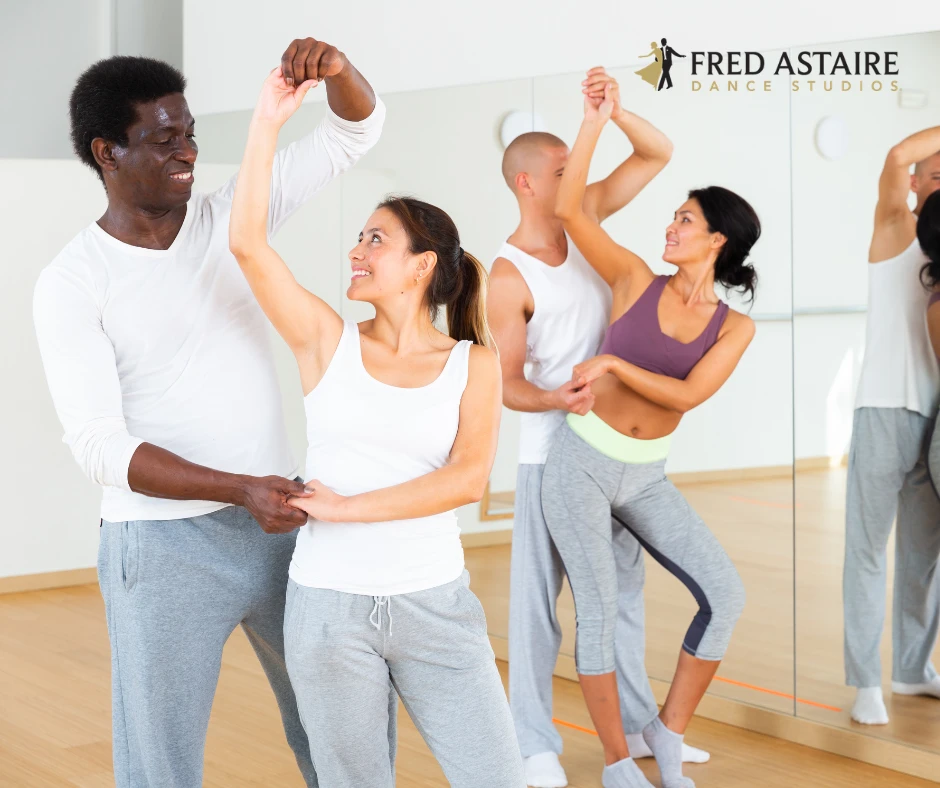
The American style system separates dances into American Smooth and American Rhythm. American Smooth includes waltz, tango, foxtrot, and viennese waltz, but allows partners to open out of closed hold more often.
American Rhythm includes cha cha, rumba, east coast swing, bolero, and mambo. These dances are especially useful for social dancing, studio lessons, weddings, and events where the music calls for more rhythm and personality.
What These Classifications Means When You Start Dancing
Studio legends like Fred Astaire and Arthur Murray helped make the American style approach widely recognized and easier for everyday dancers to learn. For beginners, the takeaway is simple: these categories help instructors choose the right dances to match to your goals, whether you’re taking couple’s dance lessons to prepare for a wedding, taking a group dance class for fun, want to learn social Latin dances for nights out, or are thinking about competitive ballroom dance later on.
How Argentine Tango Differs from Ballroom Tango
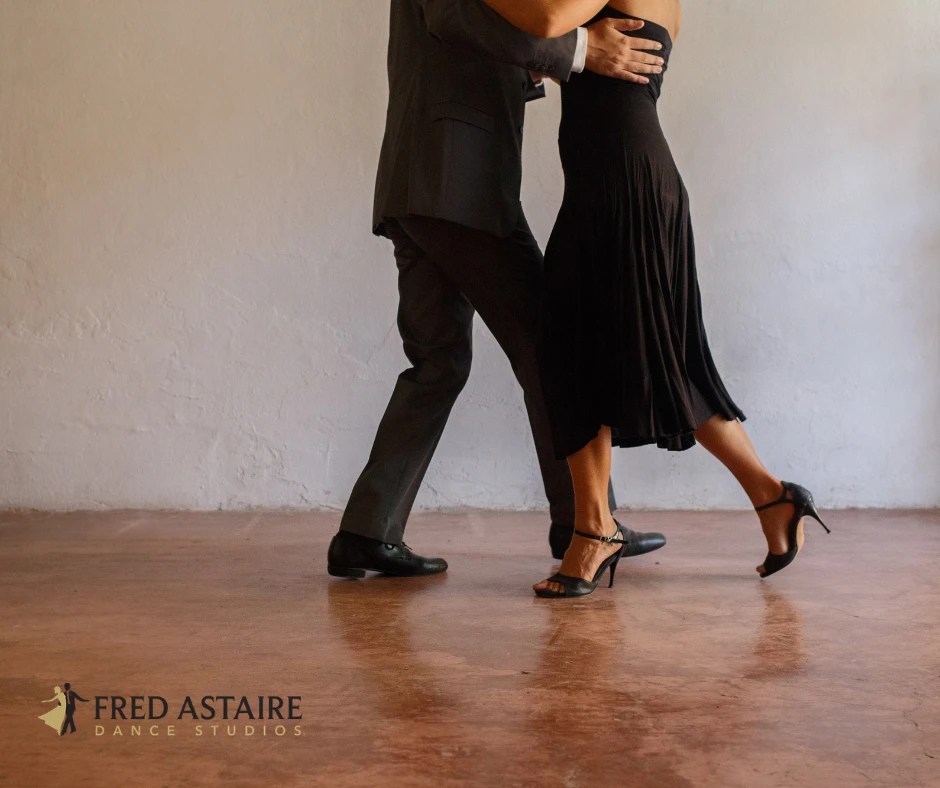
Argentine tango differs from ballroom tango. It has its own style, history, and social dance culture. Developed around the Río de la Plata region of Buenos Aires, Argentine tango focuses on close partner connection, musical interpretation, and improvised movement rather than the sharp, structured look associated with ballroom tango dancing.
For beginners, Argentine tango can be a good choice if they’re drawn to a more intimate, grounded dance that feels conversational between partners.
Ballroom vs Latin Dance FAQs
Which dance style is easier for beginners to learn?
It depends on the beginner. Ballroom dance may feel easier for people who like structure and slower movement, while Latin dance can feel easier for those who connect quickly with rhythm and upbeat music. Private lessons can help new dancers find the right starting point without guessing.
What are the most popular dances for beginners?
Some of the most popular dances for beginners include waltz, foxtrot, tango, rumba, cha cha, and east coast swing. These different dance styles give new dancers a mix of timing, partner connection, rhythm, and confidence on the floor.
Is ballroom dancing good for a wedding first dance?
Yes. Ballroom is a strong choice for wedding dance lessons because it helps couples work on posture, frame, turns, and smooth movements without needing complicated choreography. Waltz, foxtrot, and rumba are common starting points for a first dance.
Is Latin dancing harder than ballroom?
Latin can feel challenging at first because of the timing, hip action, and precise footwork. Ballroom has its own learning curve too, especially with frame, floor travel, and dances that use dramatic pauses, like tango.
What dance has the most intricate footwork?
Cha cha, samba, quickstep, and jive are known for intricate footwork, especially as dancers move beyond beginner patterns. New dancers usually start with simpler steps first, then add sharper timing and more detailed foot placement as they improve.
Can beginners learn both ballroom and Latin dances?
Yes. Many beginners benefit from learning both because ballroom builds posture, frame, and partner connection, while Latin builds rhythm, body movement, and social confidence. Trying a dance lesson for each can make it easier to decide which style feels more natural for you.
Are group classes or private lessons better for beginners?
Group classes are helpful for practice, repetition, and getting comfortable around other dancers. Private lessons give beginners more individual feedback on timing, frame, footwork, and specific goals like weddings, social events, or learning popular dances faster.
Schedule Your First Dance Lesson in Raleigh Today
The easiest way to find out what dance style feels right is to try a lesson. Fred Astaire Dance Studios of Raleigh offers a new student introductory offer for beginners who want to explore dance lessons by themselves or with a partner—your first two lessons are just $59, and you can mix and match styles!
Use your first lessons to test the basics, ask questions, and get a feel for different styles. Schedule your first lesson today by calling 919-872-0111 or filling out the form below.