

Dancing Through Life’s Ups & Downs: How Ballroom Dance Builds Mental Health & Emotional Strength
Ballroom Takeaways
When we talk about ballroom dance & mental health, we’re talking about something bigger than steps. Ballroom dancing combines movement, music and human connection to help you feel more grounded through the good days and the messy ones.
- Ballroom dance reduces stress, lifts your mood and supports emotional health through joyful rhythmic movement.
- Learning dance moves builds confidence, self esteem and a stronger sense of “I can do this.”
- Partner dancing creates social connection, trust, empathy and a sense of community.
- Even complete beginners at Fred Astaire Dance Studios can feel the benefits from the very first class.
- Ballroom dancing doesn’t just help you feel better in the moment – it builds lasting emotional strength over time.
- Because it combines movement, music and connection it supports your mental health in a way that feels natural, enjoyable and sustainable. Whether you’re navigating a stressful week or celebrating a great one, dance gives you a way to stay grounded and engaged.
Introduction: Why Emotional Strength Matters Now More Than Ever
Work pings. Family needs. News cycles. A world that never stops spinning. If life from 2024 to 2026 has taught us anything it’s that emotional strength matters.
Emotional resilience means bouncing back, staying grounded and keeping hope in your back pocket. And here’s the fun part: ballroom dance mental health benefits are real. This is for beginners and intermediate dancers who want better mental well being not a lecture in fancy footwork.
How Ballroom Dance Supports Mental Health Day to Day
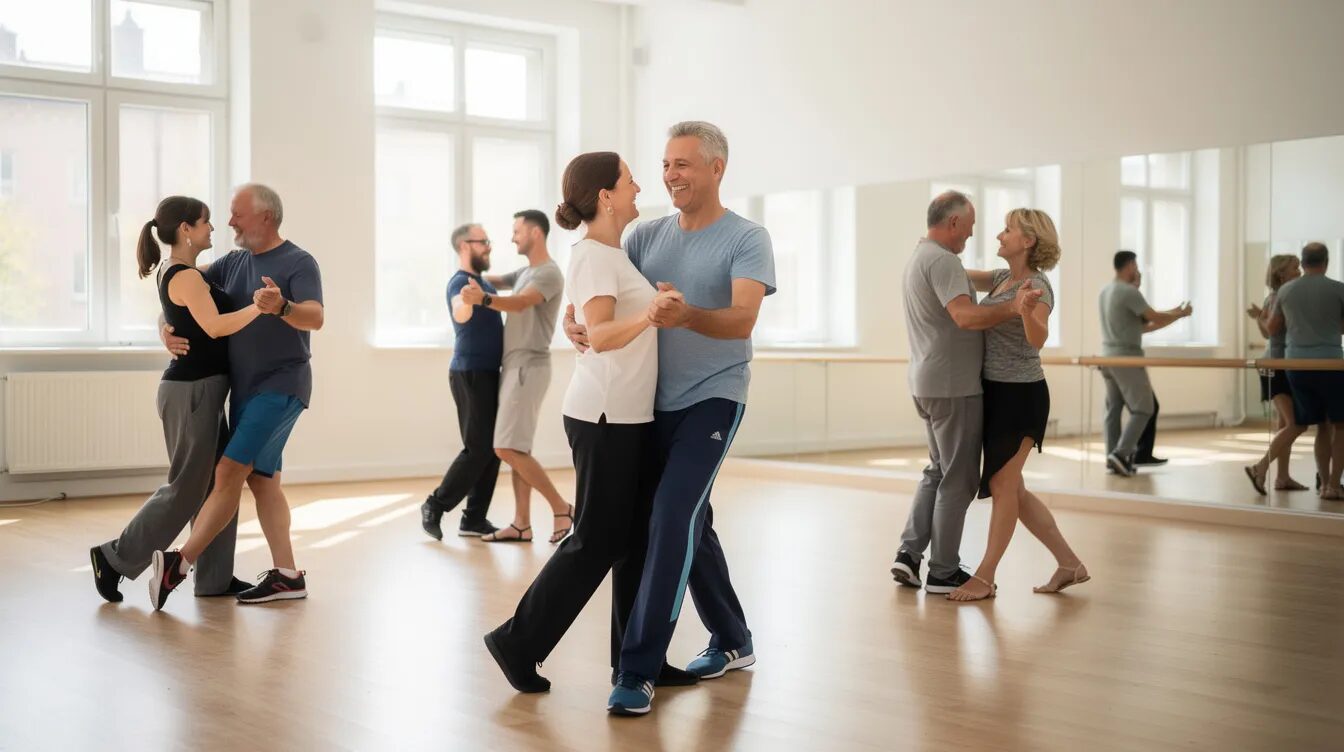
Ballroom dancing includes American Smooth styles like waltz, tango, foxtrot and Viennese waltz; Rhythm styles like cha-cha, rumba, swing, bolero and mambo; plus Latin and social dance styles. Unlike running, cycling, modern dance, belly dancing, weight training or other forms of exercise ballroom adds a partner, timing, touch and teamwork.
The benefits of ballroom dancing show up in everyday life:
- Less anxiety because your focus shifts to timing, lead and follow and music.
- Better mood because dancing can improve your mood and attitude as many people take dance classes because they enhance their emotional state.
- Sharper focus from learning choreography and remembering patterns.
- Better sleep after physical activity.* Higher self esteem as you master new skills.
For many people these benefits are felt almost immediately. Even a single lesson can shift your energy from feeling overwhelmed or distracted to feeling focused, present and uplifted.
That’s because ballroom dance engages both your body and your mind at the same time – creating a full reset that few activities can replicate.
Participating in ballroom dancing classes gives you a wide range of physical, mental and social benefits for all ages. Ballroom dancing classes is a holistic combination of physical fitness, mental sharpening and social connection.
And no, you don’t need a partner, rhythm or “main character energy” to start. We’ve got you.
The Science: What Dance Does to Your Brain and Body
Let’s keep the science simple and sparkle-friendly.
Ballroom dancing is a low impact exercise that improves cardiovascular fitness by elevating your heart rate into a moderate aerobic zone, similar to brisk walking, and enhances endurance and circulation. That’s good for heart health, blood circulation and overall health.
Ballroom dancing can help lower blood pressure and cholesterol levels, reduce the risk of heart disease and overall cardiovascular health. A single 30 minute ballroom dancing session can burn between 200 to 400 calories making it great for weight management.
Ballroom dancing engages multiple muscle groups, improves core stability, leg strength and overall muscle tone. Regular ballroom dancing can improve muscle tone and functional strength, improve posture and joint stability through controlled movements that engage core and stabilizing muscles. As a weight bearing activity ballroom dancing stimulates bone density and prevents osteoporosis.
Now for the brain health glow-up: learning new dance steps and patterns in ballroom dancing activates memory, attention, sequencing and decision making which supports cognitive function and neuroplasticity. Memorizing complex dance steps and synchronizing movement can reduce the risk of dementia by up to 76% according to research often cited in dance and aging discussions.
Ballroom dancing has been linked to reduced cortisol levels which is associated with stress and improved mood regulation through the stimulation of dopamine and serotonin pathways. These happy chemicals explain why dancers often leave class feeling lighter than they arrived.
Memorizing complex dance steps and synchronizing movement can reduce the risk of dementia by up to 76%, according to research published in the New England Journal of Medicine often cited in dance and aging discussions.
Scientific studies from university and medical researchers have compared dance with brisk walking and cycling. Dance adds music, touch, creativity, spatial awareness and partner teamwork which can make the mental health benefits even more engaging.And while the science helps explain why dance works, what really matters is how it feels in real life.
That sense of clarity after a lesson. The lighter mood. The shift in energy.
Those aren’t coincidences – they’re the result of your brain and body working together in a powerful, positive way.
Building Confidence and Emotional Resilience Through Dance
Emotional resilience through dance starts with one humble truth: everyone begins as a beginner. Even the smoothest dancer once had to learn where to put their feet. Glamorous? Eventually. Human? Always.
You might start with a basic waltz box step. Then maybe rumba timing. Later, a bold tango or cheeky cha-cha. Each small win helps improve self esteem and creates confidence through dance.
Confidence moments may look like:
- Following a lead without overthinking.
- Leading a turn clearly.
- Remembering a short routine under pressure.
- Hearing your instructor say, “Yes! That was it.”
Ballroom dancing can improve self esteem by allowing individuals to learn and master new skills which enhances their confidence and sense of accomplishment.
Off the dance floor that can become better body awareness, stronger posture, more assertiveness at work and more willingness to try new things. Darling, that’s growth in heels, sneakers or whatever shoes you brought.
And the best part? That confidence doesn’t stay in the studio. It shows up in everyday moments – speaking up in meetings, trying new experiences and carrying yourself with more ease and self-assurance. What starts as learning steps becomes something much bigger: believing in yourself.
Social Dancing Benefits: Connection, Belonging and Support
Loneliness is no small thing. Adults balancing careers, families, remote work or major life changes often crave real social interaction.
A dance studio naturally creates connection through:
- Private lessons for trust and personal focus.
- Group dance classes for practice and encouragement.
- Practice parties for fun, friendship and confidence.
- Events where you meet new people without awkward small talk doing all the heavy lifting.
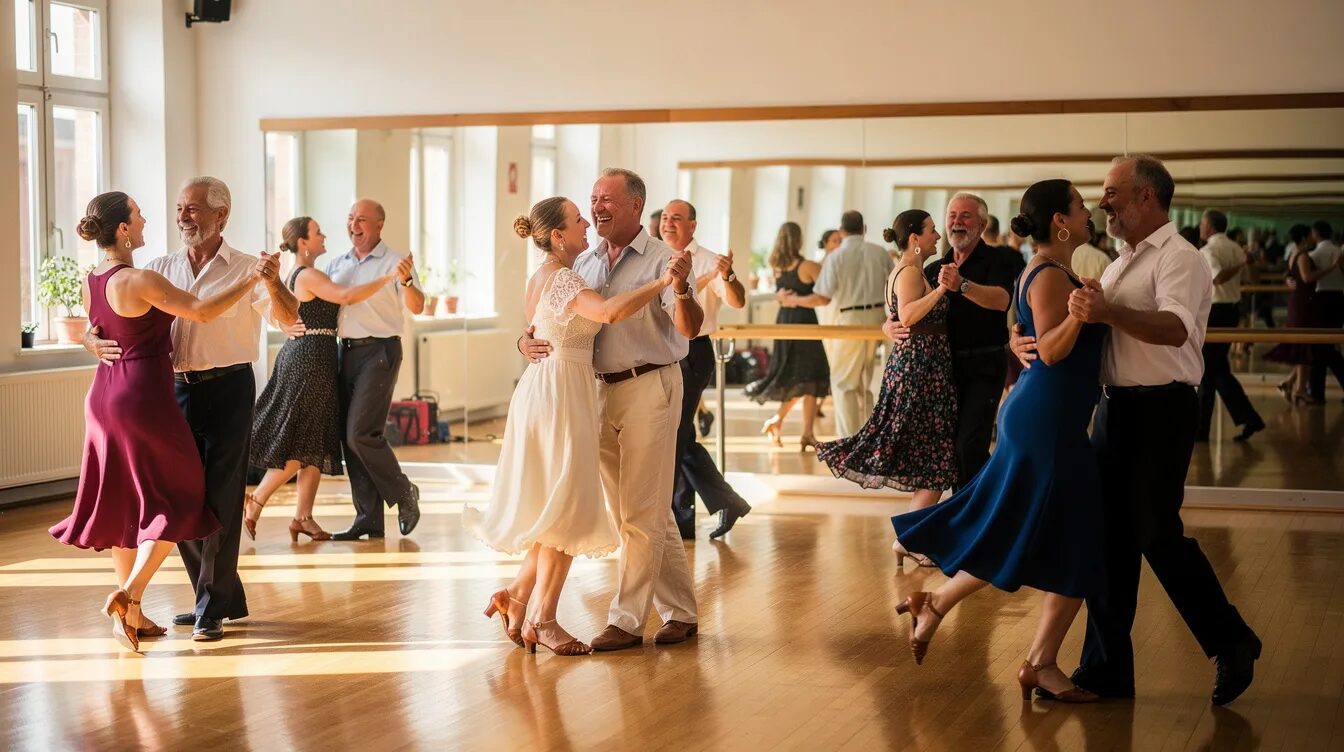
Group ballroom dancing classes combat social isolation and build friendships, enhances community connection. Ballroom dancing provides a unique opportunity for social interaction, allows individuals to meet new people and form lasting friendships through shared experiences on the dance floor.
Partner dancing enhances non-verbal communication skills, leading to improved trust and empathy among dancers. When you lead, follow, pause, adjust and listen with your body you build emotional awareness. Participation in ballroom dancing has been shown to increase feelings of belonging and community which can boost your social life and overall happiness. Research shows that social dance participation (like ballroom dancing) correlates with longer life, likely due to the combination of physical activity and social engagement.
Those social benefits aren’t fluff. They’re part of a healthy life.
In a world where so much interaction is through screens, having a space where you can connect face-to-face makes a real difference. Ballroom dancing brings people together in a natural, supportive and enjoyable way – without pressure or expectation. And that sense of belonging can be one of the most powerful contributors to emotional well-being.
Dance as Stress Relief and Emotional Outlet
Many students come to us for dance after work, after heartbreak, after a tough season or simply after too many emails. Relatable.
Dancing creates a flow state. In rumba, foxtrot or swing, your mind shifts to timing, connection and music. Worries step aside because your body moving needs your attention now.
Different styles offer different emotional outlets:
- Tango for intensity.
- Waltz for calm and romance.
- Cha-cha for play.
- Swing for fun.
Ballroom dancing has been linked to reduced cortisol (the stress hormone) and improved mood regulation, supporting emotional resilience. The joy of movement and music in ballroom dancing releases endorphins which can boost mood and combat depression, a holistic approach to mental well-being.
Dance can support people managing stress, anxiety, depression, or other mental health conditions, as explored in research on how dance supports mental health.
Over time this becomes more than just an occasional escape. It becomes a reliable way to reset your mind, process your emotions and get back to your daily life feeling more balanced and in control. That’s what makes dance such a powerful long-term tool – not just for stress relief but for emotional resilience.
Why Ballroom Dance Feels Different from a Traditional Workout
A gym routine can be great. But treadmills and reps don’t always make your soul say “Ooh, again please.”
Ballroom feels different because it’s exercise disguised as play. You build balance, muscles, posture, coordination and endurance through patterns not repetitive machines.Ballroom dancing improves balance and coordination which is crucial for fall prevention in older adults. Ballroom dancing requires constant weight shifting, direction changes and partner awareness which stimulates the vestibular system and improves neuromuscular coordination and balance.
Research shows dance-based movement (like ballroom dancing) improves postural stability more than static balance exercises especially in older adults. Ballroom dancing enhances proprioception which is the body’s ability to sense movement and position and reduces the risk of injury and promotes safer movement patterns.
The best part? The class, the group, the music and the community makes you want to come back. That consistency supports physical health, mental health and the kind of happiness that doesn’t feel like homework.
Because when it feels good, you’re more likely to stick with it. And consistency is what drives real results – both physically and mentally. That’s why so many people find ballroom dance becomes part of their lifestyle not just something they try once and forget.
Getting Started: Your First Steps into Ballroom Dance
You don’t need experience. You don’t need a partner. You don’t need to be “in shape”. You just need curiosity and maybe shoes with smooth soles.
At Fred Astaire Dance Studios an introductory private lesson usually lasts about 30-45 minutes with a certified instructor, making it easy to start dancing and explore different styles. You might try waltz, rumba or swing at a comfortable pace.
Quick beginner checklist:
- Wear comfortable clothes.
- Choose shoes that stay on your feet.
- Arrive a few minutes early.
- Share your goals: stress relief, wedding dance, confidence, social fun or other details.
- Try group classes when you’re ready.
- If you’re feeling even a little curious, that’s enough. You don’t need to feel ready – you just need to be willing to take the first step. Because once you do, everything else becomes easier, more natural and a lot more fun than you might expect.
Imagine 3-6 months from now: more confidence, more friends, a mind sharp from practice and a stronger sense of balance in life. Not bad for a little music and movement, yes?
Fred Astaire Dance Studios: A Supportive Place to Grow Through Dance
Fred Astaire Dance Studios has been helping people discover the benefits of ballroom since 1947. We teach ballroom and Latin dance in a warm, polished, non-intimidating environment for adults of all ages.Our programs include:
- Private lessons.
- Group classes.
- Social dance parties.
- Wedding choreography.
- Showcases and competitions.
- Progress tracking through our curriculum and trophy system.
At Fred Astaire Dance Studios we talk about the four pillars of dance:
- Physical
- Mental
- Emotional
- Social
Ballroom dancing is one of the few activities that strengthens all four at the same time—helping you not just move better, but feel better and live more fully.
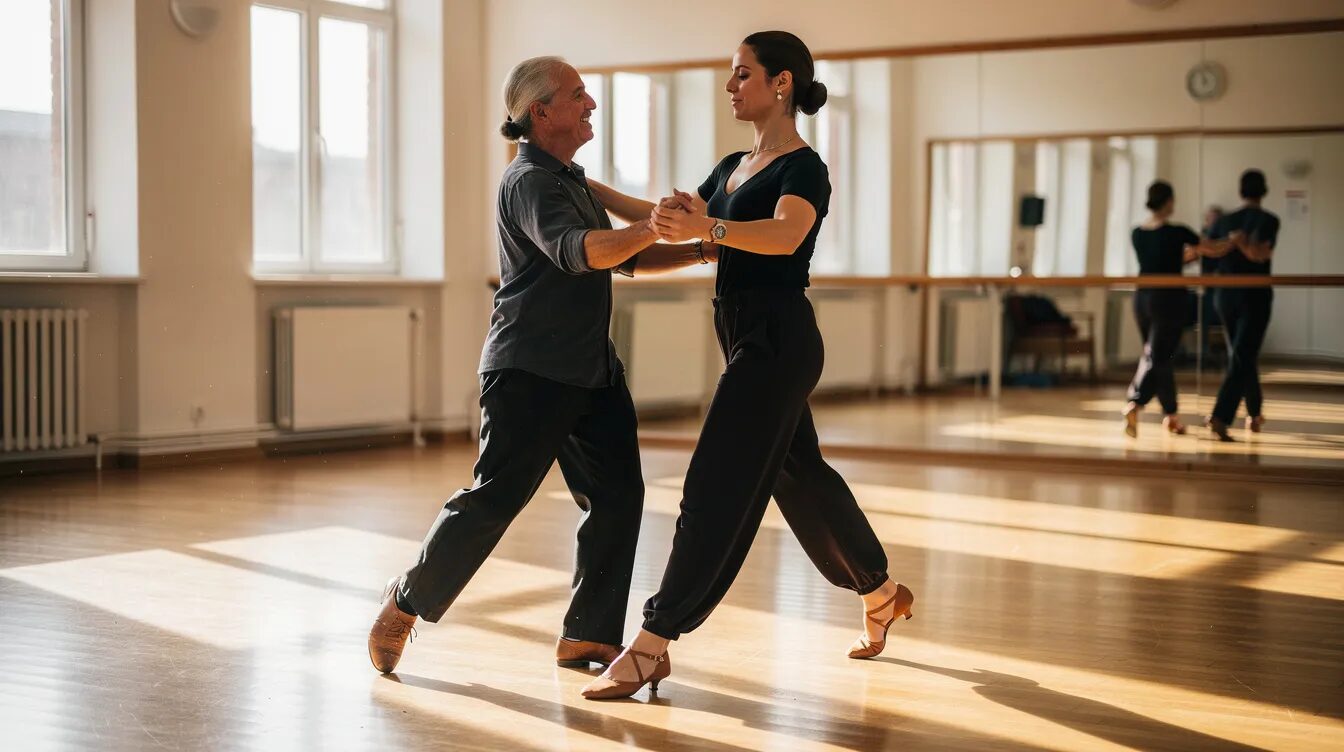
Our certified instructors teach steps, of course. But they also help with nerves, self-doubt, confidence and that first brave walk onto the dance floor, using proven teaching methods that combine private lessons, group classes and practice parties.
Curious? Find a Fred Astaire Dance Studio near you or try beginner lessons. If you’re an entrepreneur who loves wellness, dance and community you can also learn about Fred Astaire Dance Studios franchise opportunities.
🎯 Final Thoughts: Dance Through It—Together
Life will always have ups and downs.
But you don’t have to stand still through them.
You can:
- Move
- Grow
- Heal
- Connect
👉 You can dance through them.
Ballroom dancing isn’t just about learning steps—it’s about discovering strength, confidence, and joy within yourself.
💃 Ready to Take the First Step?
Your mental health matters.
Your journey matters.
And it can start today.
👉 Find a studio near you and begin your dance journey:
www.fredastaire.com
🎥 Watch the Experience Come to Life
(Embed your YouTube video here)
💬 Join the Conversation (Win Something Special 🎁)
What does movement mean to you?
Comment on our social posts and share your story for a chance to win something special!
👉 Follow us and join the conversation:
- YouTube
#DanceForMentalHealth #FredAstaireDanceStudios #BestInBallroom
Start Your Mental Health Journey with Ballroom Dance Lessons
Ballroom dance benefits your body, brain, heart and social life. It supports mental health, builds confidence, improves balance and is a beautiful form of stress relief that feels like joy not discipline.
So try one lesson and see how you feel afterwards.
👉 Try it out. Find your local Fred Astaire Dance Studios, step into your first class and let the music remind you: you get to grow, glow and dance through life’s ups and downs.
The hardest part isn’t learning the steps. It’s taking the first one. And once you do, you may be surprised by how quickly things start to change – not just on the dance floor but in how you feel every day.
FAQs About Ballroom Dance and Mental Health
How does ballroom dancing help with anxiety and stress?
Ballroom dance mental health support starts with presence. Steps, timing, music and connection redirect attention away from anxious thoughts.
Movement releases endorphins, supports dopamine and serotonin pathways and may lower cortisol. Weekly lessons create a predictable positive routine. Dance can complement therapy or medical care but should not replace professional support when needed.
I feel awkward and uncoordinated—can ballroom dance really help my confidence?
Yes. Most beginners feel awkward at first. That’s not a personality flaw; it’s just the starting line.
Small wins like learning a box step or completing a turn build confidence through dance. At Fred Astaire Dance Studios we break skills into simple pieces and celebrate progress not perfection.
Is ballroom dance good for older adults mental health?
Yes. Ballroom dancing supports cognitive function, balance, coordination, mood and social connection for older adults.
Because it’s low impact and adaptable lessons can be tailored to different mobility and fitness levels. It keeps the mind sharp while making movement social and enjoyable.
How often should I take ballroom dance lessons to feel mental health benefits?
A realistic starting point is one to two sessions a week. That may include private lessons, group classes or practice parties.
Consistency matters more than intensity. Regular participation reduces stress, builds confidence and strengthens emotional resilience through dance.
Do I need a partner to experience the mental health benefits of ballroom dance?
No partner required. Instructors can partner with solo students, and group classes often rotate partners.
If you come as a couple, you may enjoy extra relationship benefits like communication, teamwork and shared fun. If you come solo, you can still enjoy all the social connection.
YOU MAY ALSO LIKE:
Mental Health Benefits Of Dance: 6 Unbelievable Benefits of Ballroom Dancing
Express, Embrace, Enhance: 15 Ballroom Dances For Unlocking Emotional Wellness